How many times have you bought postcards on your holidays and then forgot to either write or send them? To be honest, Rio de Janeiro would have been the most obvious place to buy too many, as few skylines in the world are more iconic, or more controversial: the iconic shape of the sugarloaf, rainforest-covered hills topped with a glow-in-the-dark Christ, non-descript highrises against a backdrop of seemingly picturesque slums – Rio has it all. So much so that forgetting to buy postcards there is not simply unforgivable, but also a non-brainer. But more of that later.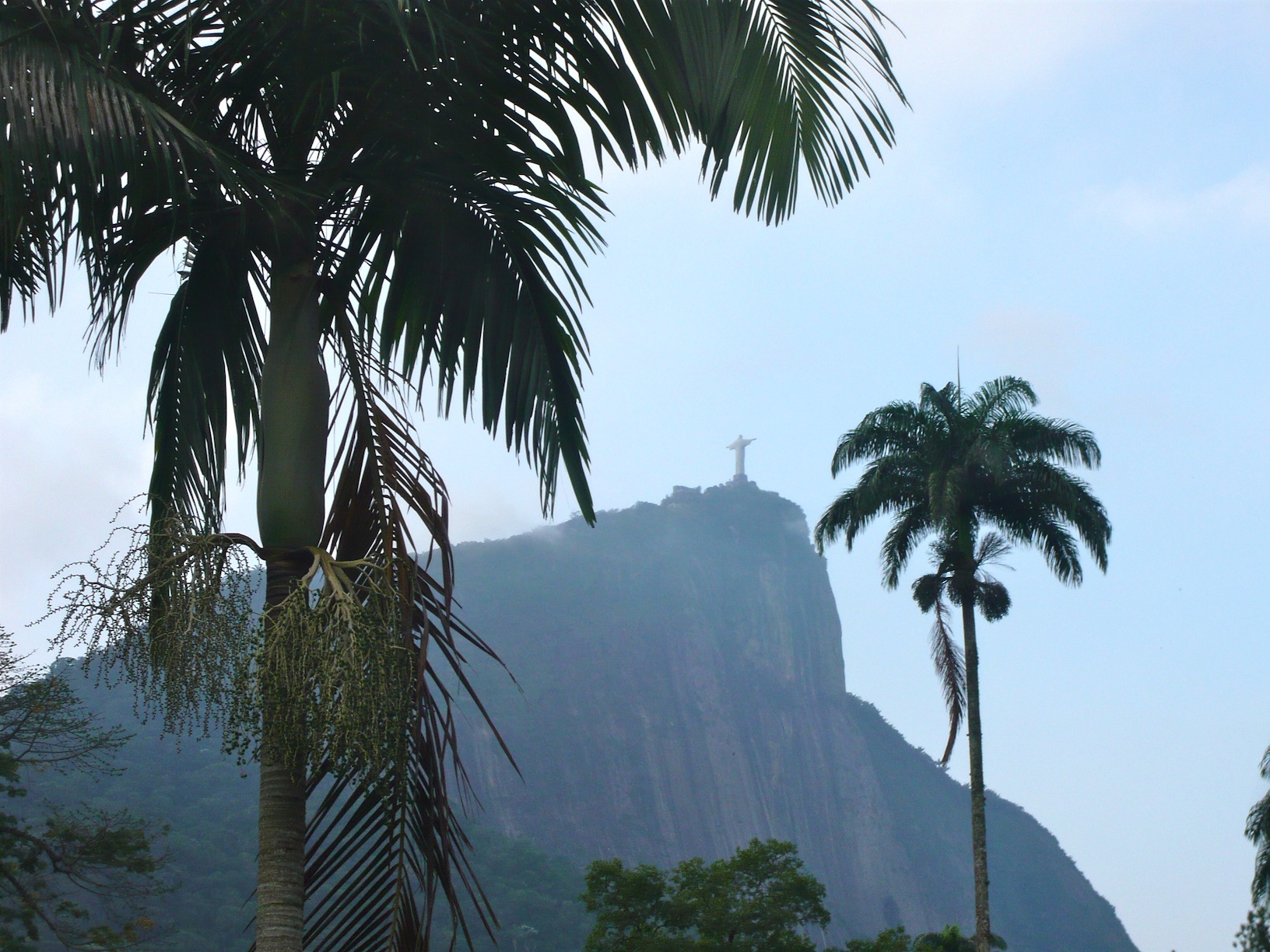
The reason we ended up there for our holidays was less the realisation of a life-long dream but a practical necessity: my partner needed to go there for work and asked if we would like to come along. We did, under the condition that we would travel on to visit the extended family in Chile, making Rio our rather glorious extended stopover.
Left to our own devices every day, we tried to make the most of Rio de Janeiro, despite the fact that we clearly had come at the wrong time, as every single local we met reminded us that Rio in Winter is miserably cold. It is true, temperatures never got above 26C and we only used our hotel’s air-conditioning twice, but this meant we could go out and explore the city without breaking into too much of a sweat. Anyway, Rio’s a great place to visit whatever the season, and if you’ve never been or looking for a reason to go, here’s our top 5 tips for your stay!
1 Where to stay and where to go
As mentioned above, Rio, like most of South America, is a place of extremes. Your phone or camera would take someone on minimum wage weeks, if not months, of work to afford, and a large part of the people you see will not earn much above the state-regulated £200 a month. Bear that in mind when you go out, and, most importantly, listen to advice on where to go and where to avoid.
We stayed in the admittedly un-scenic Ipanema quarter, which has the advantages of being very safe (especially for an unaccompanied Gringo woman and two kids), being close to a clean beach (an important point to bear in mind when planning to don a pair of speedos or a tanga) and of generally being well-connected. Lots of restaurants, bars and shops can be found there, as well as these brilliant mobile churros vans: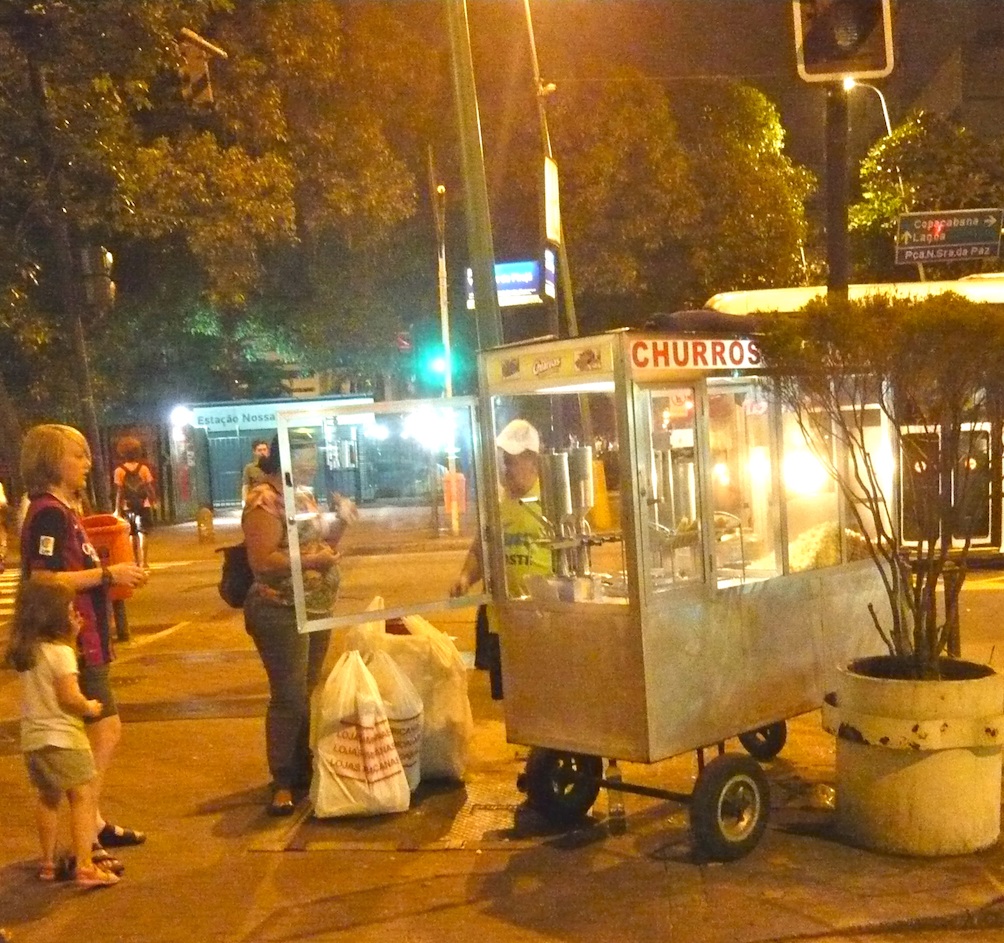
Before you book a hotel, check out where it is and what your travel guide says about the area: it’s not much different from any other big city around where you live: many places are considered ‘safe’ in the daytime but not at night, or vice-versa. Listen to the locals and follow your instincts.
2 Visiting the obvious: Christ the Redeemer Statue and Sugarloaf Mountain
There’s no way you can get around visiting those two places, unless they’re constantly covered in low clouds and you’re really good at photoshopping yourself into a stock photo. Many operators offer guided tours but I don’t think that’s necessary as they’re easy to get to and, well, on the whole quite self-explanatory. For your convenience, simply wave down a yellow taxi and either say ‘Corcovado’ (Jesus statue) or ‘Pão de Açúcar’ (yep, Sugarloaf), followed by a friendly ‘Obrigada’ (please). The drivers of the yellow taxis are incredibly friendly, have a taximeter to show you the price and will know exactly what you are looking for. Generally get there early to avoid queuing.
For Christ the Redeemer, check the weather and visibility before you head out: you should be able to see it clearly from most streets (ask for directions if necessary) as if you can’t see it from the ground, chances are that you can’t see the ground from up there, either. And that’s, basically, the whole point of it: the view across the bay, the Sugarloaf mountain and the whole city is really as breathtaking as the countless pictures of it you’ve already seen make it out to be. Honestly!
And if you don’t like stunning views you might still enjoy the ride on the furnicular railway, which takes you through tropical forests and past favelas right up to the top, only 200 steps away from the summit (escalators and lifts available if you don’t fancy the hike).
Similar rules apply to the Sugarloaf: make sure it is a clear day, get there early to avoid queues, and enjoy the amazing views. Here two cable cars get you to the summit, providing you with amazing views of the city and the bay. Needless to say you can also climb the whole thing, but don’t expect any details from me.
3 Visiting the less obvious: a Rainforest Hike and Niteroi
Our highlight, or, rather, the highlight of all the highlights, was a hike through Rio’s very own city rainforest, Tijuca National Park. Not only is it immense, it is also incredibly beautiful: after having more or less deforested the whole area in the previous century, the Brazilian king decided to make up for this environmental disaster be reforesting 12.5 square miles. The result is a stunning miniature rainforest, complete with sloths, toucans and dangerous snakes and spiders, right in the city centre. Needless to say, us Gringos weren’t going to explore that on our own but instead turned to local guides Rionatural, who organise walking and hiking tours around Rio.
As we were planning to explore the forest with a 3-year-old, we sent off an email asking for advice: we did want to do some walking, but not necessarily hiking. No worries, was the response, with some suggestions as to which tours would work best and the assurance that they could be adapted if necessary. We booked a 5-hour tour of the park and the wonderful Gui picked us up from our hotel and drove us straight to one of the most beautiful viewpoints of the park, the Chinese Pavillion:
Past waterfalls we drove higher and higher through the lush forest and across older parts of Rio, until we reached our destination and the start of our planned hike up Piedra Bonita, the ‘beautiful stone’. At just under a mile and relatively steep, this seemed a rather ambitious undertaking with a small child, but the beautiful rainforest scenery and the hands-on support of Gui, who even carried her for a part of the walk!, helped us get to the top, where we were meant to be compensated with another round of stunning views of the city (see ‘Christ the Redeemer’).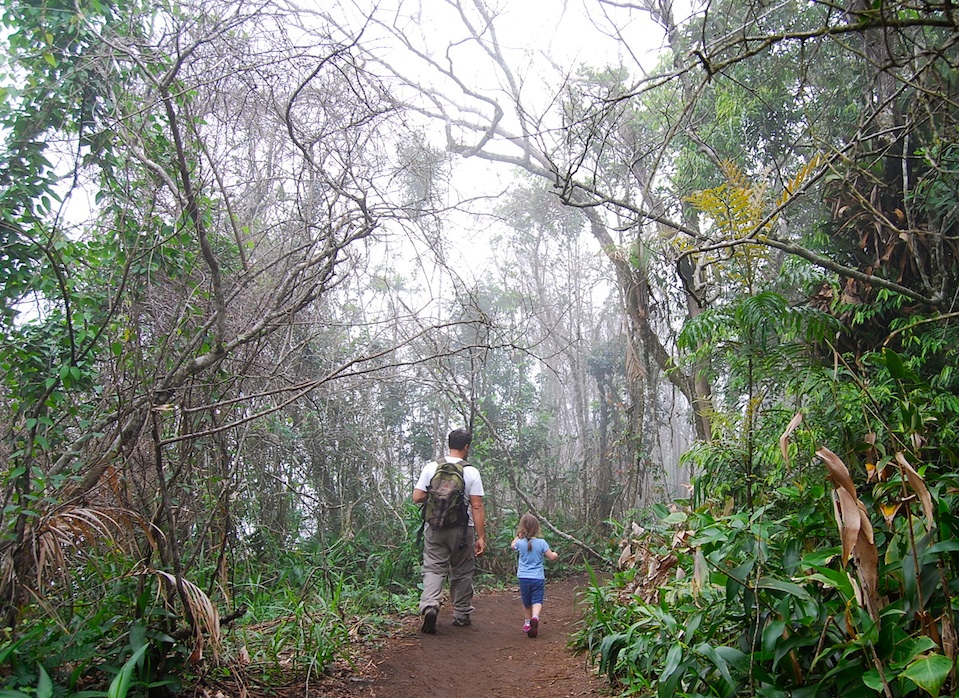
Instead we had rather atmospheric mists rising from the forest, which made us feel like extras on the set of Indiana Jones or even Jurassic Park. The hike down went much smoother, no carrying of small children necessary, and I can only recommend the tour – and our tour guide! – to anyone visiting the city.
A second, less obvious day trip is to Niterói, a rather nondescript little town on the other side of the Bay, right opposite Sugarloaf Mountain. You can take a bus there right across that bridge from Fast&Furious 5, or a ferry from the city centre, which takes you to Niterói in under 20 minutes. 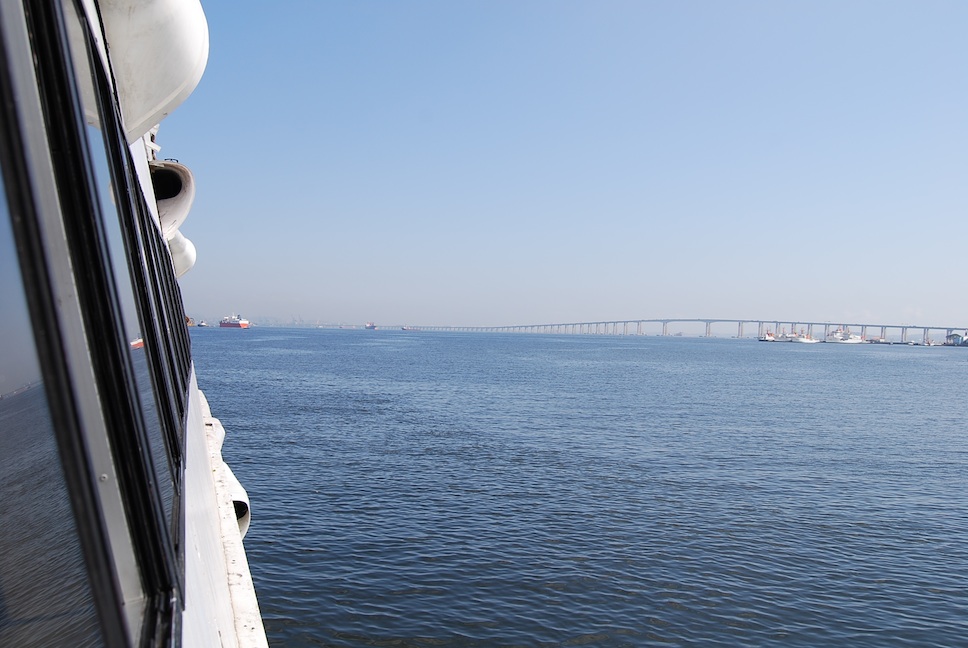 From the ferry terminal, take a taxi or a bus to Niterói’s most obvious draw, the impressive Museum for Contemporary Art built by the late Oscar Niemeyer, one of Brazil’s most famous architects:
From there you can get another amazing view of the city and the bay, so, again, make sure you get a clear day to do this! Another tip is to check the museum website before going to ensure you don’t come in the only week it is closed …
While you’re in Niteroí, make sure to check out the beautiful little fish market – it’s a 10 minute walk from the ferry terminal and well worth a visit: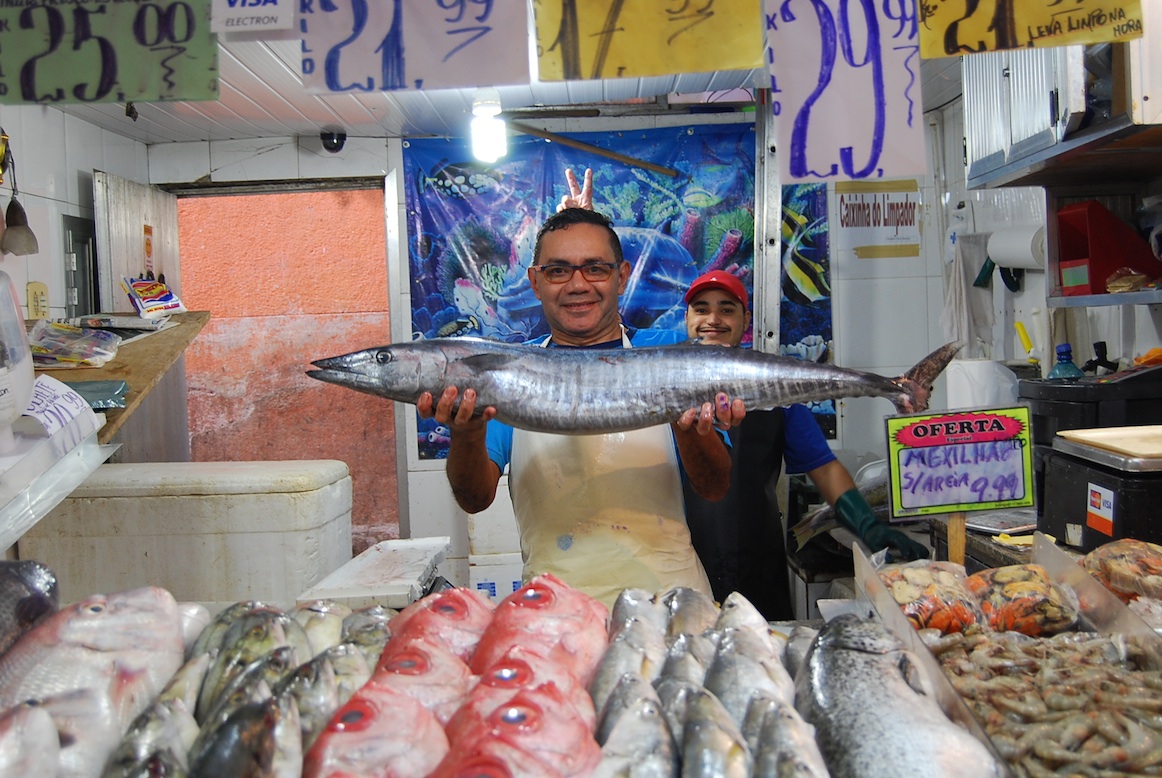
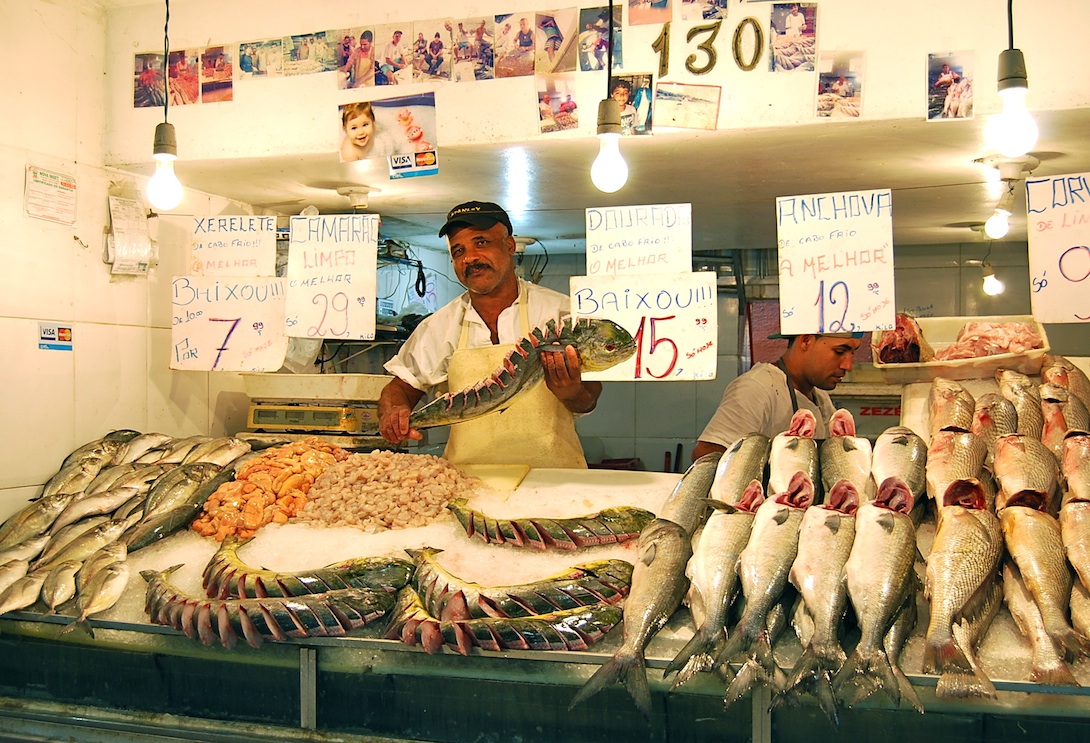 The fresh fish on display is amazing, and upstairs (stairs are at the end of the market on the right, no signs to guide you) are a couple of small restaurants that make the perfect place to have some local fish for lunch. Which brings me to my favourite point: food.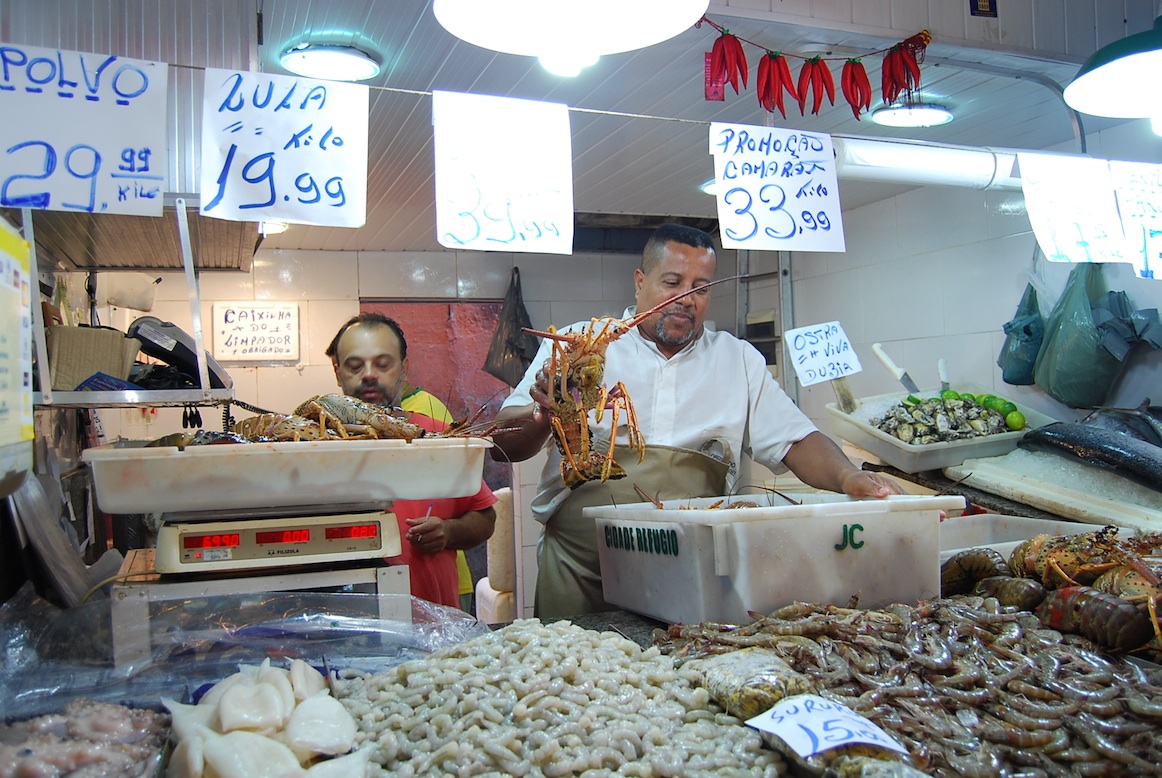
4 Eating out in Rio
Make sure to sample the wide range of freshly-pressed juices – from oranges via watermelons to papaya nothing is safe from those juicers, and rightly so. Throw caution in the wind (take some medication for diarrhoea along, just in case) and make the most of it! Sometimes you don’t even have to juice it, such as with the green coconuts they open for you at the little beach bars – simply add a straw and enjoy. We tried everything and had no issues whatsoever, if you know what I mean.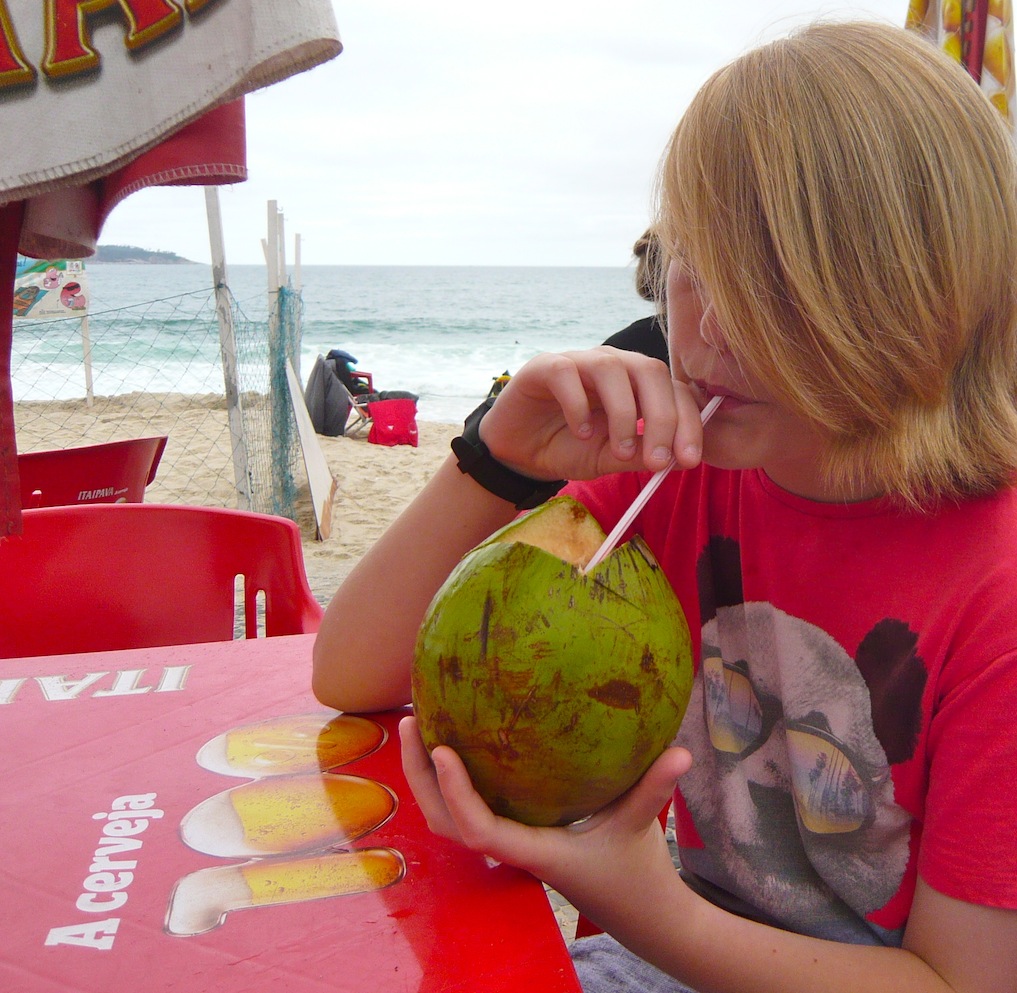
As for food, no trip to Brazil is complete without a visit to a rodízio, unless you’re vegetarian, obviously. In these restaurants you pay a fixed sum and are issued with a little card that says, basically, “Yes I can still fit in more’ in green writing on one side, and ‘No, I am absolutely stuffed but, well, if you insist’ in red on the other. Staff come round with large lumps of meat on skewers and will be cutting off slices of it right onto your plate until you turn the little card to red. Then they’ll simply wave all that tender, perfectly grilled meat in front of your nose and you’ll cave in. 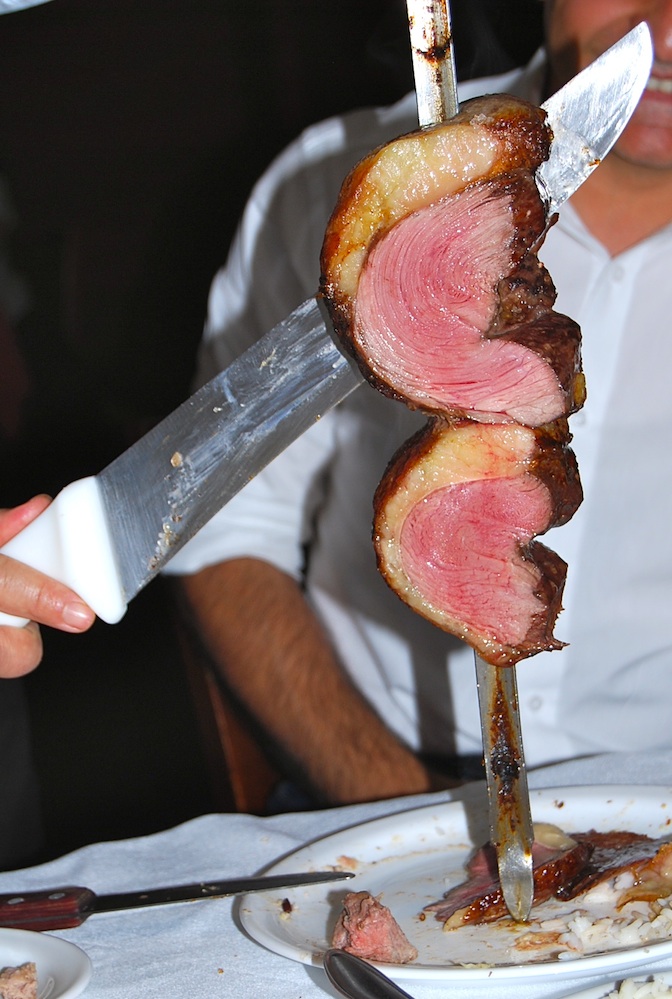 We spent a wonderful evening at Carretão, a traditional rodizio in Ipanema. Apart from these perfectly grilled meats, they also had the most amazing side salads, which help you digest but unfortunately prevent you from eating even more meat. I can only recommend Carretão – the teenager even tried the chicken hearts – ate two of them! – despite knowing what he was eating. That’s some recommendation!
5 Communicating, or: Getting By in Portañol
Finally the language issue. Brazilians working directly in the tourist industry, such as hotel staff and tour operators such as Rionatural, all speak excellent English, as do people living and working in the wealthier areas. Most other people, such as taxi drivers, don’t, but are trying their best to help you. If you speak some Spanish you can always resort to the most incredible language I have ever encountered, Portañol.
Have you ever cringed at tourists talking to foreigners very loudly and slowly, preferably with a pretend-foreign accent? Embarrassing, you might think, even racist. But think again: if actually works! Just not with English.
In Latin America nobody thinks twice about speaking Spanish very slowly, softening every consonant to a drawl and adding random ‘sh’ sounds when speaking to people from Brazil, who will answer in slow Portuguese, adding random croaky sounds and rolling r’s without reason. It’s called ‘Portañol’ and allows speakers of ‘Español’ and ‘Portugues’ to communicate effortlessly. Trust me – my Spanish isn’t that great but even I was able to hold down long conversations with taxi drivers and others using Portañol, so much so that I am seriously considering adding it to my CV.
Finally the postcard issue. My excuse is – and I stand by it! – that my children’s insistence on buying neon-coloured Jesuses or cuddly sloths prevented me – and, ultimately, them – from entering any postcard-selling establishment, making this the first holiday ever we not only forgot to write and sent the darn cards, but to even buy them altogether. But with the help of all those other cards we never wrote, with the addition of an iconic landmark here or there, nobody will be the wiser …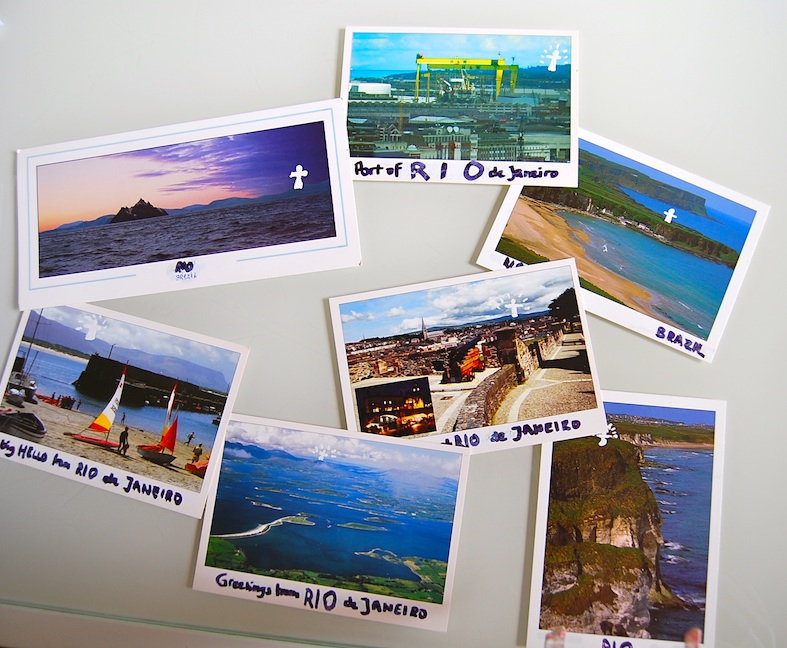
After that week, we had to be rolled onto our plane to Santiago de Chile, a mere 5 hours’ away and yet worlds apart. You see in Chile, when they say it’s Winter, it really is Winter …


 Ginger&Bread
Lovely post Ginger, I enjoyed seeing Rio through your eyes – what beautiful photos of the rainforest. You’re very brave traipsing along with a young child in tow? Good for you! The views are stunning aren’t they? We went in March 2014 and I started blogging in April 2014, guess what my first post was all about? Brazil, yes you guessed it. What a great opportunity to have accompanied your partner on a business trip. I can’t wait to hear about your Chile experiences. My good friend here is from Chile, and she promises to do a “girls trip” to Chile in the next couple of years, perhaps we should take her up on it. Anyway, great post, wonderful stories, stunning photos and glad you accomplished some of your dreams. 🙂
LikeLike
Thanks, Loretta – it’s the closest I have come to a safari (well, there were two encounters with massive spiders today, but I don’t think that counts …) Rio was amazing, in many ways, but Chile was even better (although not quite as scenic …) Thanks for the comments about the pictures – the better ones were taken by my son …
LikeLike
I’ve always wanted to go to Rio, looks beautiful. What a fantastic trip you had, there has to be so much to see and do and you covered a lot of territory, Great post and travelogue.
LikeLike
Ha ha, we don’t get out much, so I have to milk it if we do 😉 It is a great place and well worth a visit, but personally I wouldn’t go in the summer – the heat’s not really my thing …
LikeLike
I enjoyed your photos of Rio very much. I haven’t been there in years, but it looks very familiar nonetheless. I look forward to your post(s) on Chile which is where I spent a few years of my childhood. I know Santiago and some of the coastal cities have changed a lot since then.
LikeLike
THank you, Hilda! It was my first time in Chile, but even I could tell it’s a country on the move. Literally. The last earthquake had some devastating effects that you can’t gloss over so quickly.
LikeLike
Thanks for sharing your photos, Ginger! 🙂
LikeLike
You’re welcome, Linda – it’s not often that we get to go somewhere quite so exotic!
LikeLiked by 1 person
Beautiful photos and a fun trip with your family. I always bought post cards for my scrapbook and not to send, unless we were gone for at least 2 weeks!
LikeLiked by 1 person
Ours always ended up in an old shoe-box!
LikeLike
Oh you lucky, lucky family! And Obrigado for the fantastic post. It’s good to know that Big Man and I will be able to communicate fairly effectively if we ever get there 😉
LikeLike
De nada – Big Man will have to use ‘s’ first (as a proper Andalusian he’s probably dropping them) and then replace them with ‘sh’ and all will be fine 😉
LikeLiked by 1 person
Thank you for sharing your tips and pics and travels 🙂 it’s not somewhere I’ve ever been so great to see through your eyes xx
LikeLike
It’s not somewhere that was on my bucket list, either, so I was quite surprised how much we all liked it!
LikeLike
Wow, now I want to go to Rio!! Actually have always wanted to go, but now even more. Beautiful place!
LikeLike
To be honest, the first week back in school you’d rather be anywhere, wouldn’t you! 😉 No, seriously, it’s worth a visit for the churros alone! Happy FF 🙂
LikeLike