After the excesses of the last weeks (cake! bun! more cake!) I thought I’d give you a break and preach sourdough instead. Especially as it is Real Bread Week, an annual celebration of real bread run by the charity Sustain. Their aim is to get people to take their bread more seriously, either by becoming a more discerning shopper or by learning to make their own bread. I’m all for it, as you could have guessed – especially the bit where you get to make your own bread!
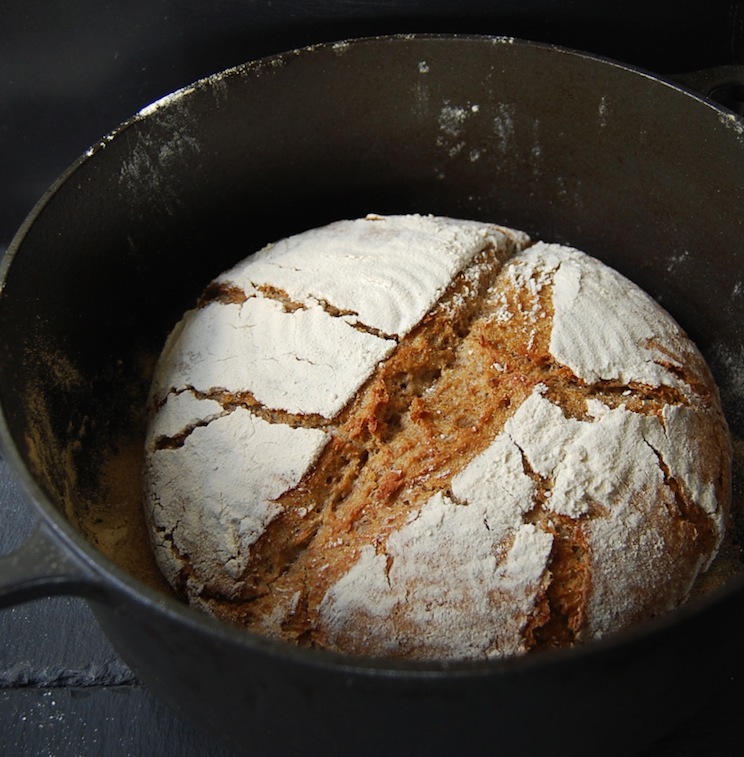
I’ve talked you through making your own starter, using wheat, or, for the more daring baker, using rye and wild yeast. From then on it’s up to you whether to stick to my easy formula or try out something more challenging, such as baguettes. Personally, after all those cakes and dumplings I felt like a break from wheat, which explains my use of rye flour and oats for this loaf.
If you have never made bread before or feel a bit worried about sourdough, let me assure you it is incredibly easy. Check out my no-nonsense sourdough bread.Once you got the idea, varying your flour types is easy: sticking with my formula you will need to adjust the amount of water to create a wet but firm dough. Because I used oats, the following recipe needed quite a lot of water – simply keep adding small amounts until you get it right.
Whether you use a wheat-based levain or a rye starter is really up to you (I used a mix of the two, simply because I didn’t have enough). I didn’t leave much time for the bread to rise, leaving it to rise for around 2 hours in a banneton until it had doubled in size. To get a prettier, airier crumb you might want to rest it overnight in the fridge, ready to bake the bread for breakfast.
Either way, the result is a light and nutty-flavoured loaf, and one that – hopefully – will get you experimenting!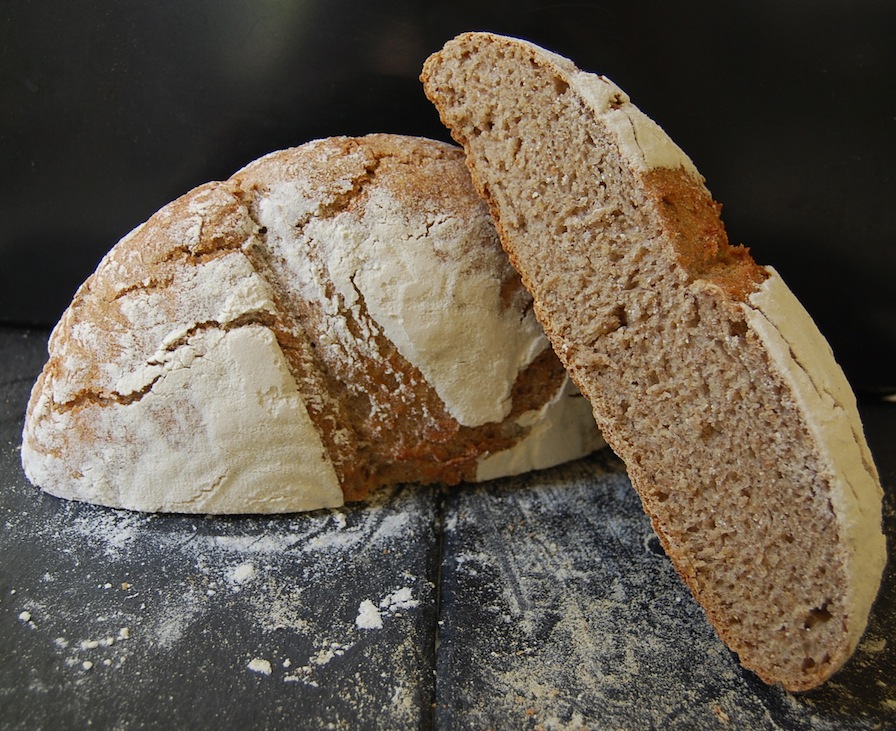
Wholewheat, Rye and Oat Bread (makes 1 loaf)
- 1 cup strong white bread flour
- 1 cup wholewheat bread flour
- 1 cup rye flour
- 1 cup coarse porridge oats
- 1 cup levain
- 1 1/2 cup lukewarm water
- 1 tsp dried active yeast
- 1/2 tsp sugar
- 1 tsp salt
Dilute the yeast in 1 cup of water; after a few minutes it will start bubbling. Knead in all the remaining ingredients until it all comes nicely together, adding the remaining 1/2 cup of water if necessary: you want the dough to be fairly sticky and wet, but not runny.
Cover the ball and let it rest for about 2-3 hours or until it has roughly doubled in size. This is called the first ‘proofing’.
When your dough is ready, knock it back by kneading it a little, then form it into any shape you fancy. Cover and rest for an hour or two, until it has roughly doubled in size again. That’s your second proofing, in case you were wondering. If you want to create a lighter texture and a more pronounced sourdough taste, leave the bread to rest in the fridge overnight: this will get the yeasts working, to great effect.
Heat the oven to 250C / 480F. For best results, bake your bread in a large cast-iron casserole pot, like a Dutch oven, which you heat up inside the oven, as you would your baking stone or sheet: they need to be well hot before you place your bread in or on it! Once they’re all piping hot, remove the pot or sheet and place your bread on it. Now ‘score’ it, which means you cut along the bread where you would like it to expand: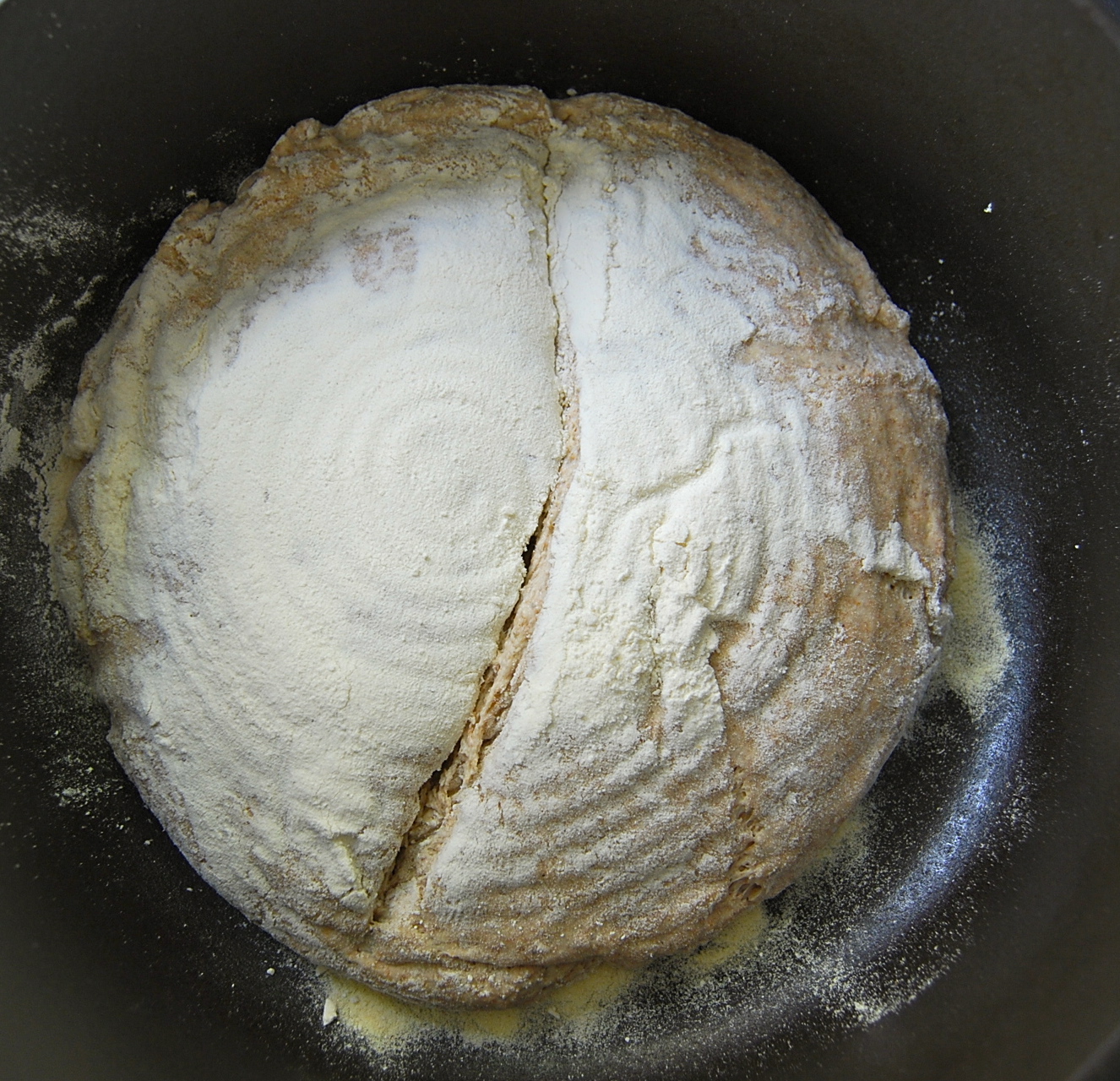
Use a sharp serrated knife for it and cut at an angle, as if lifting a flap: this will help the bread opening in a nice flap. I went for a very basic shape and cut, but check out my more arty efforts here or here.
Close the lid (if using the pot) and place the bread in the oven. If you’re using a stone or a baking sheet, throw 1/2 cup of water onto the sides of the oven before closing the door. Reduce the heat to 230C / 440F and bake the bread for 45-50 minutes. It is done when the bottom of the bread sounds hollow when you tap it.
Remove the bread from the oven to cool – remove the lid of your pot at this stage, otherwise it’ll get all soggy. 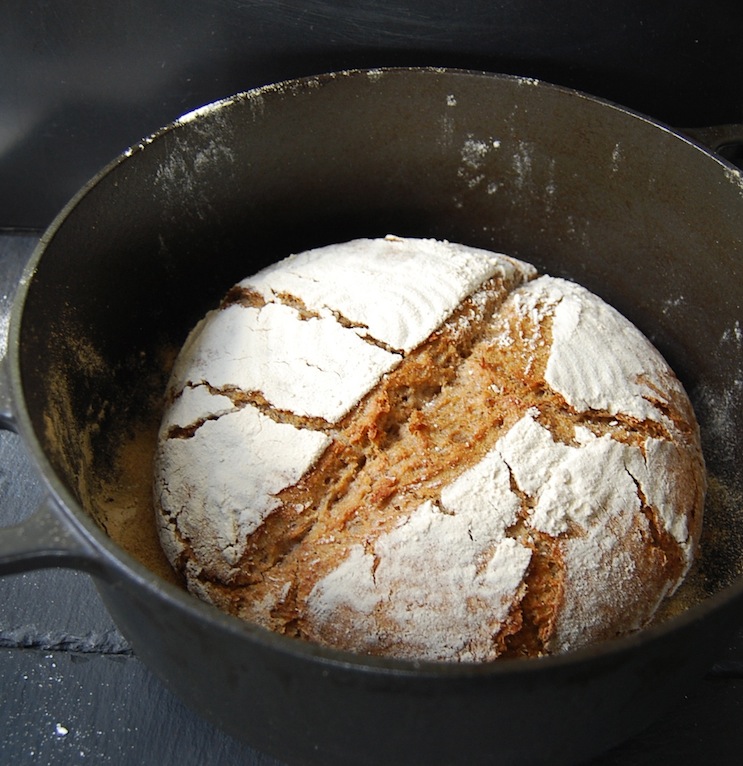
If you liked it, why not add buckwheat or spelt the next time? Or use granary flour? The possibilities are endless…
Happy Real Bread Week!


 Ginger&Bread
Your bread sounds wonderful Ginger – I have backed off a little with baking bread right now, you know the weather is getting warmer. However, I have printed it and hope to make it when we get cooler weather. Thanks for a new and “healthy” recipe 🙂
LikeLike
I couldn’t live without bread, hot or cold! I hope you enjoy it, it’s a lovely combination of flavours.
LikeLike
You have a real gift for baking bread Ginger! This is a healthy but still gorgeous loaf.
LikeLike
I’m working in it 😉 both the bread and the healthy food, that is!
LikeLike
I love the rustic look to this! What I would give to eat this dipped in a bowl of steaming soup right now!
LikeLike
That’s a great idea! We’ll probably have it with goulash on Friday! The nice thing about wholewheat and sourdough bread is that they keep fresh for so long.
LikeLiked by 1 person
Sounds heavenly!
LikeLike
I was thinking how delicious this would be as a grilled cheese with gouda! This is such a lovely loaf!
LikeLike
Nice one! Haven’t grilled cheese in a while, so thanks for reminding me!
LikeLiked by 1 person
Love love love that bread Ginger! Oats add a nice texture and flavor to any bread… Beautiful and rustic.
LikeLike
I never really used oats for anything other than porridge or muesli, but my friend Edie convinced me it worked well with rice, and next thing I started appreciating it in a whole lot of things!
LikeLiked by 1 person
And happy real bread week to you my friend. That is a cracker of a loaf! Jesus would be proud 👌
LikeLike
Depending on his mood on that day, he might point out we’re still 29 loaves short 😉
LikeLiked by 1 person
Beautiful bread!!!
LikeLike
Thank you, Elaine! I’m trying 😉
LikeLiked by 1 person
And succeeding!!!
LikeLike
I am not sure I could live without bread. I miss the heavy rugbrod of Denmark, but we can get nice bread down here too! 😀
LikeLike
My brother still talks of the breakfasts he had in Denmark – I must check that one out!
LikeLike
That is an excpetionally beautiful looking loaf!
LikeLike
Thanks, Chica! I hope you are enjoying Spain – at this time of the year it is just too beautiful!
LikeLiked by 1 person
How are you? I just heard about record temperatures in Valencia this week, I hope you are getting your fair share of this!
LikeLike
What a gorgeous bread!!
LikeLike
Thank you! It’s such an easy bread to pull off though 🙂
LikeLike