I love Mexico: the Cookbook‘s matter-of-fact style: each recipe comes with the minimum or decorum: a list of ingredients, the method, sometimes a picture, that’s it. For someone familiar with Mexican culture and cuisine, that’s all they need. But sometimes a headnote would not go amiss, as in the case of her Rosca de Reyes, or ‘King’s Ring’, the Mexican sweet bread traditionally served at Epiphany. Amongst the list of ingredients and the separate steps, Carrillo has missed the most important ingredient: a little plastic baby Jesus.
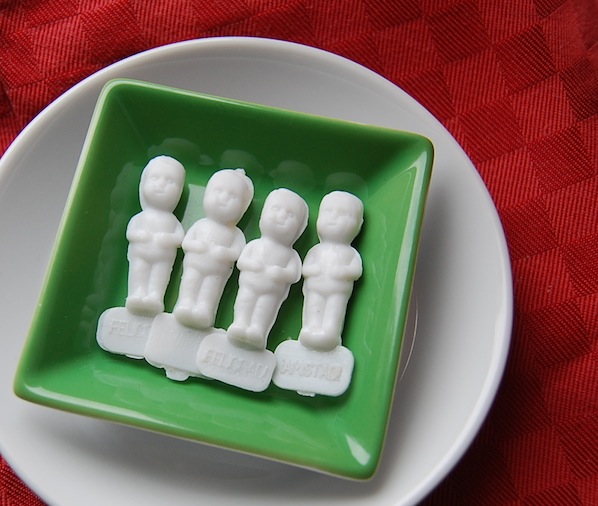
Little figurines representing Baby Jesus, produced specifically for the Rosca de Reyes
In Mexico, as in many Latin countries, Christmas presents are not delivered by Santa or the Christkind, as they are in many English- or German-speaking households.
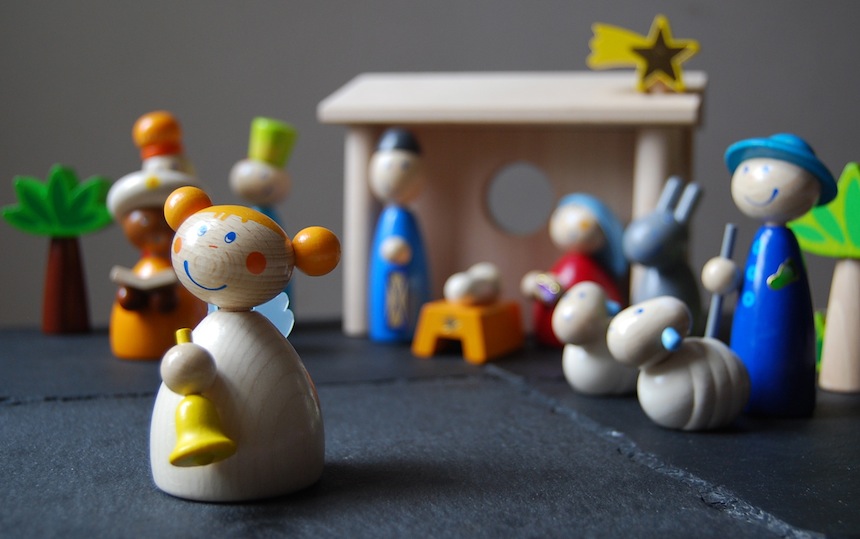
The Christkind announcing the birth of Jesus and thus the beginning of the German Christmas
Instead, the gifts are delivered by the three kings, who arrive on January 6, bearing gifts to present to the new-born King. And if baby Jesus could wait that long for his birthday presents, so can the children all over the Spanish-speaking world.
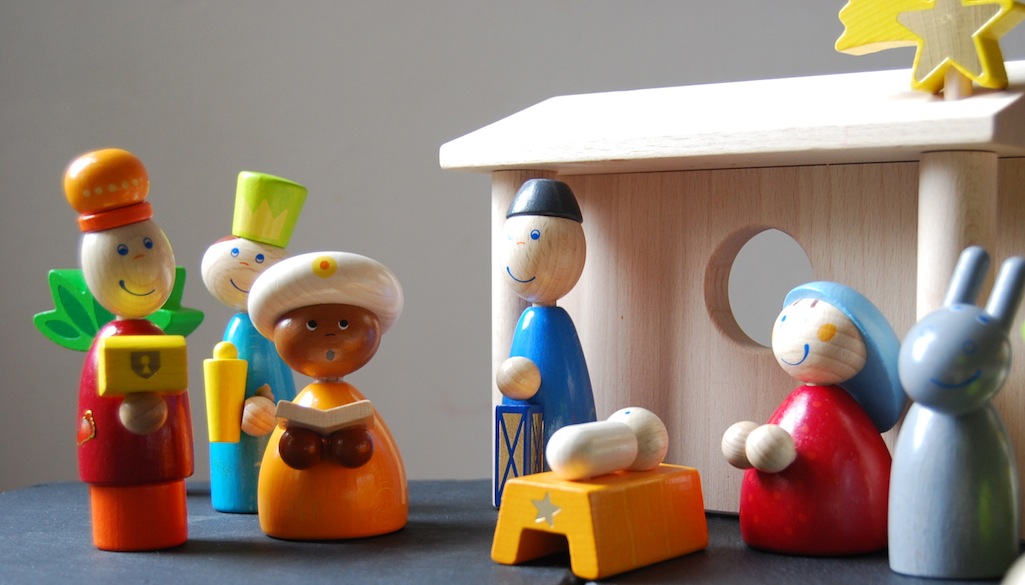
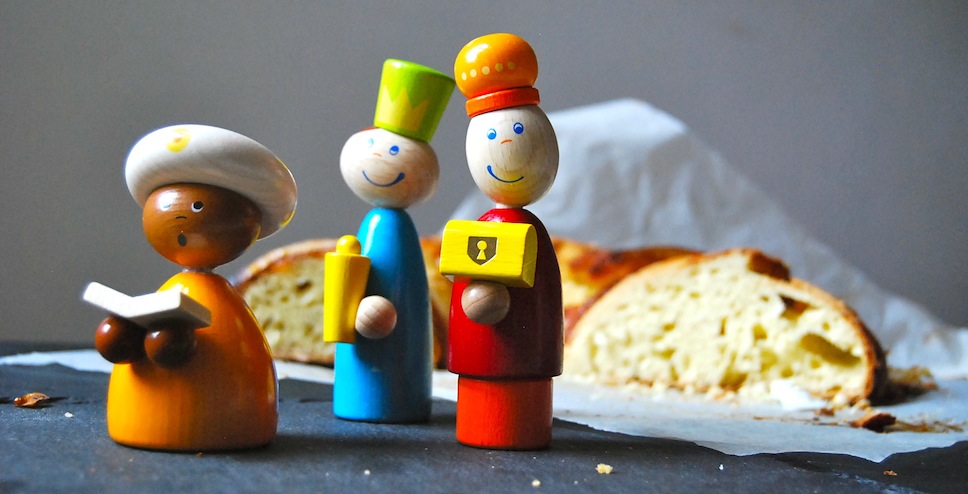
The three kings, bearing gifts for the new-born Jesus (albeit arriving almost two weeks late)
To celebrate this event, many countries share the tradition of hiding a little figure within a wreath-shaped cake, be it in the French gallette or gâteau des rois, the Spanish roscón de reyes or the Latin-American rosca de reyes. Whoever finds the little trinket is crowned ‘king for the day’, which comes with added responsibilities: in France the finder will have to provide the following year’s cake, whereas in Mexico they’ll have to provide the tamales and atole for the next party, Candlemas, on February 2nd.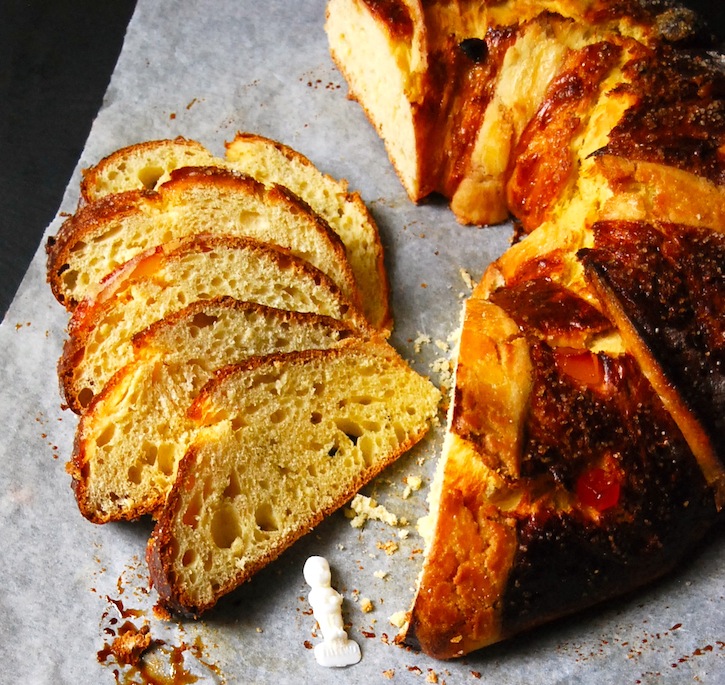
The Rosca really is a sweet bread, prepared over two days and decorated with crystallised fruit that represent the jewels in the king’s crown. Still working my way through Carrillo’s cookbook, I had to adapt her recipe slightly: for a start, Mexican family gatherings are much bigger affairs than our European ones, so halving her recipe is a must; the lovely decorations, on the other hand, posed their own problems in form of having to glacée my own orange peels and figs; Carrillo’s decorative dough strips contain so much salt that I replaced them with the kind of mix used for the crosses on hot cross buns. As for the little figurines I was just very grateful as a Mexican friend dropped them round in time for preparing the rosca.
The finished result, albeit not as pretty as the one in the book, has the most amazing texture, thanks to the rather wet dough. From a photographer’s perspective, adding flour will give you a tighter and more defined ‘crown’-shape, but at the cost of an incredibly light and open texture. I’ll leave that decision to you, guys.
Beware, though: whoever spots the baby Jesus figurine first will have to organise the next feast!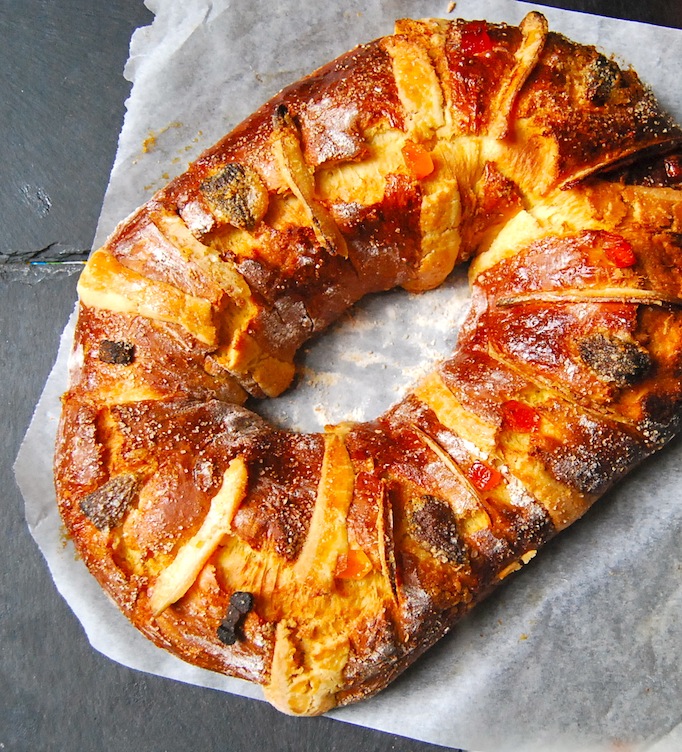
Rosca de Reyes (makes one generously-sized loaf)
For the starter:
- 1 tsp dried active yeast
- 4 tbs caster sugar
- 250g plain flour
- 2 large eggs
Mix the ingredients into a stiff, dryish dough (see picture – it doesn’t get any better than that), cover the bowl and let it rest for a couple of hours or overnight.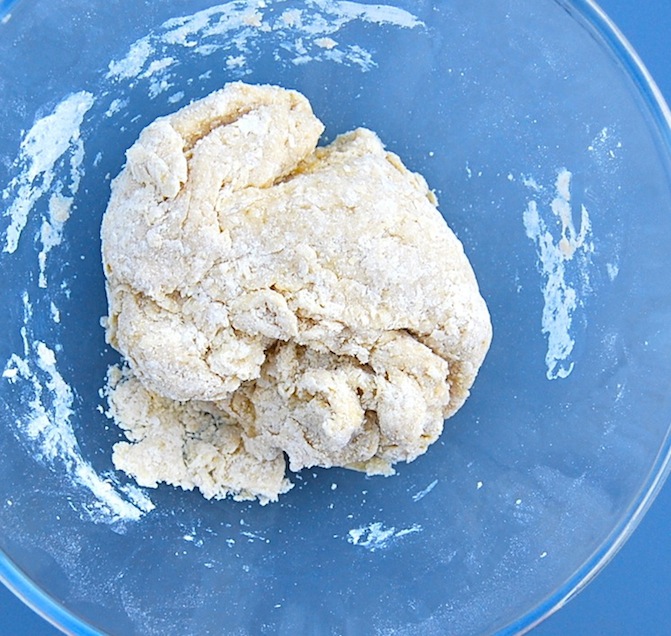
For the dough:
- pinch of salt
- 100g sugar
- 100g cold butter, diced
- 250g plain flour
- 4 eggs
- 1 tbs orange blossom water
- the freshly grated zest of 1/2 orang and 1/2 lemon
Mix all of the ingredients except for the butter with your starter and knead firmly for a good 10 minutes (if you have a Kitchen Aid or similar, that’s a good moment for your very own epiphany). Add the butter and knead for another 10 minutes or until you get a shiny and elastic dough. Pop it back into the bowl, cover it with cling film and rest it until it has doubled in size (this takes a good 4 hours).
Once the dough has doubled in size, form a roll that’s around 2in/5cm in diametre and shape it into a wreath. Place the wreath onto a baking sheet lined with baking parchment and cover it with a tea towel. Leave to rest for another hour.
For the candied fruit:
either use shop-bought candied orange peel, cherries and figs,
or make your own:
- the peel of 1/4 orange, cut into thin, long slices, 2 figs, quartered
- 100g sugar
- 100ml water
In a small saucepan, mix the sugar and water and bring the mix to boil, stirring it until all the sugar has dissolved. Add the fruit and keep boiling the syrup over a medium heat until the water has evaporated and the fruit look slightly transparent. Place them on a sheet of baking parchment and leave them to dry.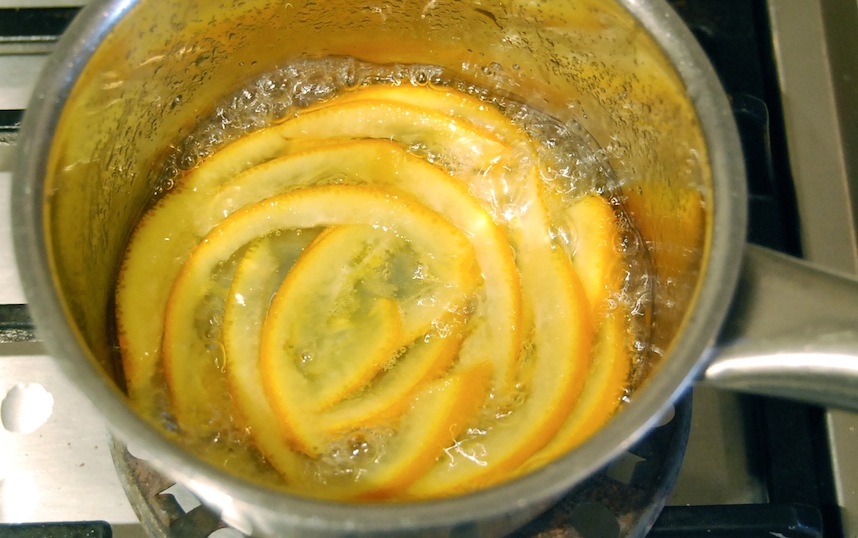
For the decoration:
- 200g flour
- some water
- 1 beaten egg
- sugar for dusting
Preheat the oven to 200C/400F. Mix the flour with enough water to make a very thick paste.
Glaze the wreath with the beaten egg and decorate with the strips of paste and the candied fruit. Sprinkle the sugar over the top and bake it for 25-30 minutes. You might have to cover it with some tinfoil after a while to prevent it from getting too dark.
Cool on a wire rack and hope you won’t be the one to find baby Jesus. Although, to make sure it’s not just me doing all the work (again!), I put in a whole handful of baby Jesuses, just to be sure.
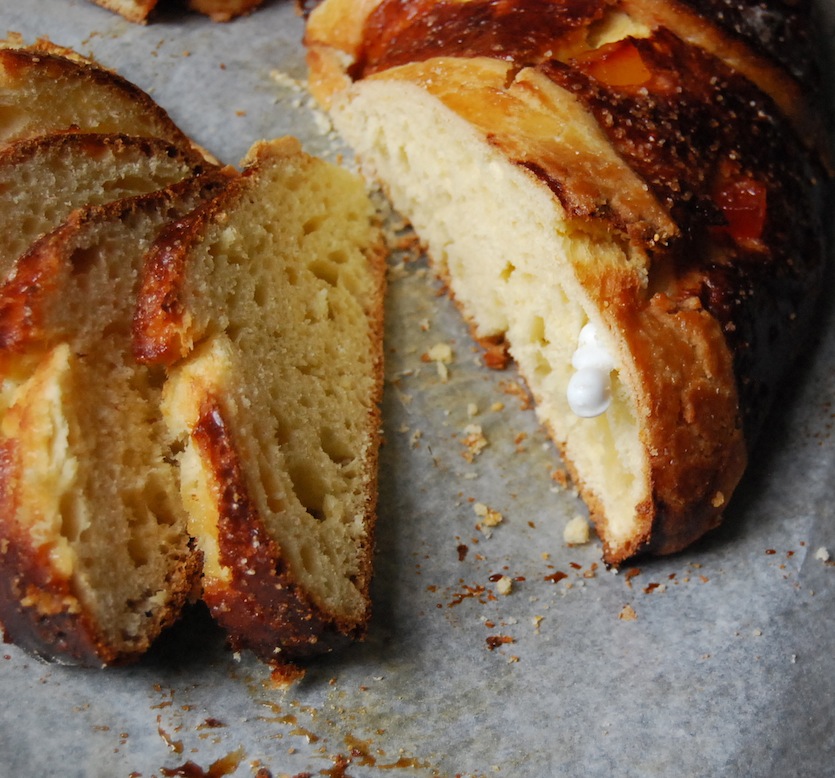
Happy Epiphany, everybody!


 Ginger&Bread
Oh what a cute post Ginger!!
Love it!
LikeLike
Thanks – that’s all my leftover Christmas cuteness used up 😉
LikeLiked by 1 person
Nice post! France is divided in two: in the North, we make a “galette”, which is basically two sheets of puff pastry stuffed with frangipane almond cream and a “trinket” (it doesn’t have to be a baby Jesus, it can be any small object you like, traditionally we used a dried bean); and in the South, they make a very similar brioche to this one! I had no idea the tradition travelled as far as Mexico!
LikeLike
I had heard about the bean, which is used in Spain as well, as far as I know. Or coins. But the little baby Jesuses (probably made in China) are just too adorable 😉
LikeLike
My mom once gave me a golden trinket in the shape of Victor Hugo’s bust; I prefer using a bean… eating cake in honor of the three kings in the Bible and ending up choking on Victor Hugo’s head is a bit strange to me… 😀
LikeLike
Yeah, so much less dignified than coughing up a dried bean ;-D
LikeLike
Latin and South America is split into two – most countries, I believe, follow the Spanish tradition of epiphany, whereas other countries, such as Chile, have adopted the US traditions, including Rudolph the red-nosed reindeer, free markets and coca cola with every meal 😉
LikeLike
The whole idea that the three kings bring the presents makes sense to me, they were supposedly the original present givers after all! Love the look of the bread too, complete with baby Jesus! Perfect! 🙂
LikeLike
The plastic doll is the deal clincher, I know 😉
LikeLiked by 1 person
I really like that a bit over tanned king 😜was reading today that nobody knows where these kings come from and for sure they were pagans!! Of course they were for God’s sake😂we have the galettes here in Lux- very unfair because it’s always my boyfriend getting the king! Yours looks amazing, I mean AMAZING!
LikeLike
But then he’ll have to make next year’s gallette? Or is he just king for the day, with no extra responsibilities?!
LikeLiked by 1 person
You’re kidding me right?? One day only of course😛
LikeLiked by 1 person
Felices Reyes – we celebrated today 🙂 Well done on a stunning Rosca (or Roscon as we call it in Spain).I made one a couple of years ago – a long process but well worth it.
LikeLike
Happy Reyes to you, too! I just love any yeasted sweet bread, whatever the occasion 😉 The orange blossom water adds something subtly tropical to this version, though!
LikeLike
That is just absolutely gorgeous!!! We’d like to eat the whole thing myself!!
LikeLike
eat the whole thing ourselves…..darn pre-mature submit! 🙂
LikeLike
I am a terribly sloppy editor myself – but when I am reading other people’s texts I have to restrain myself from using my red teacher pen 😉 Thanks for your lovely comment – it’s a wonderful cake to go a little overboard with the decorations, as long as you have tamed your yeast!
LikeLiked by 1 person
Going to an Epiphany or Three Kings party tonight at a Dutch friend’s where she has a traditional cake. This looks very good, especially with the candied fruit. How long does the fruit keep?
LikeLike
I have actually no idea! I’d say if you store the orange slices in a tin, separated with baking paper, it should last a week or two. The figs would need more work – I found instructions here on how to do it properly: http://therunawayspoon.com/blog/2009/09/candied-figs/ . Even they say they’ll only last for a week 😦
LikeLiked by 1 person
I passed your blog on to a German friend today. She was looking forward to checking it out!:)
LikeLiked by 1 person
Thank you! 🙂
LikeLike
How fabulous 😄
LikeLike
Thanks!!
LikeLike
what a fount of knowledge you are, dear! i really love reading about all these food traditions.
LikeLike
I am very lucky to have friends from all over the world (living in London this is not an achievement, I know) who are willing to share their foods and traditions with me! Wait for my next post if you like unusual foods and cultures!
LikeLike
I like that thing, whatever it is for… and I like the little wooden peeps too. Very nice Ginger!
LikeLike
Little people like wooden peeps! Although we had a couple of issues over the years; the first year Joseph absconded, clearly the paternity issues played heavily on his mind and all that, but, good on him, he pulled himself together and reappeared shortly after Christmas. This year baby Jesus got lost in the lego box – probably preferred that to incense and myrrh (and he didn’t get that he could use the gold to buy himself some lego). So, it’s all fun and games, really.
LikeLike
Brilliant 🙂
LikeLike
next year I’ll have a cake for this day too, today I can only look at your wunderful creation. I love those fluffy yeasty things…
LikeLike
The texture was spectacular! Do give it a try next year – email me your address and I’ll post one of my baby Jesuses ins Ländle!
LikeLike
oh great- I will do that! (hoping to remember where I will put that baby)
LikeLiked by 1 person
A belated Happy Three Kings Day, Ginger 🙂 the bread looks amazing!
My sister in law is Spanish and told me about making this bread and how difficult it can be!
LikeLike
Thank you, Elaine! Yeast can be temperamental, our first attempt went a little wrong in that the dough never rose … dodgy yeast was replaced with a new tin and voilá, habemus corona!
LikeLiked by 1 person
Excellent!!!!
LikeLike
Beautiful and unique presentation of Rosca de Reyes Ginger! Very nice photos as well! I’ve noticed within the last 10 years that our local bakeries and supermarkets now offer it. Maybe it’s from our changing demographics. My friends and acquaintances from Caribbean countries like Puerto Rico and the Dominican Republic all celebrate or acknowledge “El Dia De Los Tres Reyes Magos”. My Mexican buddies don’t hold as much importance for it. I think it depends where in Mexico you are from. I don’t remember seeing it celebrated on the south Texas border where we grew up.
You are quite a baker Ginger!
LikeLike
I only found out through my friend who is from Mexico City-it’s such an interesting country, I’ve been reading up on it and all those different foods, it’s mindblowing! You are very lucky to have your supermarkets catering for Mexican immigrants, the only place in London to get plantain leaves, apparently, is on the other side of the city! But I can get the most obscure Indian, Pakistani or Sri Lankan ingredients in the little corner shop across the road!
LikeLike
New Orleans does a king cake on Mardi Gras also known as Fat Tuesday (day before Ash Wednesday). Their official king cake with a baby in it starts on January 6th (epiphany). The finder is supposed to host the remainder of the celebrations. Typical Americans just use it as another reason to have a party. 🙂
LikeLike
I read about that – New Orleans seams such an interesting place with all those different cultural traditions!
LikeLiked by 1 person
Oh your pictures look amazing! I had this bread always when I went switzerland skiing x
LikeLike
Thank you!! Switzerland sounds great 😉
LikeLike
What a nice tradition. I had to laugh at your putting in more than one baby Jesus to spread out the responsibilities for your next feast. 🙂
LikeLike
They come in packs of 20 – surely that’s a sign! 😉
LikeLike
I love it! I can’t see any difference between la rosca de reyes made in Mexico and Ginger’s rosca, by the way we cut the rosca de reyes on the 6th of January and I got the baby Jesus so we will make the tamales for the 2nd of february. You are invited!
LikeLiked by 1 person
I am so relieved you found baby Jesus, too – I was terrified I’d have to make them! 😉 Date has been earmarked and we’ll all be over at yours!
LikeLike
I had to feature this over on the food round up that I wrote for BritMums this month… 🙂
LikeLike
Pingback: Review: Mexico: The Cookbook, by Margarita Carrillo Arronte | Ginger&Bread
Pingback: Flapjacks or Granola Bars – as close to healthy food as it gets, I suppose … | Ginger&Bread