Springerle are probably one of the most decorative biscuits: the delicately carved molds which are pressed onto the dough to leave the most intricate imprints have been around since the Middle Ages. Originally depicting Christian imagery, over the centuries they have evolved to mark a wide range of special occasions, such as christenings, weddings and any other celebration. Their subtle aniseed flavour, however, makes them the perfect Christmas biscuit. In southern Germany they are called Springerle, which in the Swabian dialect means ‘little jumpers: this refers to them ‘jumping’ up, leaving the much-desired little ‘foot’ at the bottom of the biscuit. 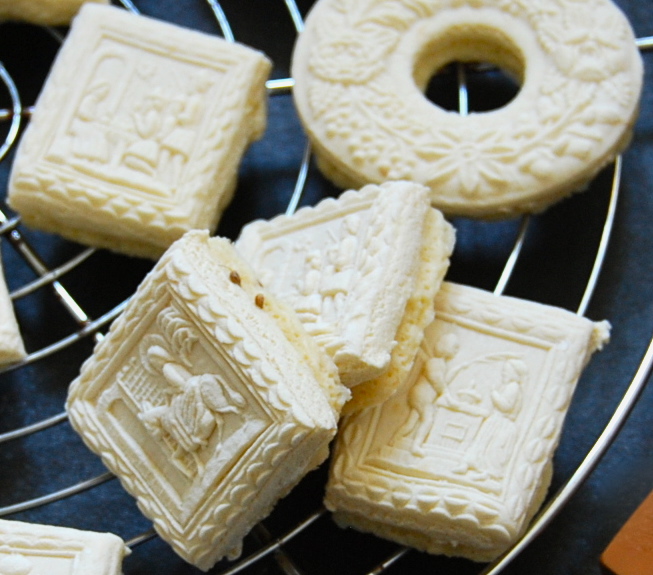 The dough is made of eggs, icing sugar and flour, and the subtle aniseed flavour comes from the whole anise seeds that are sprinkled over the baking tray and end up at the bottom of the biscuits. Our neighbour grows some very decorative anise plants in her garden, which we were allowed to harvest. Dried anise can be used as a herbal tea, which is supposed to aid digestion.
 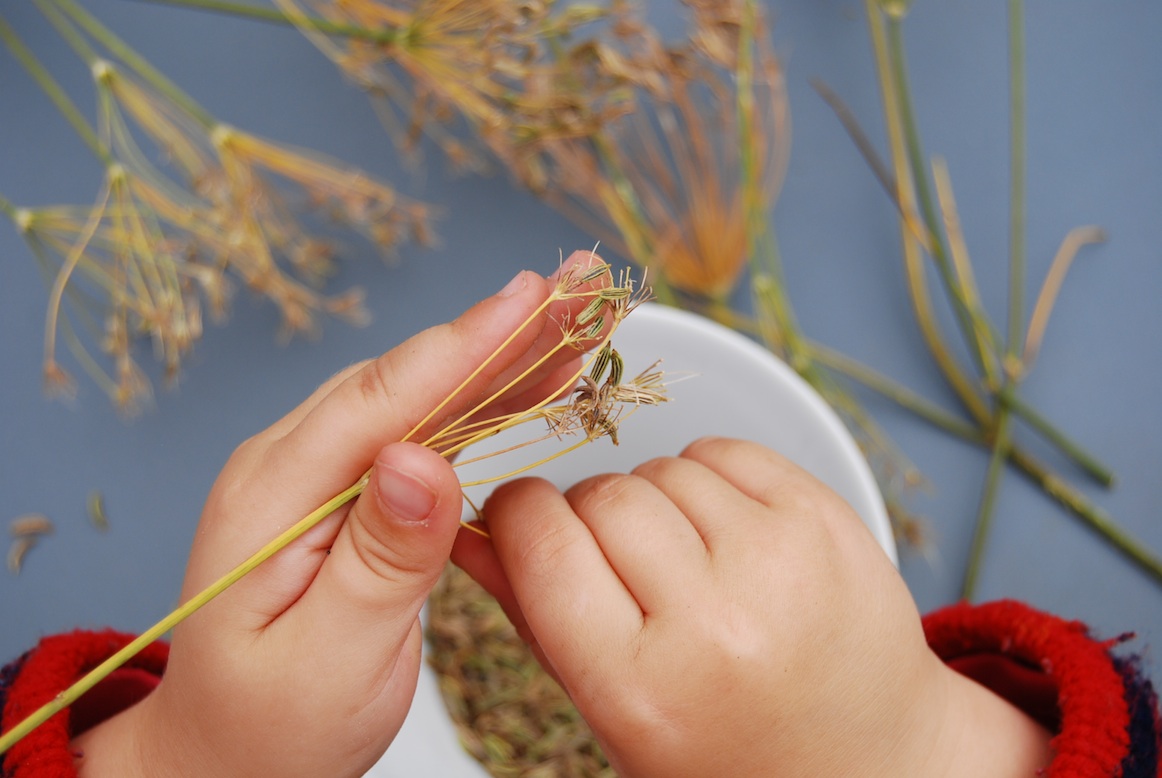 Although Springerle are relatively simple to make, the difficulty lies in getting hold of molds: traditional hand-carved ones are collector’s items and cost a fortune. The more economic solution are modern wooden molds (such as the little bird one and the angel) or replicas of historic molds (such as the wreath, St Nicholas and the large mold depicting Biblical Christmas scenes). The molds themselves are not cheap but quite pretty, which means they can double up as ornaments 🙂 The biscuits take time and patience: they need to dry overnight and only time will tell whether they rise and soften – the latter can take up to a week! If you succeed, however, you are left with an amazing piece of baking history, as well as an impressive little cookie. And if they’re too dry, why not use them to decorate your Christmas tree?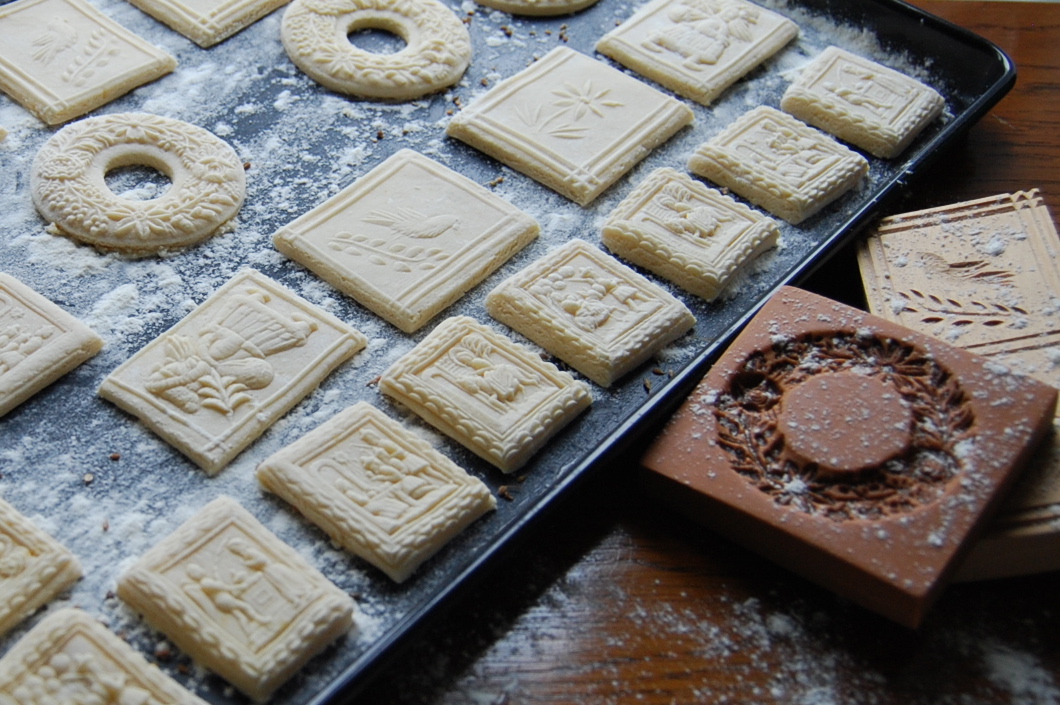
Springerle (makes 50)
- 500g icing sugar
- 4 eggs
- 500g plain flour
- a pinch of baking powder
- grated zest of one lemon
- unsalted butter and flour to grease the baking sheets
- 1 tsp anise (Pimpinella anisum)
- 1 tsp caster sugar
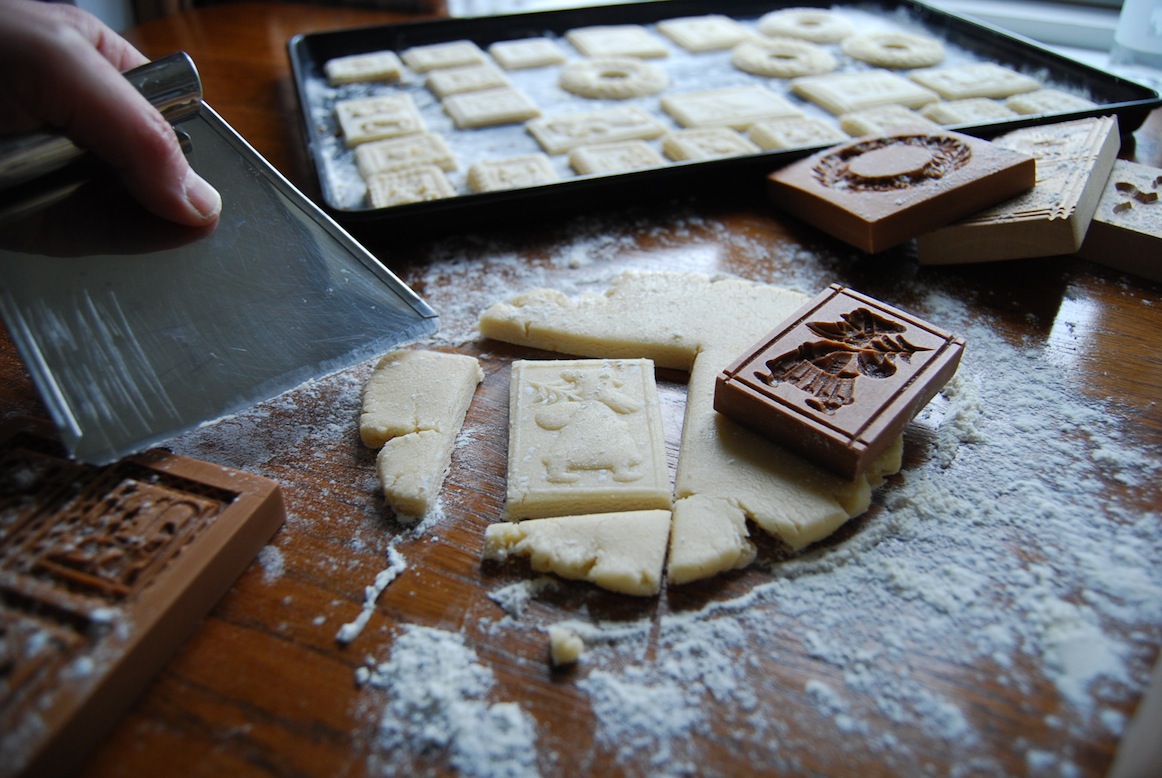
Grease two large baking sheets with butter and sprinkle with flour and the aniseed. Mix the icing sugar and eggs with an electric mixer at a high speed until the mix becomes light and creamy. Using a sieve, gradually add the flour and the pinch of baking powder (see picture below), and finally the lemon zest. Using your hands, knead it well until it is smooth.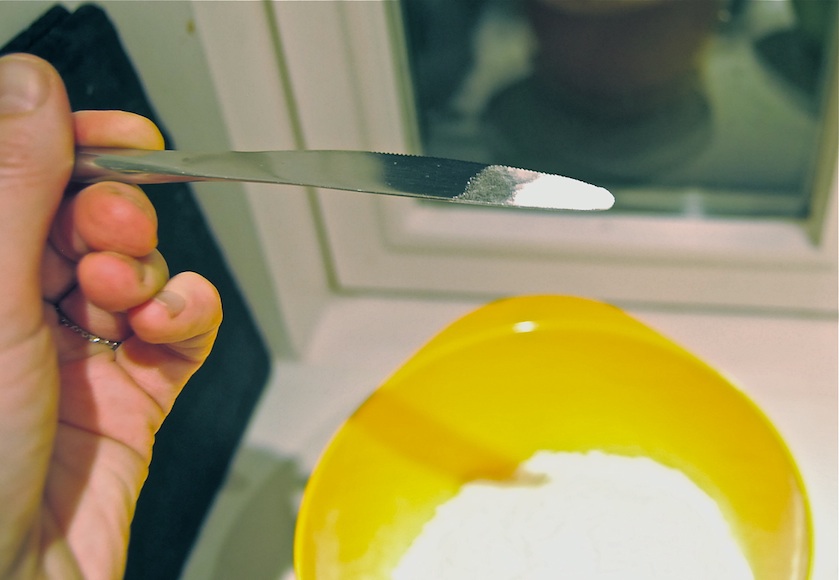 It is best to roll it out in small portions, to a thickness of around 1 cm or 1/2 inch. Sprinkle a little flour on top of the dough and press your mold gently and evenly into it. Remove carefully and cut, using a knife or a cookie cutter of the required shape. Place the biscuits on the tray – you don’t need to leave much space in between the biscuits as they will not expand.
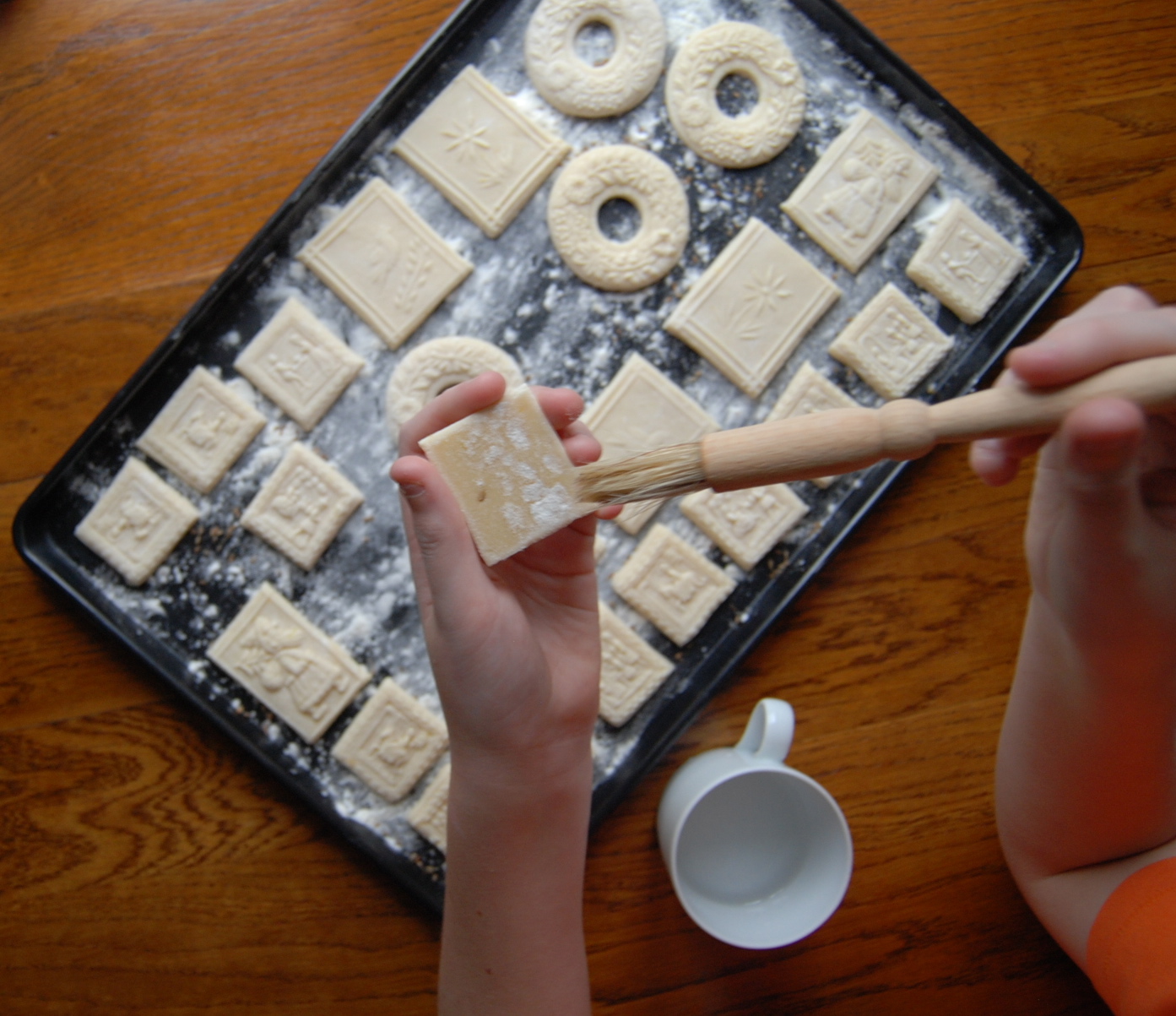
 Leave to dry for 24 hours in a coolish room. The next day, heat the oven to 120C. In a cup, mix 1 tsp caster sugar with 1 tsp water and paint the bottom of each of the biscuits with the sugar water – avoid spillage as it will ruin the surface of the biscuits. Place them back on the greased trays and remove any remaining flour from the patterned surface with a clean and dry brush.
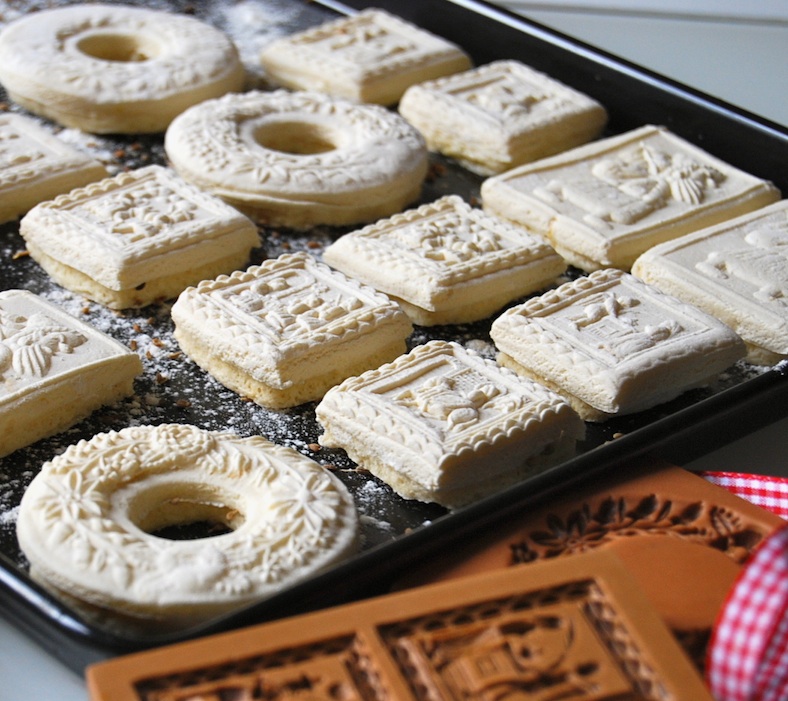
  Bake on the middle shelf for ca. 20 minutes – under no circumstances open the oven as it will prevent them from rising! After 20 minutes, cover the biscuits with baking parchment and bake them for an further 6 minutes. They need to remain white on top, but with little feet at the bottom. Leave to cool for a little before removing them from the oven tray. Store in tin – they might be quite hard at the start, but after a few days they will have softened. If not bite off a corner and blow into the biscuit to soften it. Believe me, that’s how we professionals do it 😉
Do you have any cakes or biscuits that require unusual tools? We have quite a few bits and bobs, such as the wooden board and spatula we use for the Spätzle noodles. But our collection of biscuit cutters and molds for Christmas is rather extensive, I admit…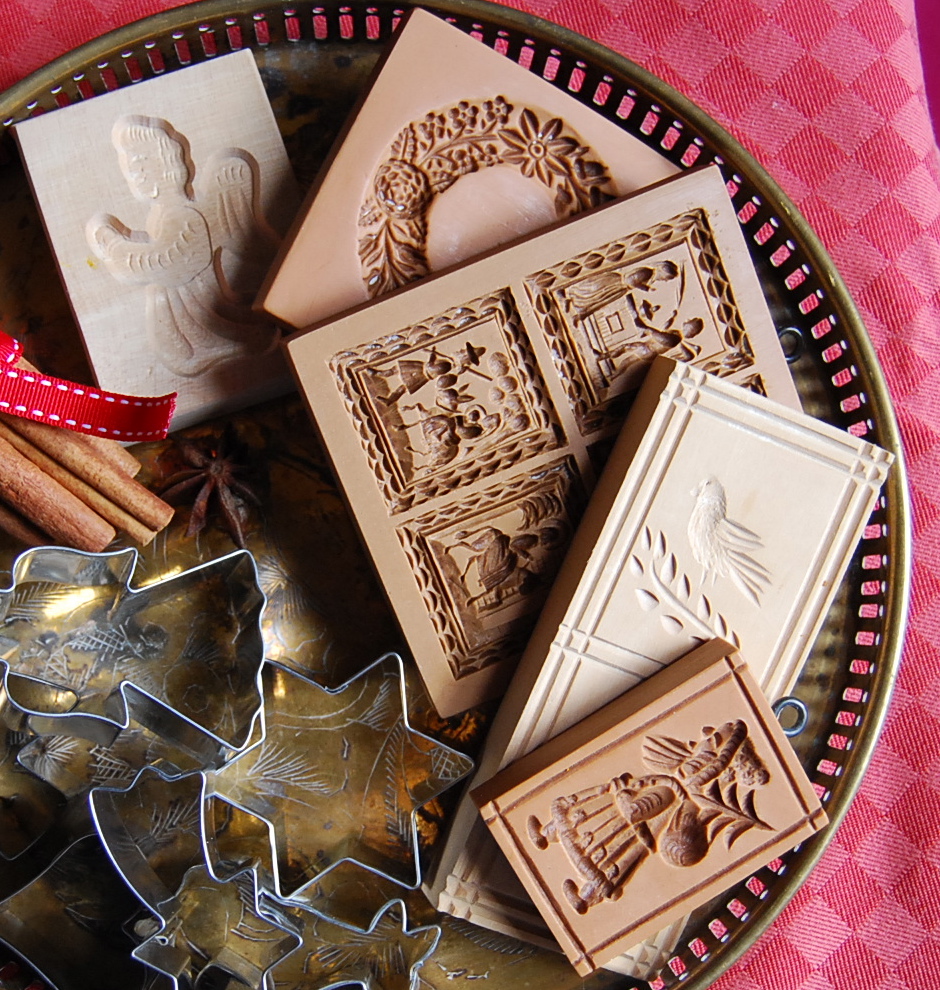


 Ginger&Bread
Ginger you made this?? Mamma mia, this is a real masterpiece! We have these biscuits in Poland too, I love them 🙂
LikeLike
We love them, too! I remember feeding a batch of rather hard ones to my son when he was teething …
LikeLiked by 1 person
I didn’t know that – I always thought they were German/Swiss! I got a book about the history of German food for my birthday and it’s absolutely brilliant to see where our ‘typical’ foods came from 😉
LikeLiked by 1 person
They’re amazing – I think I’ve seen them in a local deli, now I know what they are!
LikeLike
In Spain or in England? I have never seen them here in London, but then I don’t really get out much 😉
LikeLike
In Bexhill but I’ll go back to check!
LikeLiked by 1 person
This is amazing Ginger! They look great!I have to get me some of these molds. They are perfect and so much fun. 🙂
LikeLike
Thank you! Some of those molds are just too beautiful – I love the 18th Century miniatures but I will never be able to afford an original 😦
LikeLike
These look so pretty!
LikeLike
Thanks you!
LikeLike
Masterpieces! Your mold collection is so beautiful. I imagine many of the treasured molds are passed on in families. I did not realize these cookies were also made for specila occasions outside of Christmas. I always learn so much reading you Ginger.
LikeLike
A lot of the ‘traditional Christmas’ biscuits were made all year round and are now mainly associated with Christmas. There are some beautiful wedding-themed molds for sale, especially in the States!
LikeLike
I will ask my German friends about these cookies I am sure they have rich family traditionsto share too.
LikeLike
It’s great to find out about other people’s traditions – I particularly enjoy finding out where things I grew up with end up!
LikeLiked by 1 person
These are gorgeous biscuits!! I’ve never heard of them before and really do love learning about other cultures and cuisines. If I could get my hand on one of those beautiful molds, I would definitely give these a try.
LikeLike
The biscuits are rather unusual, but delicious!
LikeLike
your cookie molds are so beautiful! I would make cookies every day if I had those.;) love the aniseed flavour, too!
LikeLike
They are lovely! And you are right, aniseed is such a wonderful flavour 🙂
LikeLike
These cookies look so Old World. Perfect for the Christmas season.
LikeLike
They are very old-fashioned, definitely!
LikeLike
Never tried my hand at those, it’s a pity! They are really hard to come by, at least home-meade, even here around. Perhaps all the younger people use the molds for decoration only… yours are really nice and your instruction seems quite perfect.
LikeLike
It took my mum and my brother years to perfect them – and then I simply nicked their recipe and began showing off 😉 In southern Germany you can find the molds in cooking equipment or even antiques shops, I think.
LikeLike
Daaaaaamn girl!!
LikeLike
Wow… these are beautiful, Ginger! I bet the flavors are divine too!
LikeLike
Hi! I might just have to try them this Christmas! Need to find some moulds first though – amazon, maybe?
These look incredibly incredible… ❤ I can't believe I've never heard about them here in Austria.
Have a baketastic baking day,
Your Backdirndl
https://backdirndl4you.wordpress.com/
LikeLike
Amazon has some – otherwise you’ll have to cross the border 😉
LikeLike
These are just so beautiful!! I need to find some of those molds! On my list on the next visit to Germany 🙂
LikeLike
You’ll probably find them in the south, or in Switzerland – do share if you come across some very pretty ones!
LikeLike
Oh my gosh, these are just stunning…. I have haunt fir those molds now…. amazing…:)
LikeLike
I am so intrigued/impressed by these cookies! What a labor of love!
LikeLike
I am so intrigued/impressed by these cookies! They look so gorgeous and obviously take a lot of time and patience! What a wonderful labor of love!
LikeLike
Pingback: Basler Leckerli, a Swiss Gingerbread | Ginger&Bread
Wow – you made Springerle! I had a go at them a couple of years ago. A very late evening in the kitchen, I must have ended up with about 200! Yours look really beautiful – excellent detail on the Springerle!
LikeLike
They are so moreish that I might have to make a second batch before Christmas …
LikeLike