Bread is so important to a German diet that we have an entire meal named after it: our evening meal, ‘Abendbrot‘, means literally ‘evening bread’ and consists of, you guessed it, bread, cold meats, cheese, and salads. We have quite a reputation for our breads, too, at least on the continent: rye bread, buttered and with slices of cooked meats or cheese, is called бутерброд – pronounced ‘butterbrot’- which is German for ‘buttered bread’. Funnily enough, sliced white bread with a filling is now called сэндвич – ‘sandwich’.
It would be a lie to claim that Germans are obsessed with bread. In fact, whilst they live in Germany, they couldn’t care about it less: with at least five or six independent bakeries per square mile (my completely unrealistic estimate), they really don’t need to worry about it and are increasingly buying it in supermarkets and the likes, where it is cheaper and ‘more convenient’.
Thus the obsession with bread usually sets in the moment they leave Germany and realise what they are missing; soon, the same feeling will hit them at home too, when the majority of the independent bakers hat to close down because of changing consumer habits, but that’s another story altogether.
As expats, we’re ok for a while in countries where we can indulge in white breads, such as baguettes or foccacia, but inevitably we will long for something slightly more ‘herzhaft‘ – hearty – which is created by the typical mix or rye and wheat that forms the basis of a Schwarzbrot, or ‘black bread’. 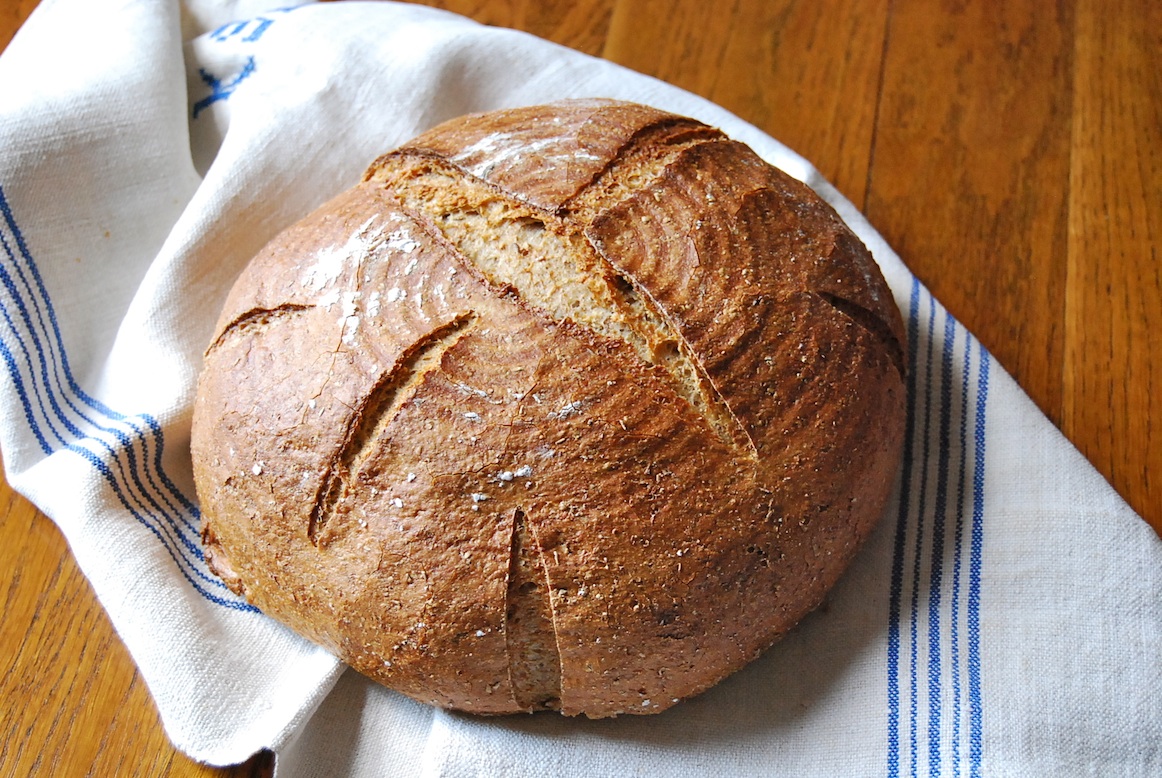
Some of you are already familiar with my quest for the perfect loaf: a mix of wheat and rye, not too dark, but with a strong sourdough taste. I found something close to perfection in my grandmother’s cookery book, the Kiehnle Kochbuch of 1912, and have since decided that the French levain I had used as a starter might have been the reason for it tasting not quite as ‘hearty’ and sour as I had hoped for.
Having decided to give a German rye-based starter a go, I have now come up with a version that I am happy with, at least in terms of bread (being German I will always find something else to complain about). I reduced the quantities of the original to make just one loaf and decided on a mix of brown bread flour, white bread flour and rye flour to create a loaf that is not too dark and healthy. In addition, I have added a few teaspoons of vinegar and some caraway seeds, which are often added to the darker breads.
I hope you like it, as I am entering this in Zorra’s World Bread Day event, celebrating home-baked breads from across the web. There’s only one thing that’s more delicious than the smell of freshly baked bread, and that’s its taste 😉
German Country Loaf
- 400g wholewheat bread flour
- 300g white bread flour
- 300g rye flour
- 100g sourdough starter
- 1 tsp easy bake yeast
- 600ml lukewarm water
- 1 1/2 tsp salt
- 1/2 tsp caraway seeds, ground
- 2 tbs vinegar
Measure out the flour into a large bowl, leaving a dent in the top in which you mix the sourdough starter, water and yeast until it forms bubbles. Cover with a kitchen towel and leave to rest for 20-30 minutes, to activate the yeasts.
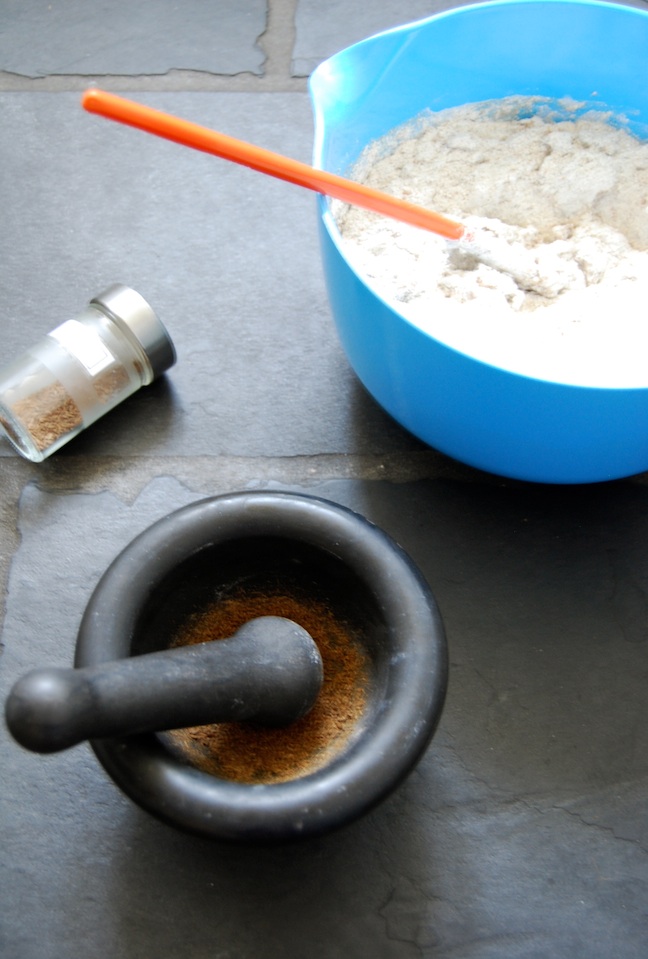
Grinding the caraway seeds before adding them for extra stress relief (the grinding ;-))
Once it is bubbling away, add in the remaining ingredients and around 500ml of the water and knead vigorously for around 10 – 15 minutes. It did help to have had a rather stressful day at work, I have to admit. Add the remaining water if necessary, keeping the dough a little on the wet side. Once the dough is coming together, you can remove it from the bowl and finish on a clean surface. Tearing and folding worked a treat for me. 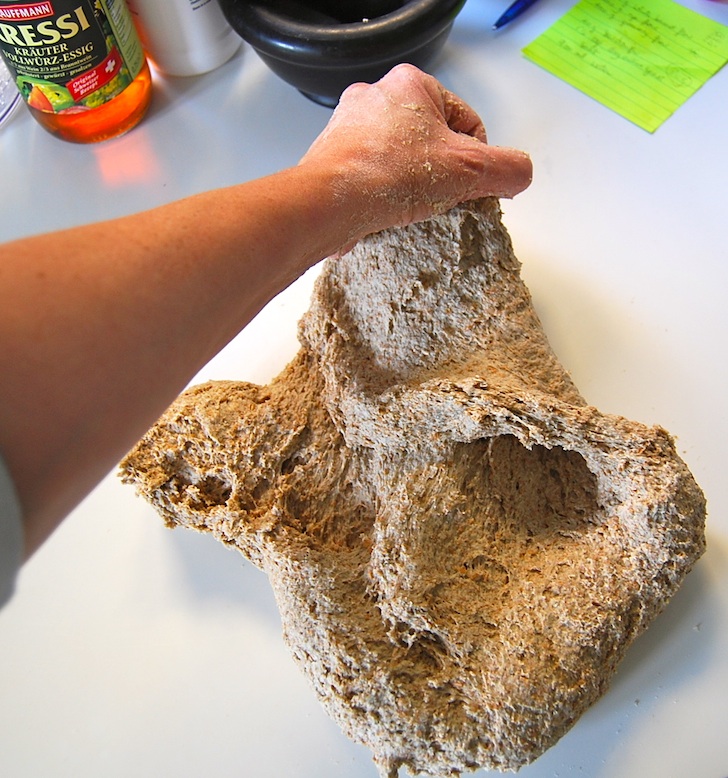
 Personally I did not push it with the wetness simply because I like a rounded loaf: the wetter the dough the bigger the holes in your bread, I was told, but I don’t like the look of a flat country loaf. It’s your call, really!
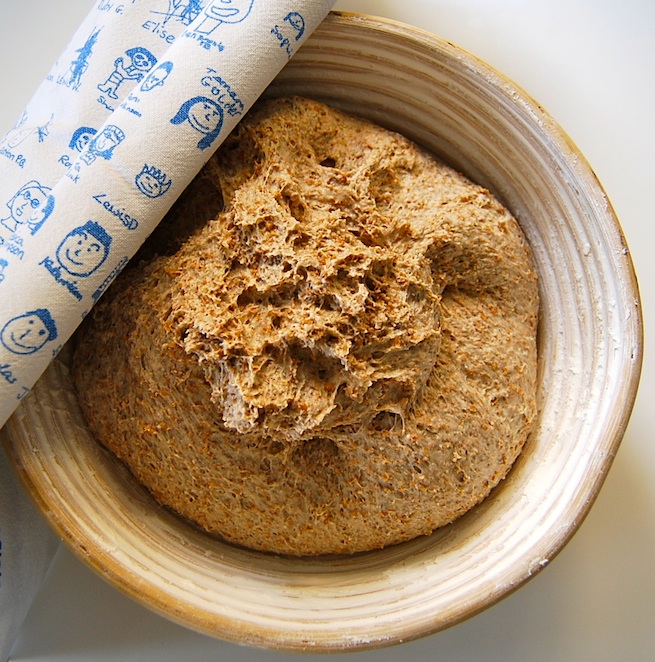
Cover and leave to rest overnight in the fridge, ideally in a proving basket (liberally dusted with cornflour), but a dusted towel in a bowl will equally do the trick.

A proving basket, or banneton, gives the finished loaf a nice pattern
 The next day, remove the bread from the fridge and heat the oven to 250C, a baking stone is a real bonus here (fortunately I had to justify the purchase of a raclette grill with a granite top, which can be removed and used for this purpose :-)). Make sure the oven (and stone) have reached the required temperature before putting in your bread.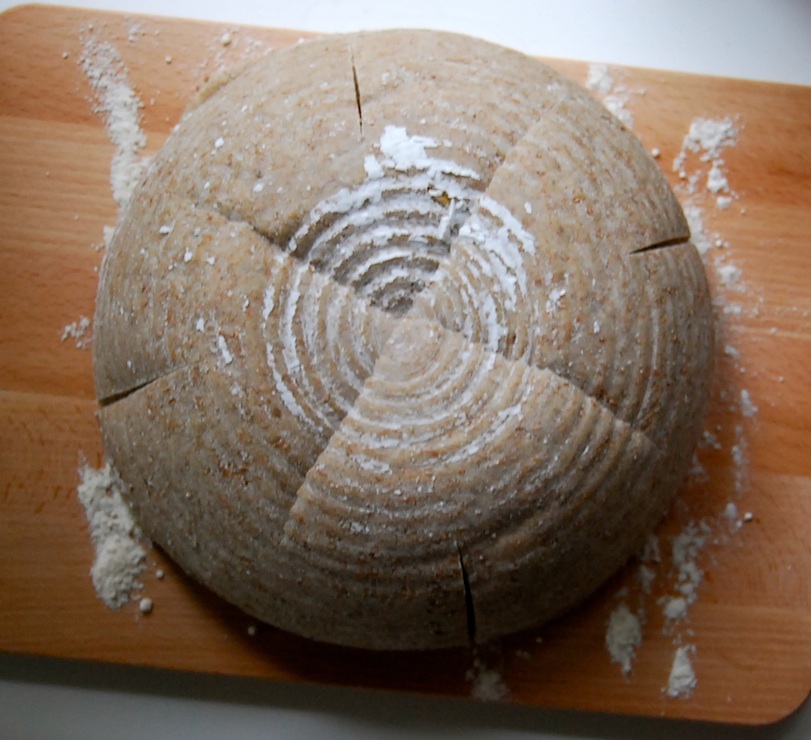
Turn out your bread onto a cutting board etc., which needs to be sprinkled with flour. Score it and gently slide it onto your stone or baking tray. Splash a handful or two of water onto the sides of the oven, reduce the temperature to 220C and bake for 40-50 minutes.You don’t want the bread to get too dark, but on the other hand you need to be sure it is fully baked.
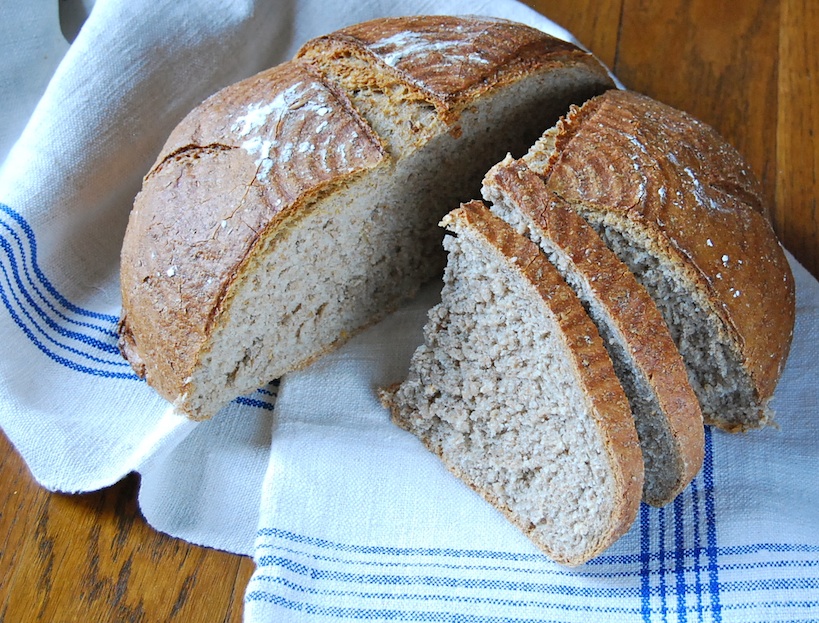
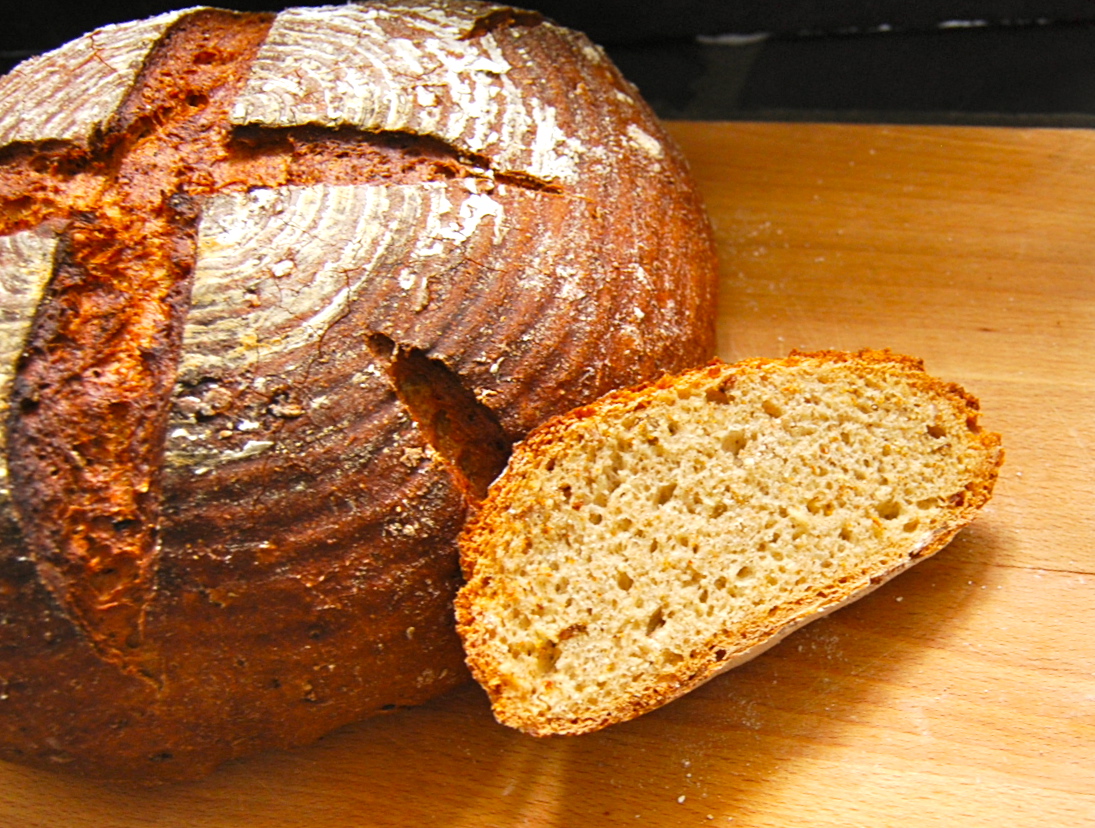
Here’s one I prepared earlier … this time with granary flour instead of the white bread flour.
Enjoy your homemade rye bread with butter and some cold meats or cheese. Check out my recipe for sausage salad if you want to get an idea of what I mean by ‘hearty’ 😉


 Ginger&Bread
I couldn’t be more impressed!! Your bread just looks like it turned out perfectly, and those are lovely photos (as usual).
I’m afraid I’m really not a big fan of German bread (not that I can eat it any more anyway!), I just find it too bitter and chewy – sorry! – but you’ll be pleased to know that I’m still letting the Mini Dietz eat slices of the loaves his dad buys (from the bakery round the corner, of course, not the supermarket!) … and he can’t get enough of it! 🙂
LikeLiked by 1 person
I suppose it’s a German thing … 😉
LikeLike
That looks beautiful! I know that I will miss the bread here when we move on one day…. Just as I miss Danish Rugbrod and their wienerbrod of course! 😀 (I do miss my dk keyboard for typing such words! )…
LikeLike
I know – all the little crosses and dots and bits 😉
LikeLike
Isn’t it fascinating how language reflects cultural customs? In Chinese, the word for “eating dinner” is “eating rice.”
I really love German bread: it is so hearty, with so much flavour. I met a German couple who moved to the countryside in Korea and lived there for many years: initially they made their own bread, then they thought, “there’s a local bakery, what if we teach them?” The bakery in their Korean village now sells the only German bread you can find in the region. 🙂
I have never tried a rye starter, I’m excited to try this!
LikeLike
Ah this is so cool Ginger!
That dough is a best though.
Tell me this is healthy and one of those ‘good for you’ breads so I can make this and cross it off my bucket list😁
LikeLike
I am not German, but I too am always looking for the perfect rye bread as you describe. For myself, I prefer the Russian, really black loaf, but my husband prefers the kind you speak of, and I am happy with that too. So, bookmarked!
LikeLike
Kiehnle-Kochbuch, das wird irgendwann hier auch noch Einzug halten. Dass es darin auch Brot gibt hätte ich nicht gedacht… und dann gleich noch so ein feines.
LikeLike
Die sind garnicht so einfach zu bekommen, zumindest die alten Versionen. Allerdings habe ich gesehen, daß es inzwischen eine Neuauflage gibt. Ich wüßte ja zu gerne, was vom Original übernommen wurde. Meines hat recht wenige Brotrezepte, dafür unzählige Plätzchen 🙂
LikeLike
That is a stunning loaf. I love bread that is heavier and denser so I would adore this. Love your proving basket too – mine is long and I want a round one 🙂
LikeLike
I want a long one! I pinned a picture of a longish loaf somewhere and I WANT ONE NOW!!!
Next I’ll give the dutch oven a try though, and the less kneading method, to see if I can get a few more bubbles into my bread 🙂
LikeLiked by 1 person
That really is a beautiful bread!
LikeLike
Thank you! It’s actually really easy to achieve, but don’t tell anyone 😉
LikeLike
This bread is amazing, Ginger, and the crust is superb.
LikeLike
I don’t know how I missed this post. This is the real thing Ginger, respect!
LikeLiked by 1 person
Pingback: My Writing Process Tour | Bread and Tortillas
My husband and I usually travel to Germany every year and the vast amounts of breads I find at breakfast in south Germany is just amazing. Your bread sounds wonderful.
LikeLike
Thank you! It’s easy enough to bake, so do give it a try sometime 🙂
LikeLike
Genau so ist es. Erst wenn mal länger im Ausland lebt, merkt man was einem alles fehlt und gutes Brot gehört da sicher dazu. Danke fürs Mibacken am World Bread Day 2014!
LikeLike
Vielen Dank – für all Deine harte Arbeit! Ich freue mich schon sehr auf die Zusammenfassung!
LikeLike
We left Germany when I was a kid and although we only moved to Holland the bread is so different here. I still remember that my parents would always bring schwarzbrot and keep it in the freezer 🙂 I started experimenting with a danish rye bread the other week (I am not sure I want to commit to feeding a sourdough starter yet. But reading your recipe I am really tempted!!
LikeLike
Those starters are really much more low maintenance than people seem to realise. I just fed one I had left in the back of my fridge for at least a month – it looked a bit dodgy but smelled fine, so we’ll have fresh bread for lunch tomorrow 😉
Go for it! And don’t forget to let us know about the Danish rye!
LikeLike