After the disappointment of Spain, I am not sure as to what to say about France. In recent competitions the bleus have lived up to their English translation, the Blues, by looking a bit sad and forlorn. I have to say I have had a soft spot for them since I saw them play Brazil in Mexico in 1986 – what a beautiful match. Wouldn’t mind that on a dvd for my desert island.
When it comes to French food, my absolute favourite has to be the Kouglof, or Gugelhupf, as it is called on ‘our’ side of the river Rhine. When I was small, we lived close enough to the border to get a regular taste of this sweet yeasted bread, and I still remember the excitement and the crunch when you bit on the almond on the top. Having searched cookery books and the world wide web, I have finally come across a version that works for me: Christophe Felder’s recipe as described in the lovely French blog L’Atelier Gâteaux.
So, all you need to support France in this world cup is a bundt cake tin: the Alsace, after all, is not just the birthplace of the Kouglof, but also of Arsene Wenger, of Arsenal fame (or notoriety, depending on your point of view).
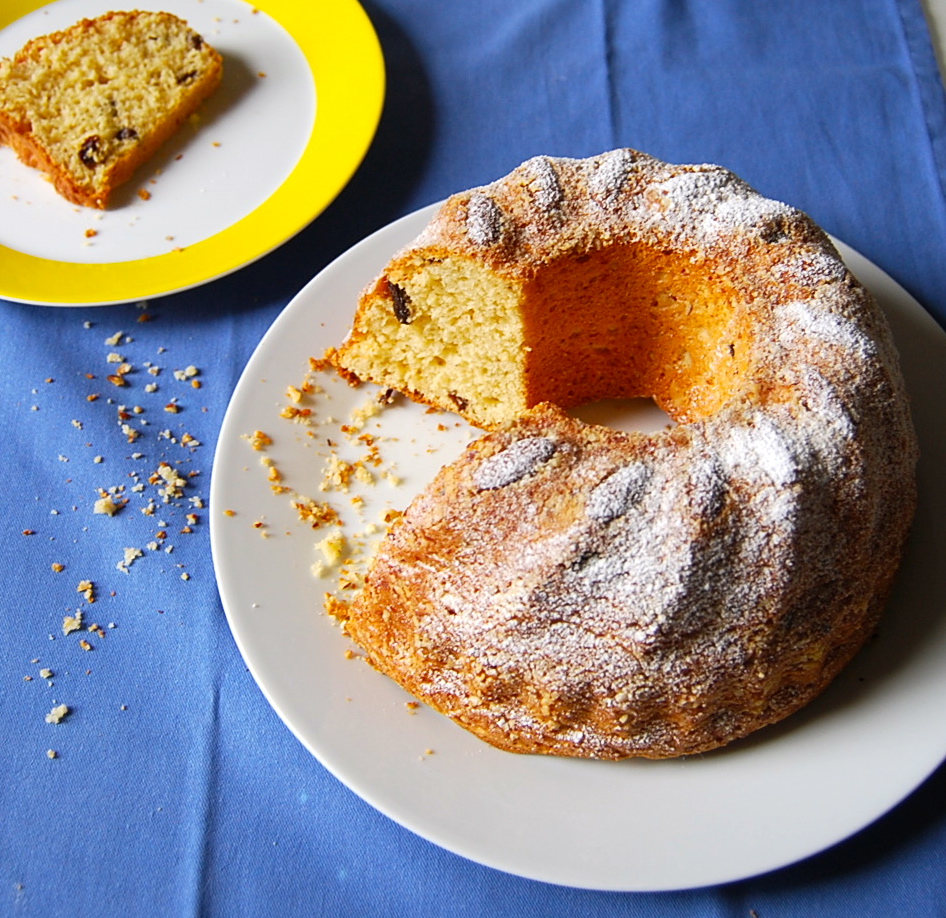
Kouglof or Gugelhupf (for a 22cm tin)
Starter:

- 2 tsp dried yeast
- 35 g of water at room temperature
- 50 g plain flour
Dough:
- 300g flour
- 1 whole egg
- 125 g of milk at room temperature
- 40g caster sugar
- 1 tsp salt
- 65 g soft butter
- 50 g raisins
For the tin:
- 25 g melted butter
- 80g whole almonds
- 50 g icing sugar to finish
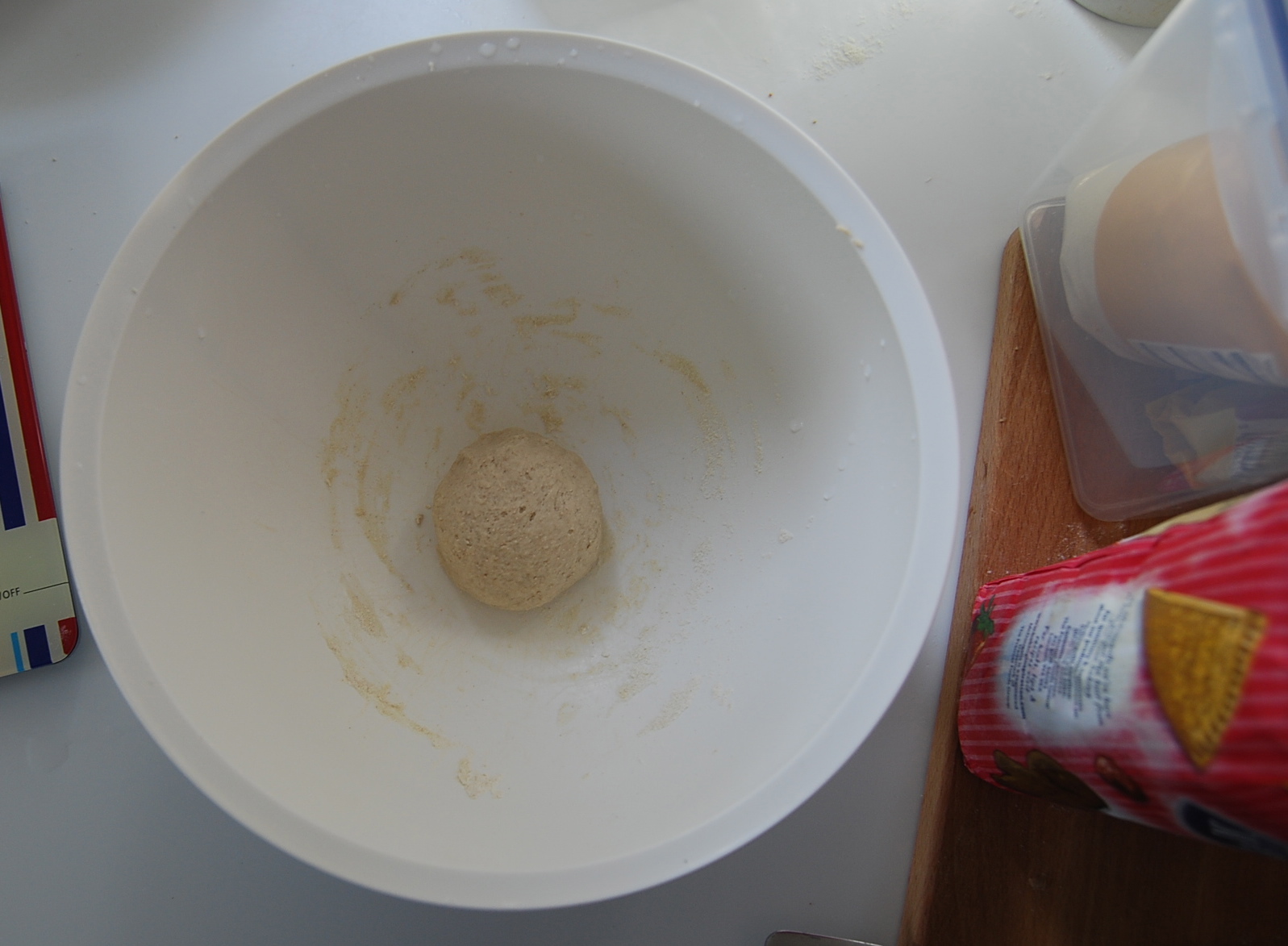
Mix the yeast, water and the 50g of flour to a stiff little ball. Cover with the remaining flour and and let it rest for around ten minutes.
In the meantime, bring 25g of unsalted butter to melt and use some of it to carefully grease the bundt tin. Place a whole almond into the indentations at the bottom of the tin. Grind the remainder of almonds to coarse little chunks and line the tin with them while the butter is still soft: carefully shake out the ones that didn’t stick to the sides.
Once the yeast has started growing, add the egg, milk, sugar, salt and the rest of the melted butter and mix it, using an electric mixer, for about 10 minutes. Begin at slow speed, but use the higher speed for the last 3 minutes.The dough should come off the edges of the bowl.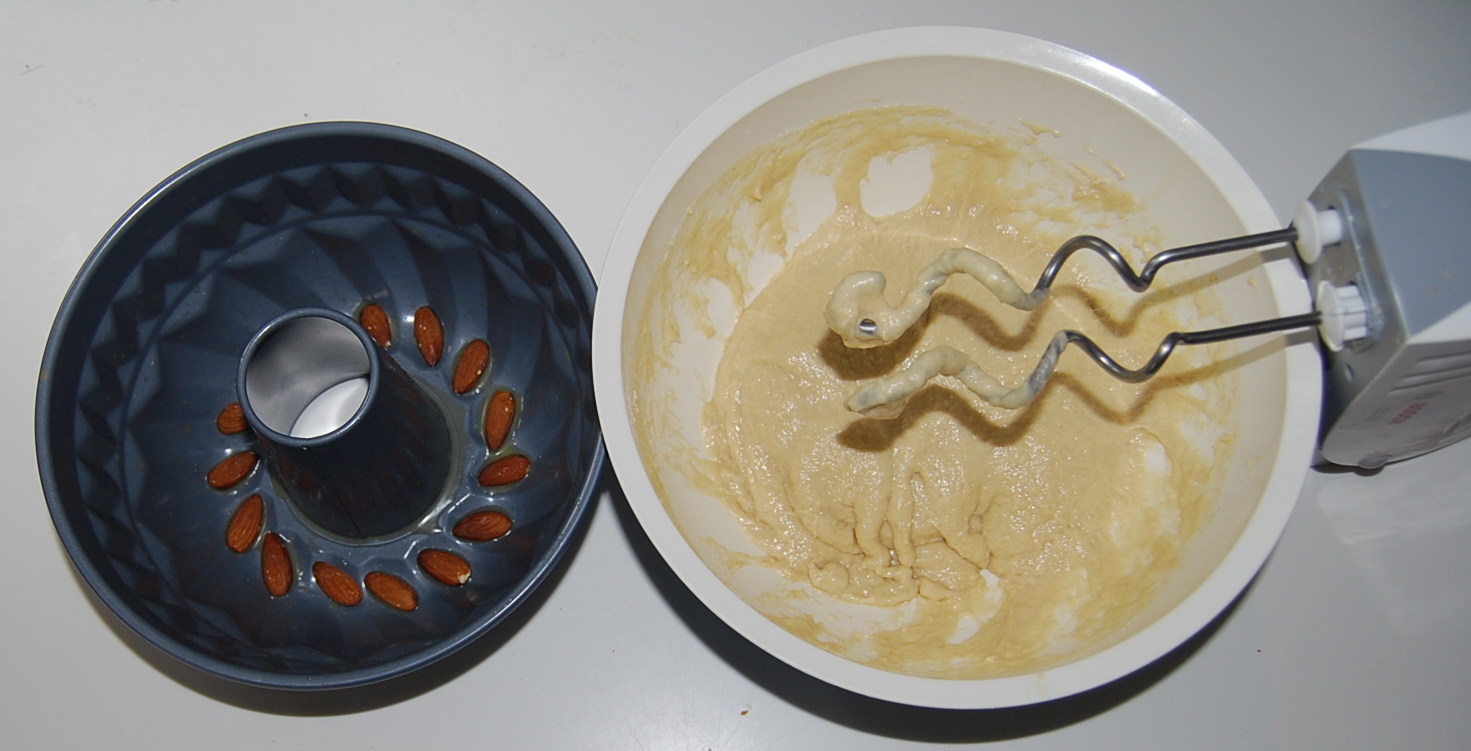
If you would like to put in raisins, add them at the end and knead the dough for a few moments to fully incorporate them in the mix. Leave the dough to rest for an hour or until it has doubled in volume.
On a lightly floured surface, use your fingertips to form a ball – take care to work the dough as little as possible. Place it in the tin and lightly press it down. Cover and let it rest for another two hours in a warm space (the cold closed over works a treat for me).
30 minutes before baking, preheat oven to 170 (fan). Bake the kouglof for 20 to 25 min.
Remove the cake from the tin and let it cool on a wire rack before decorating it with the icing sugar.
Bon appétit!
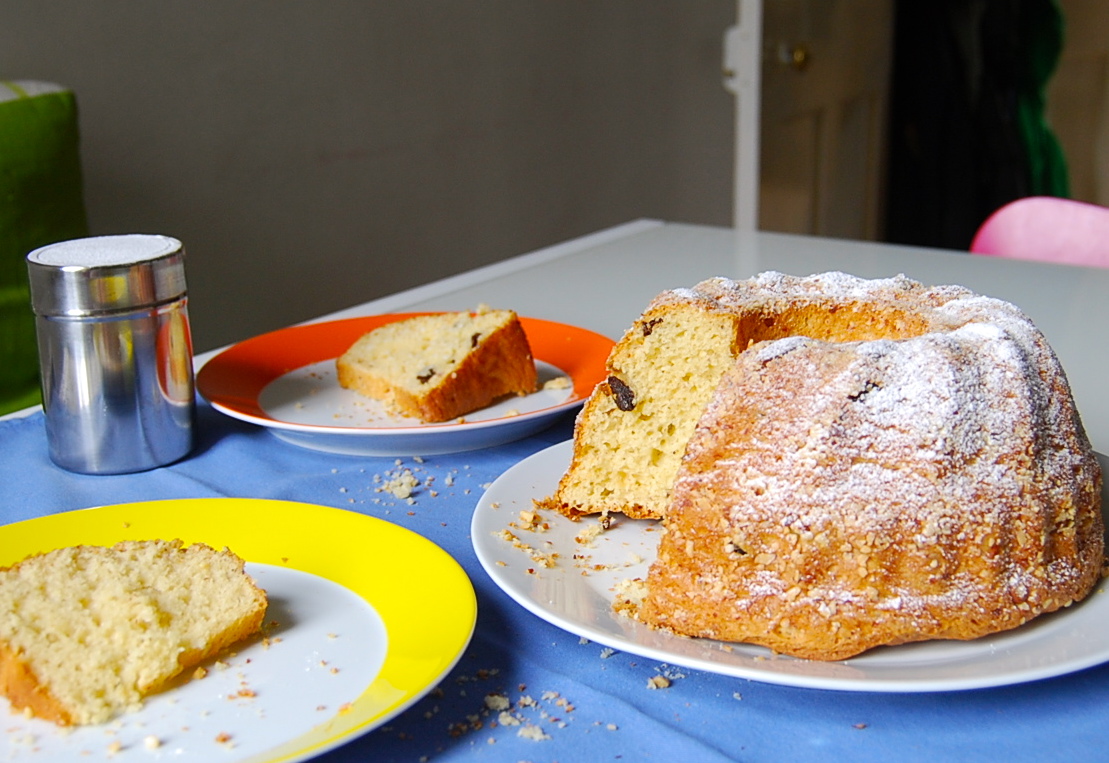
You can see the airy texture of this lightly sweetened bread. I used a 22cm tin but would like to give it a try in a slightly smaller one as I like it when the dough overspills a little, giving it a lovely ‘muffin bottom’.


 Ginger&Bread
Pingback: Countdown to the Worldcup in Rio | Ginger&Bread
I can’t be bothered about the football – but could be very bothered about that beautiful cake 🙂
LikeLike
You don’t know what you’re missing – football’s great, but I agree with you that cake’s better!
LikeLike
it’s lovely!
LikeLike
Thanks! It only took me two decades to work it out 🙂
LikeLike
Pingback: Chelsea Buns, With a Nutty Twist | Ginger&Bread