 As I have been baking bread for a few years now, the theme for this Bread Baking Day,’ancient’, really appealed to me: as a kid at my friend’s house, we helped her granny to prepare the breads for the weekly ‘baking day’, when the communal oven was heated up and the families of the village were bringing round their breads to bake. I still remember the little ‘baking house’ and the smell of the freshly baked bread. We would butter them and put a pinch of sugar on the warm slices – our idea of bliss.
Rather than going for an old-fashioned grain or method, I had a look at my cookbook, the great illustrated Kiehnle-Kochbuch from 1912. Obviously I don’t use the old version, I am in the possession of the updated 1951 anniversary edition:
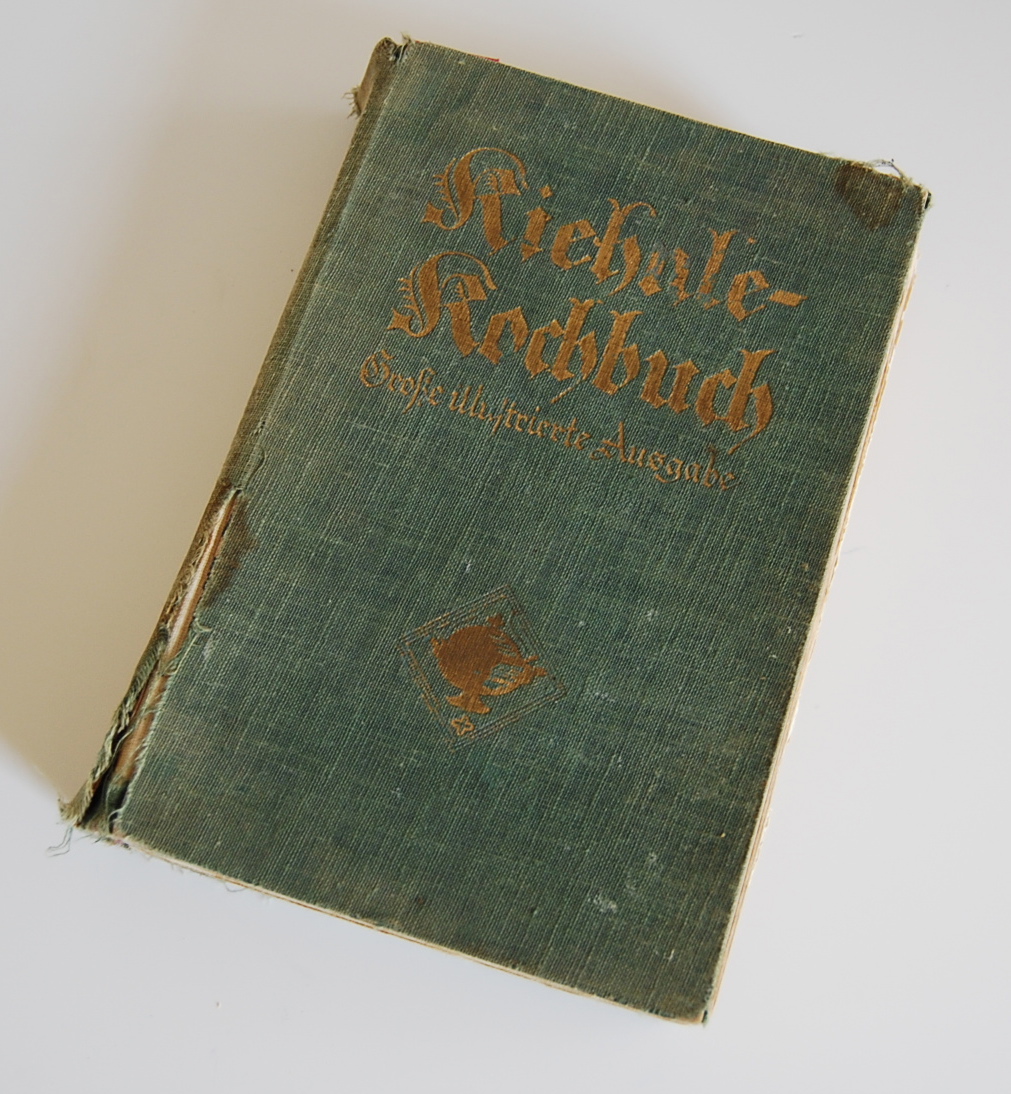
I was given this book by my mum when I left home, as it is widely considered to be the gold standard of Swabian cookery. It is still printed in the old ‘Fraktur’ font, a font widely used in Germany until the mid-twentieth century. You might recognise it from World War II films and pictures: the Nazis loved it but abandoned it eventually for a more readable font as part of their taking-over-the world-strategy, realising that it helps when the conquered people can read your writing…
The second-hand book bears many traces of its previous owners, who made countless annotations, changed ingredients and – clearly – enjoyed a cup of coffee whilst baking:
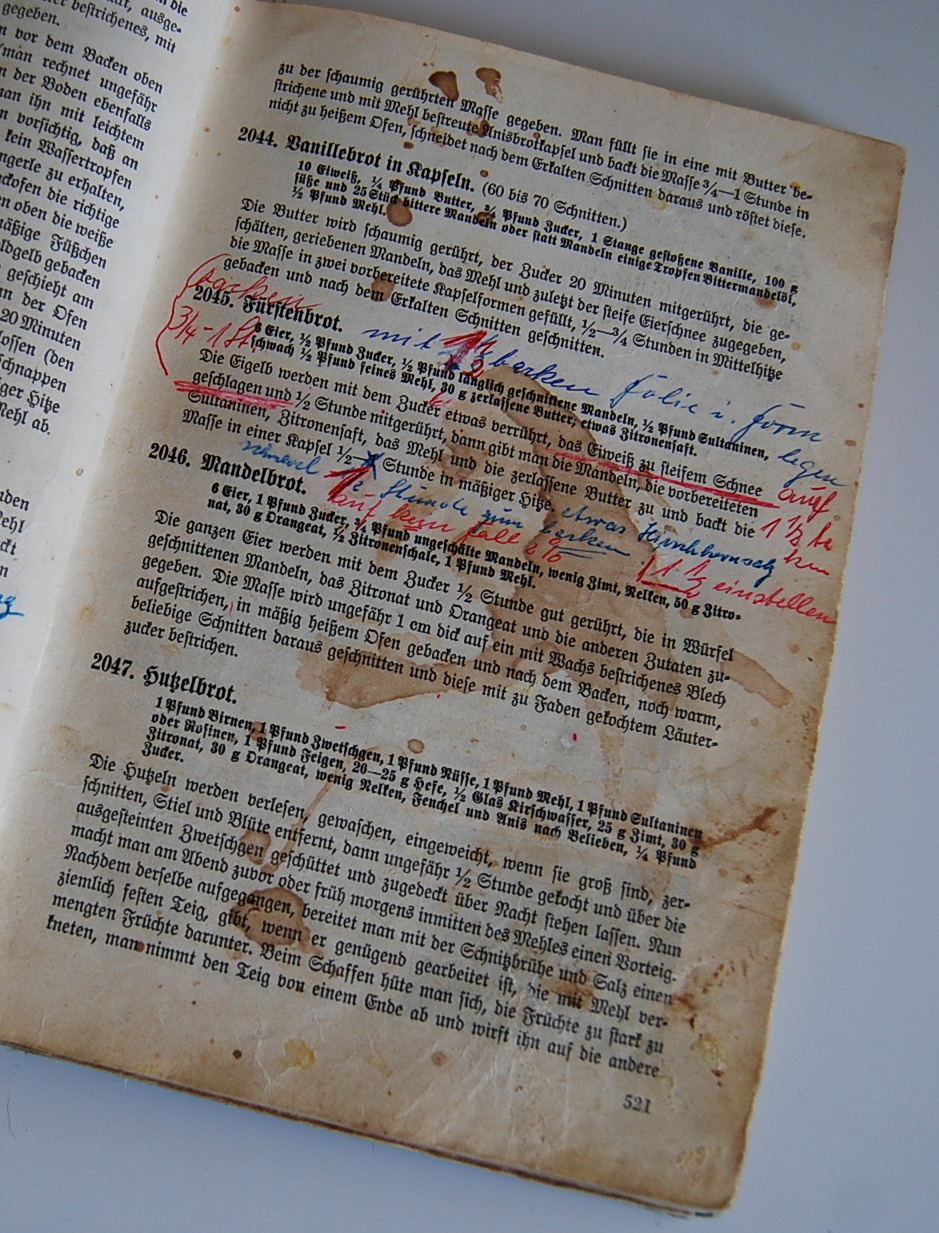
CSI Stuttgart: clearly someone enjoyed a cup of coffee!
I am convinced she worked as a housekeeper for a bourgeois family in Stuttgart – a rather picky one, it seems, as several of the recipes are annotated with a ‘sind nicht erwünscht’, ‘not welcome’:
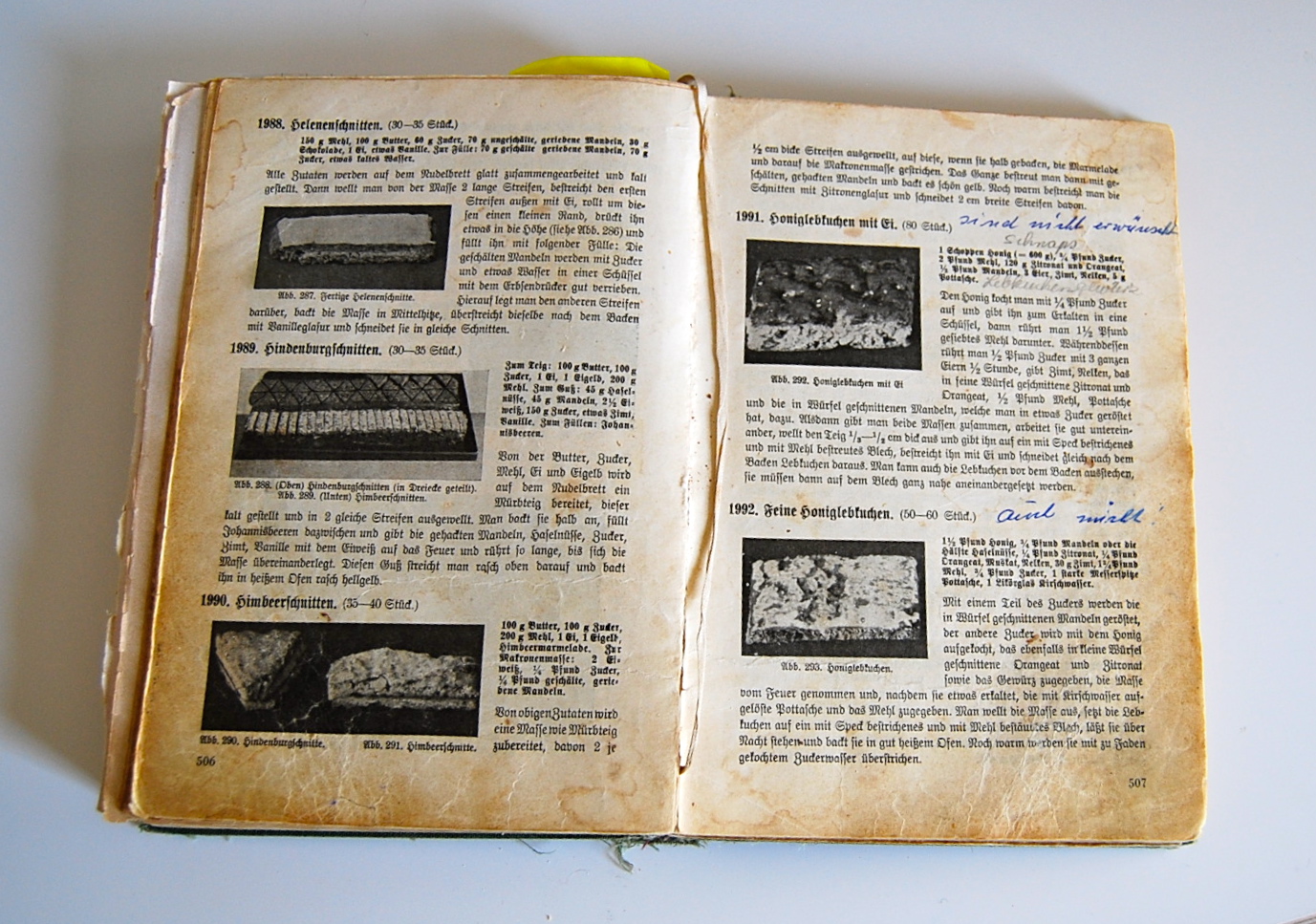
‘Sind nicht erwünscht’ means ‘not welcome’, the following recipe received an ‘auch nicht’:- ‘this one neither’.
Anyway, although there are countless recipes for cakes and pastries, there are only a few bread recipes, and one of them a very basic ‘Schwarzbrot’, which I used for this entry. I tried not to mess around with Frau Kiehnle, and to prove that I stuck to her instructions (unlike my predecessor of the ‘not welcome’ annotation) I will reprint them here in the original:
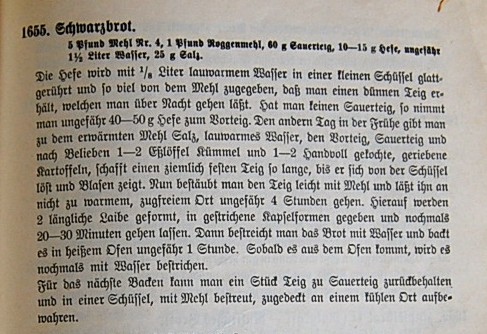
Some of the ingredients, such as the flour ‘no. 4’, I am not too sure about, so I replaced it with a mix of white and wholemeal bread flour; I think the wholemeal flour is perhaps more coarse than a German bread flour, making the bread more ‘healthy’ than the original and requiring more water than stated. I’d be grateful for any suggestions for a more ‘in-between’-type of bread flour! I also replaced the fresh yeast (10-15g) with dry active yeast, as fresh yeast is hard to come by here in the UK.
Schwarzbrot, or ‘black bread’
- 3 lb white bread flour
- 2 lb wholemeal bread flour
- 1 lb rye flour
- 60g sourdough starter
- 2-3 tsp dried active yeast
- 1.5 l water
- 25g salt
- 1-2 tsp caraway seeds (optional)
Frau Kiehnle mixes the yeast with 1/8l water and about 50g flour to make a thin liquid, which you leave covered overnight. With the dry yeast, I decided to cut this short and left it for an hour.
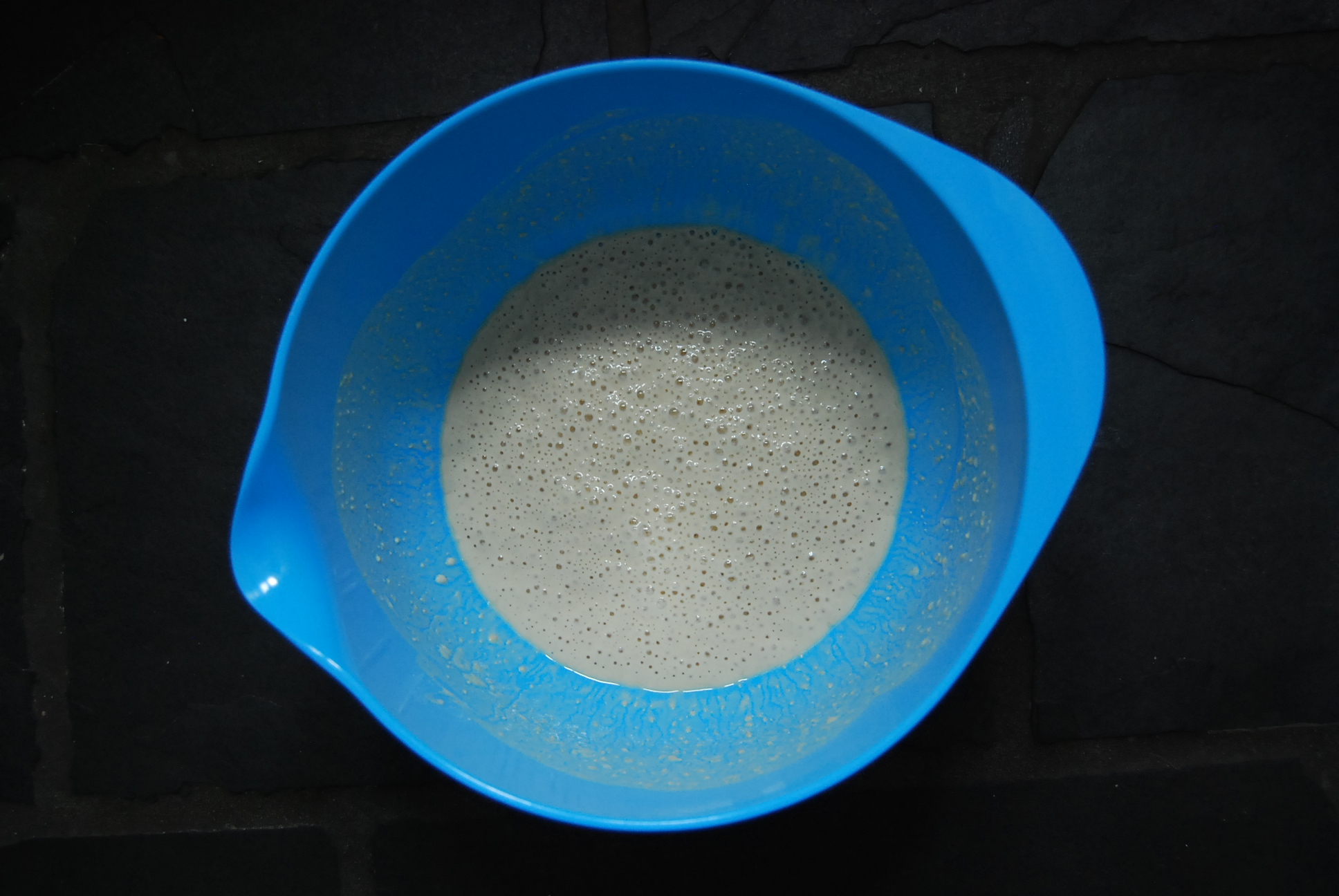
The starter bubbling away after a few minutes, thanks to the dry active yeast
The next day you mix in all the other ingredients to create a firm dough. I needed to add quite a substantial amount of water to make the dough kneadable, a result of the flour I used. Frau Kiehnle specifies a ‘firm’ dough, so feel free to add water as required. You need to knead this bread rather vigorously, for at least ten minutes, to get a nice consistency.
Cover and leave to rest for 4 hours in a warm place. If – like me – you have a day job, start the bread in the afternoon and let it prove in the fridge overnight.
The next day, preheat the oven to an unspecified ‘high’ heat (Frau Kiehnle was using a wood-burning stove it seems). I used a baking stone and heated the oven to 250C, placing a bowl of water at the bottom of the oven to create a nice crust.
Split the dough into 2 or three pieces and form loaves, which you leave to rest for 20-30 minutes. Frau Kiehnle uses an oiled bread tin, but I went for a banneton and a bowl with a piece of cloth.

Trying out different methods to see which one works best
Turn out your breads on your baking stone and reduce the heat to 220C. Bake for an hour. Unless you are using the communal baking house with its open fire, you will need to bake the bread in at least two batches. I made three loaves altogether, and will probably only ever use half the recipe to suit my oven.
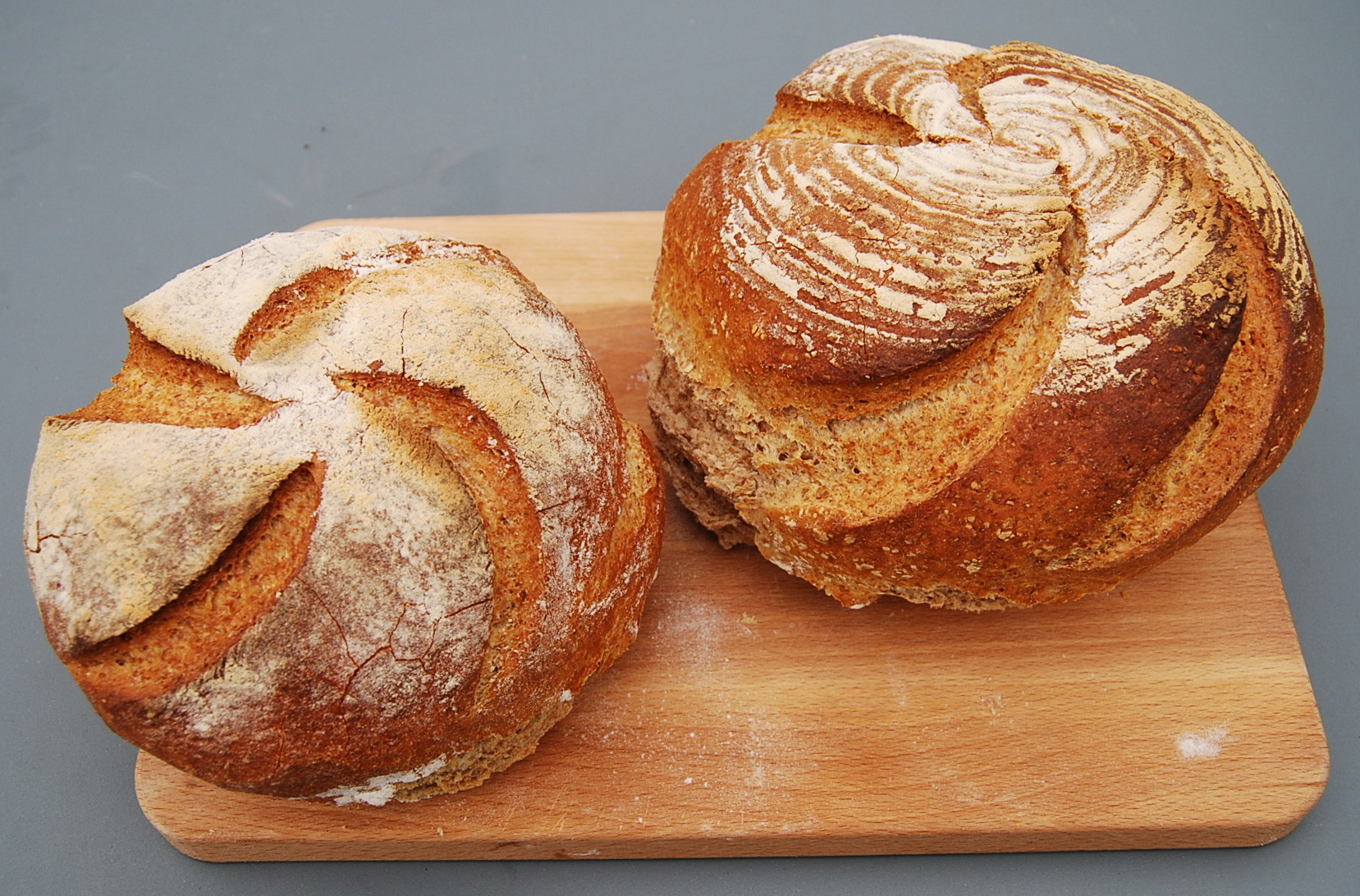
The finished product
The bread turned out beautifully and just in time for Abendbrot, the typical German evening meal of bread, sliced hams, cheese and sausage, salad and beer.
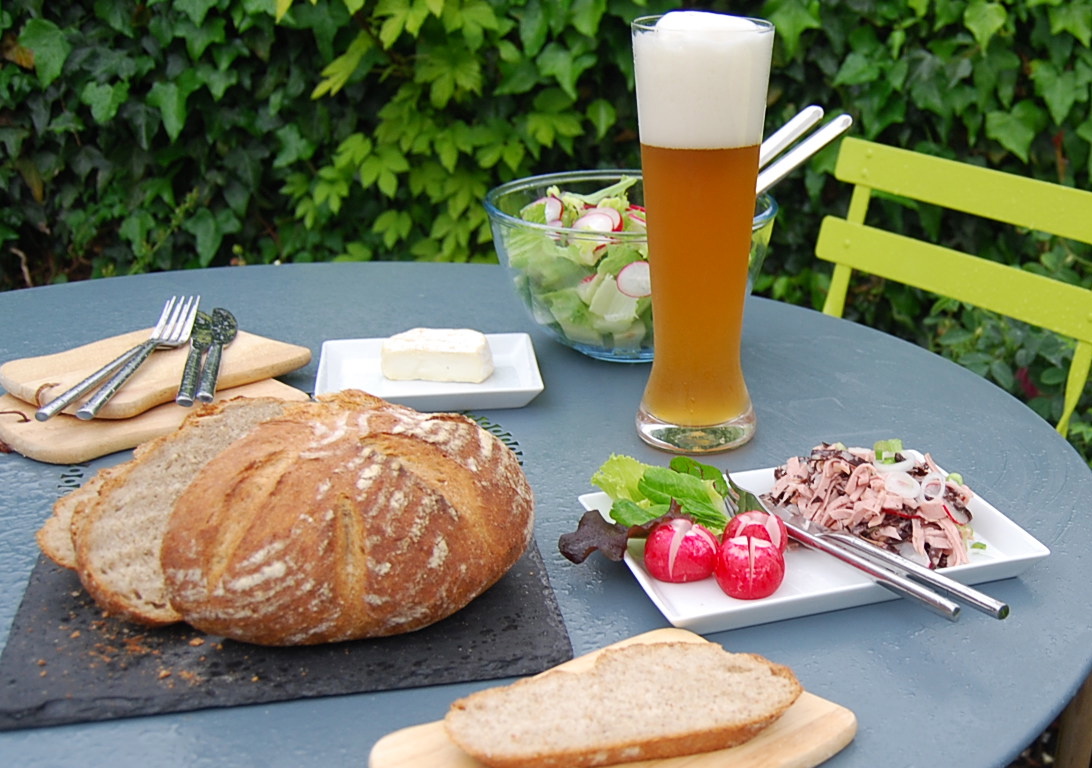
German ‘Abendbrot’, the typical cold evening meal
But was it really as dark and sour as I had imagined? Or would I’ve been better off using a rye-flour starter instead? Only time – and many more breads – will tell.


 Ginger&Bread
Wonderful post, how very interesting! Great photos and the story is fascinating! I have a plan for a novel which involves an old cookery book which has messages written in it! The bread looks so delicious… I want some now!
LikeLike
Beautifully made bread! I really enjoyed your writing and photos. Very interesting!
LikeLike
Thank you! I am really enjoying your blog, too – I love your bold use of flavours
LikeLike
I absolutely love old books like this! And your bread looks perfect 🙂 I have never baked German bread myself but my dad has baked it very often in the States (my mom missing it and his love of the bread is what I suppose brought him to try it) and he does a wonderful job. Great post, love it!
LikeLike
Thank you! Have a look at my sourdough starter recipe and my other bread, they were my introduction to breadmaking,
There are countless variations of German bread, and once you have your own starter you can start experimenting!
LikeLike
Thank you, I will definitely share this with friends in the States! I have such a good selection of bread here that I don’t normally bake bread.
LikeLike
I know. This is what I miss the most here in the UK, followed closely by the selection of sausages 🙂
LikeLike
This is a masterpiece. Recipe, Photos, Books and all. Hand me down books : Priceless
LikeLike
Thanks! The beauty of hand-me-downs and secondhand books are the glimpses you get of other, past lives.
LikeLike
Popped in as I saw you had visited my blog and I’m so glad I did! What an amazing looking book – I have a few old ones like that too and I love reading them. And what incredible bread…it looks so good and I bet it tasted fantastic.
LikeLike
Thanks – I came across your blog by accident but I loved your garden with that glorious mountain in the background. Andalusia is such an amazing spot. I am looking forward to the updates on your crop!
LikeLike
hmmm sieht sehr lecker aus. Ich will seit langem mal ein Brot Rezept ausprobieren.
LikeLike
Vielen Dank! Mein anderes Rezept ist etwas einfacher, vor allem weil es für einen kleineren Laib ausgerechnet ist! Viel Spaß beim Backen 🙂
LikeLike
Das Brot sieht wunderbar aus!
Ich liebe solche alten Kochbücher, und die Anmerkungen der vorherigen Generationen am Rand. Meine Mutter besitzt solch ein Kochbuch (Wiener Küche von Aldolf und Olga Hess), ein Erbstück von meinen Großonkel, welches aus den 20er Jahren stammt. Da habe ich mir inzwsichen einiges abgeschrieben, denn die Rezepte sind fantastisch. Ich müsste mal gucken, ob es da auch Brotrezepte gibt, bisher habe ich mich darin eher an die Mehlspeisen gehalten.
LikeLike
Mein Buch hat nur sehr wenige Brotrezepte, und wie Du backe ich auch viel lieber die vielen Kuchenrezepte. Dein Wiener Buch hat sicher nicht ganz so viele Bismarcktorten und Hindenburgschnitten! Was ist denn Dein Lieblingsrezept? Die österreichische Küche ist ja wirklich ausgesprochen lecker!
LikeLike
Your loaves are so beautiful! Love the stories and the book with all of the markings and the telltale signs of the coffee cup! 🙂
LikeLike
Thanks! It is a lovely book, although at the end of the day it is not the most exciting bread recipe …
LikeLike
So interesting about the story behind that book – loved peering inside it and leafing through some of the pages with you. Glorious loaves too – stunning …I can imagine a little sugar sprinkled on a warm slice.
LikeLike
A book with a history has its drawbacks: one of the recipes has been altered so bluntly that I cannot get to the original quantities and have never been able to get it just right!
LikeLike
Pingback: Bread Baking Day # 68: “Althergebrachtes” – Der Roundup | Hefe und mehr
Wonderful, and very welcome!! Und yes, von meiner Oma muss auch noch irgendwo so ein altes Kochbuch stehen…
Liebe Grüße
Cheriechen
LikeLike
Hello, nice to meet you, thanks for coming to me, that’s more of an old traditional bread taken from a vintage book!! your bread is fantastic, I’ll definitely try it, I love vintage books and old recipes 🙂
See you soon ….
LikeLike
You blog looks fantastic – I can read Italian to a point by pretending it is Spanish, so expect me asking for help…
LikeLike
What a neat old book! I love finds like that. I can almost smell that delicious looking bread:-)
LikeLike
Thanks! There’s nothing like it. Apparently they use it to sell houses now, baking bread when people are shown around so they feel instantly at home…
LikeLike
I’ve never heard of German black bread but it looks so fresh and delicious I wouldn’t mind eating it. Thanks for teaching me something new!
LikeLike
It sounds much more dramatic than it is – Schwarzbrot is really the most common type of German bread, and the ‘black’ refers to the rye flour used for it. Any bread made exclusively with wheat is therefore ‘white’ bread, or Weißbrot. Let me know how you get on if you give it a try!
LikeLike
Pingback: Red Currant Meringue Cake, or Träubleskuchen | Ginger&Bread
Pingback: Cheesecake, the German way | Ginger&Bread
Pingback: Going a Little Wild: Sourdough Starter using Wild Yeast | Ginger&Bread
Pingback: German Country Bread, or Schwarzbrot 2.0 | Ginger&Bread
Pingback: My Writing Process Tour | Bread and Tortillas
Hi! This is some really great looking sourdough! What was the texture like? It looks like a really tight crumb, which is what I like in my rye. Was it soft and moist, or on the stiffer, drier side? I have a starter rarring to go and am thinking about trying this out!
LikeLike
It’s actually quite moist and sticky – I’ve only recently read somewhere that you shouldn’t knead rye sourdough too much, which seems to go against my instincts! The final texture has been quite light, at least in contrast to the brick-like texture I had dreaded 😉
Let me know what you went for – or if it worked out for you!
LikeLiked by 1 person
Pingback: Wholewheat, Rye and Oat Bread | Ginger&Bread
Very lovely post to read, I love baking bread and reading recipe books, too. Great to find other sourdough baker! It’s so interesting to know different style of breads. 🙂
LikeLike
Lovely post! I have some such old books inherited from my maternal grandparents and my mom. Such a treasure they are. 🙂
LikeLiked by 1 person
It’s amazing what you can find in them – and how vague they are about processes and ingredients … 🙂
LikeLiked by 1 person
Well…. I think most traditional cooks cook by estimates and follow their senses.
LikeLike
Schöne Geschichte und gute Anleitung. In Schwaben nutzt man umgangssprachlich auch für relativ helles Mischbrot das Wort SCHWARZBROT. Sieht sehr schmackhaft aus. Grüße aus Schwaben.
LikeLike
Habe in meinem Bäckerbuch von Franz Pusch, 1901 nachgeschlagen.
Dort werden die Nummern der Mehlsorten beschrieben. Es scheint, das es zu dieser Zeit noch keine DIN Norm mit Mehltyp – Bezeichnung gab. Falls in Ihrem Buch Weizenmehl gemeint ist und davon gehe ich aus entspricht Nr. 4 etwa dem Allzweck Haushaltsmehl Type 405 bis Type 550, also einem relativ hellen Mehl. Schöne Grüße nach UK
LikeLike
Vielen Dank – der Herr Pusch scheint da etwas genauer zu sein als meine gute Frau Kiehnle 😉 Hier auf der Insel gibt es ebenfalls keine DIN Normen, man muß da immer etwas herumexperimentieren. Auf jeden Fall habe ich mich sehr über Ihre Kommentare gefreut – sachdienliche Hinweise sind immer sehr willkommen!
LikeLike