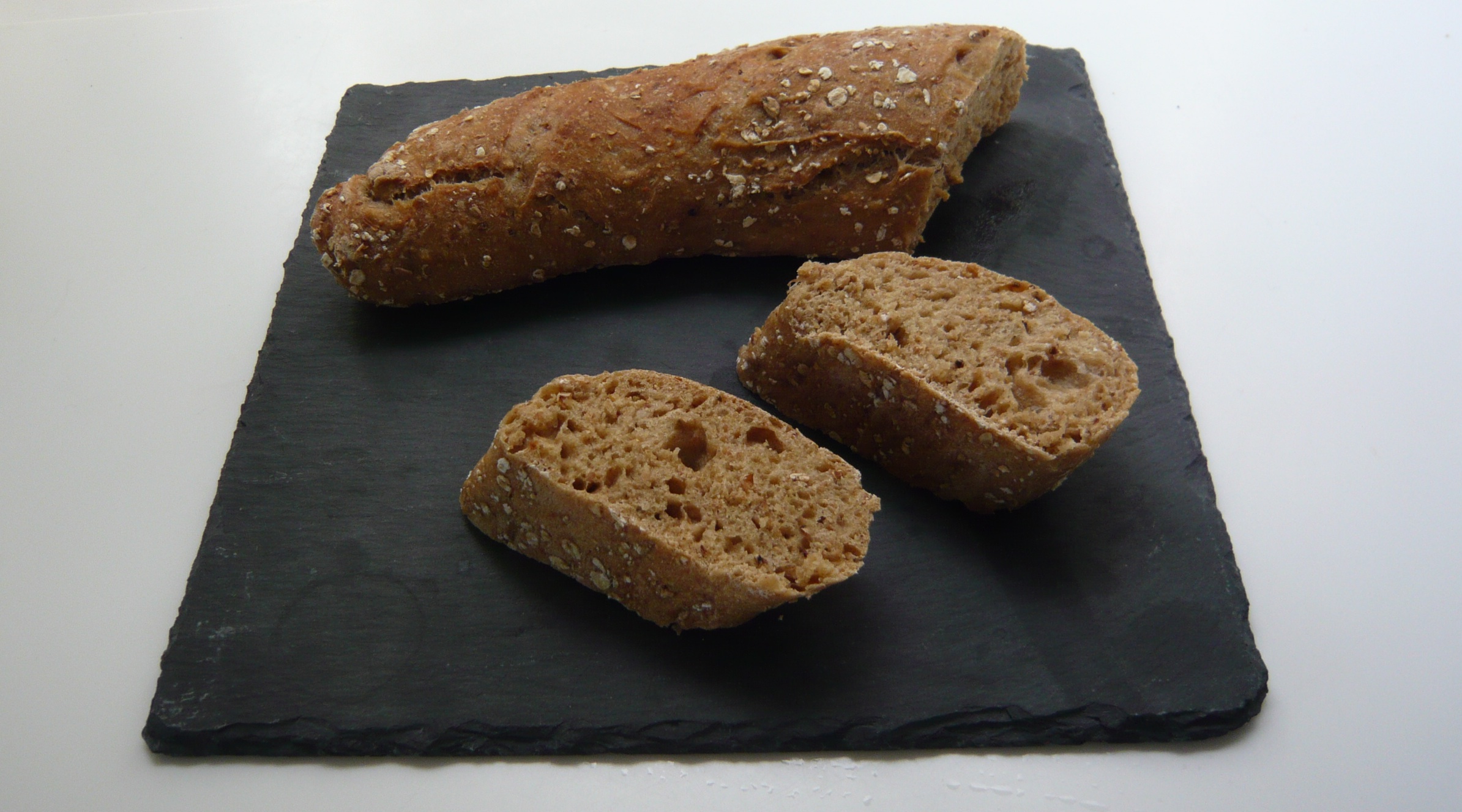
The distinctive holes in the bread are typical for sourdough
Once you have a sourdough starter, you can think about making a loaf. In order to make your starter last you will need to double it, which is called the levain and takes roughly 8 hours. Then you put half of it away as a future starter and use the rest to make your bread.
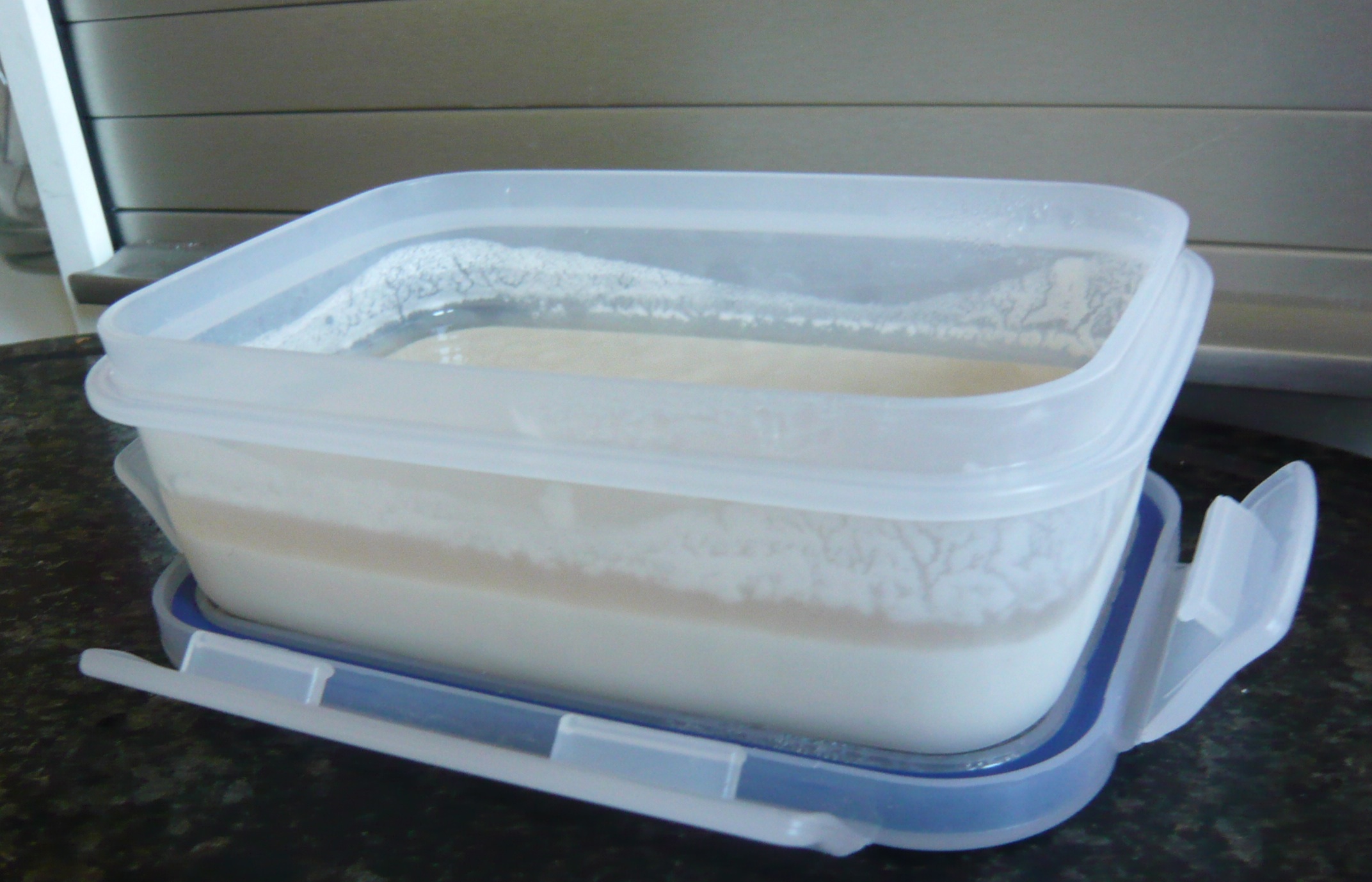
After a few weeks’ rest in the fridge the starter might look a bit funny – as long as it smells of fresh yeast (or like a refreshing yeast beer!) it is fine.
Levain (10 mins preparation, 8 hours to rest)
- 1/2 cup water
- 1 cup strong white bread flour
Add the ingredients to your chef and mix them, either in a bowl or in a breadmaker. Once mixed, cover the bowl or keep the breadmaker closed and leave the levain for 8 hours. When you are ready to bake, simply transfer half the levain into a lidded container and put it in the fridge for the next time. Leave the other half in your bowl or your breadmaker and add the following:
Sourdough Bread (10 mins preparation, 3 hours to rest, 35 mins to bake)
- 1 cup of water
- 3 cups bread flour (any type, e.g. white, wholewheat or rye)
- 1 tsp salt
- 1/2 tsp yeast
- seeds, porridge oats, etc.
Pour the water over the remaining levain and add the other ingredients; adjust the amount of water if necessary. If you are using a breadmaker simply set it to your standard setting: your loaf will be ready automatically within about 4 hours, depending on the programme.
If you are using your hands, knead the dough until it comes off the sides of your bowl. Cover with a kitchen towel and leave in a warm place for an hour or two.
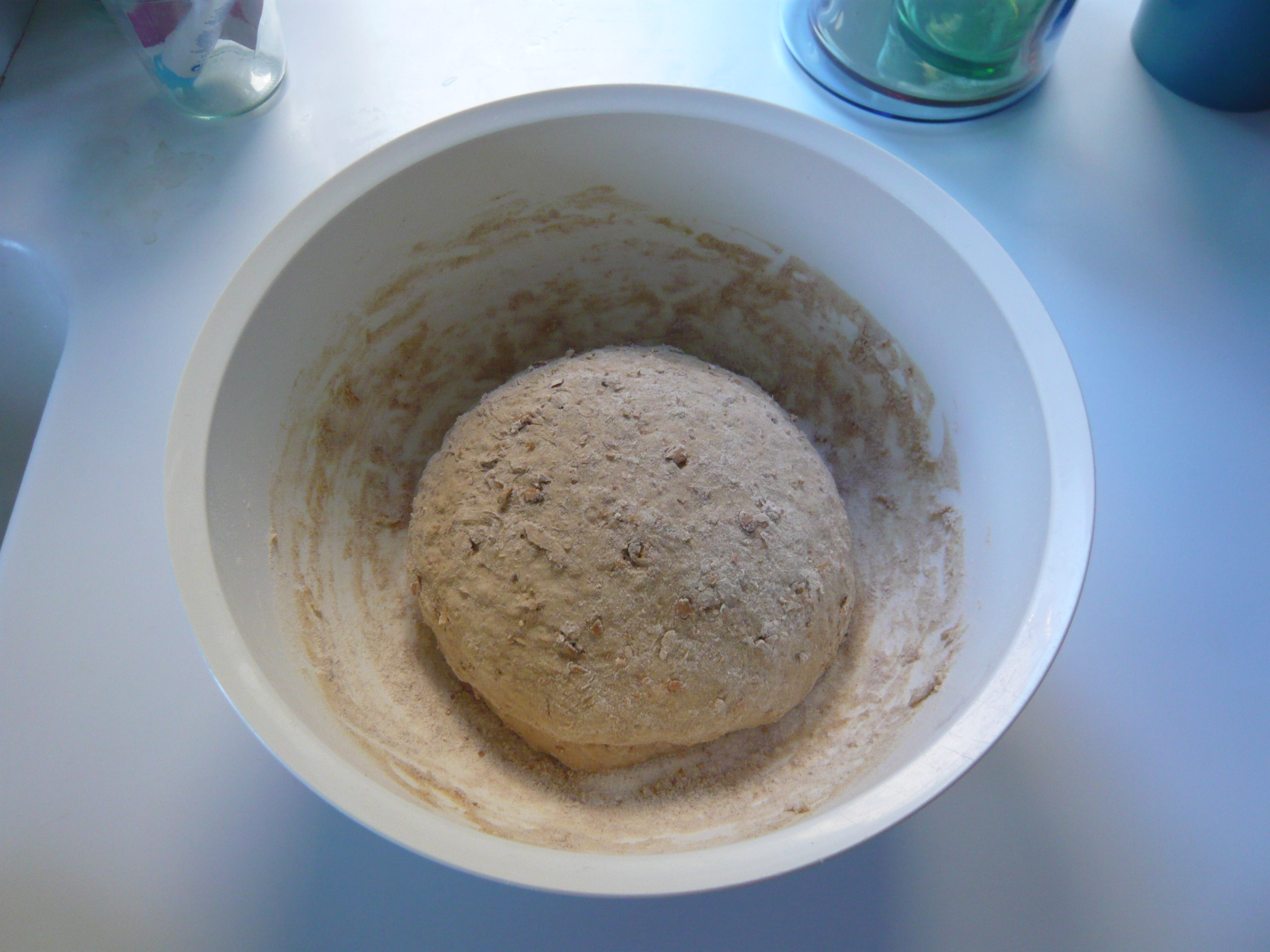
The kneaded dough, ready to rest. With the malthouse flour I had to add quite a bit of extra flour to get over the stickiness.
Now you can form your loaf, depending on your taste and needs: a round boule, one or two longer baguettes, 12 breakfast buns, whatever. Put them on a baking sheet on a thin layer of flour. Cover with the towel and leave to rise for another hour.
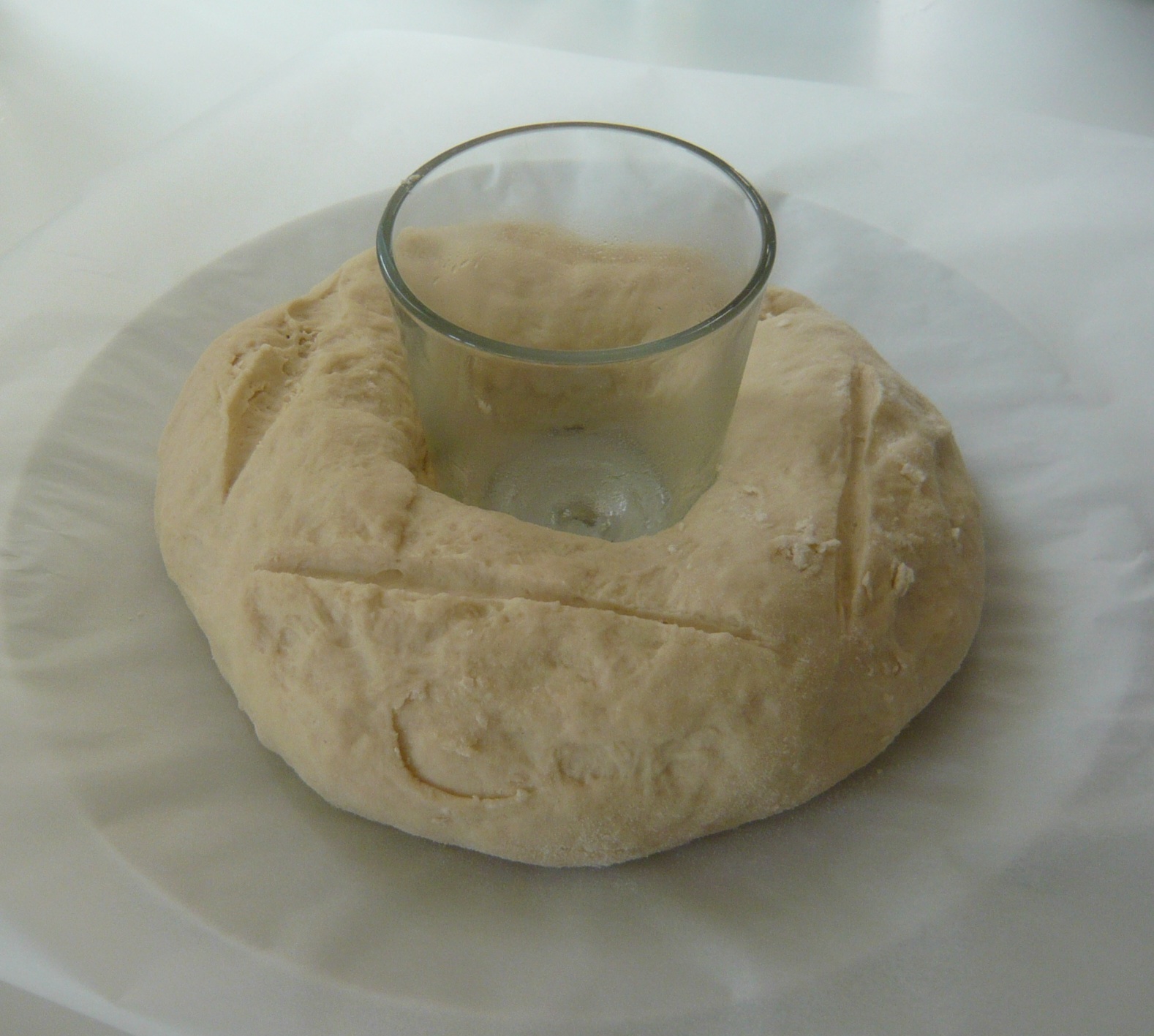
For couronne you need to inset an oiled glass to keep the hole open during the rising process
Bring the oven to 250C, with a flat dish filled with water at the bottom to create a nice crust. Once you put the bread in, reduce the heat to 230C and bake for 35-40 minutes if it is one loaf, or 15 minutes if you made buns.
When you think your bread is finished simply knock them on the bottom: if it sounds hollow they are done. Enjoy!
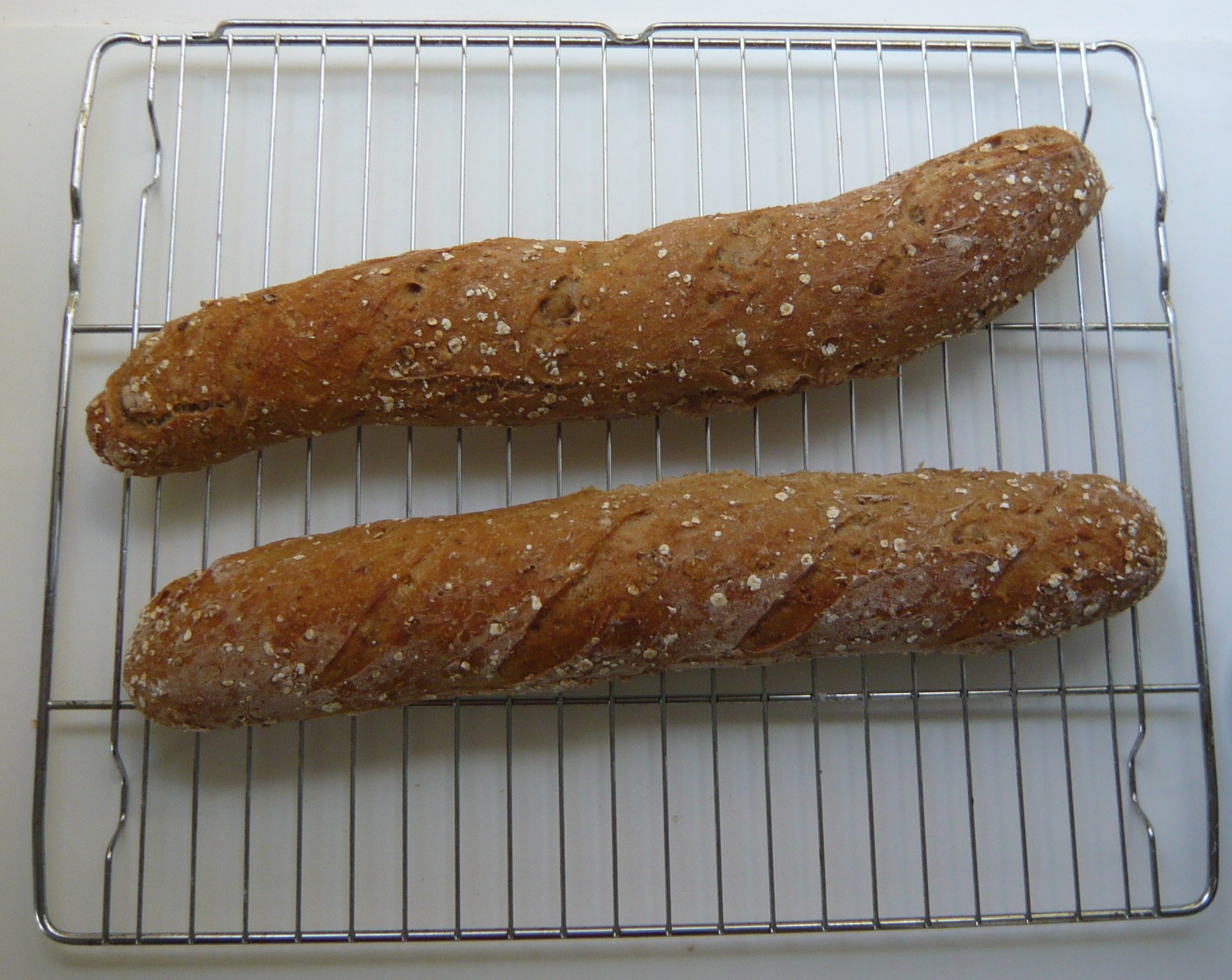
The finished product: I used 1 cup strong white bread flour, 2 cups malthouse flour and 1/4 cup porridge oats and took 20 mins to bake.
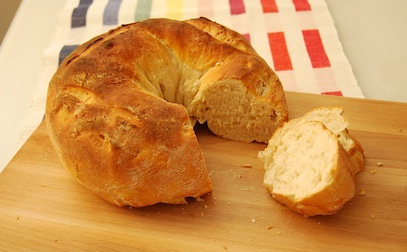
This couronne was made with 3 cups of strong white bread flour; it took 35 minutes to bake, for the last 10 minutes I turned it on its top


 Ginger&Bread
Pingback: Maßeinheiten Umrechnen – Das Imperium schlägt zurück | Ginger&Bread
Lovely – roughly how much starter is half of your original? I make a loaf which uses about 100ml but would like to try your recipe which uses cups instead of weighing!
LikeLike
My starter is around 250g, or around 200ml. Although I have experimented with the types of flour and the quantities of salt etc, I have never changed this as it suits my starter quantity. Is your recipe on your blog? I’d like to try it out some time!
LikeLike
Pingback: No-nonsense Sourdough, as easy as 1, 2, 3 | Ginger&Bread