 How better to start this blog than with sourdough starter. If you haven’t eaten sourdough bread yet you have been missing a treat: it’s chewy, has a slightly sour taste and keeps for longer than your average loaf.
Although making the bread doesn’t take that long, in order to do so you need a starter, which takes up some time. But the beauty of it is that you keep some of the starter in your fridge and simply replenish it whenever you feel like it. That way you can keep making delicious loaves, or baguettes, or whatever you fancy, from the same starter dough.
The other good news is that for most of the time your dough is simply sitting in a corner, covered with clingfilm, slowly developing the cultures that give it its name. So what’s keeping you?
The process of making the starter is split into three separate steps, which have their own fancy French names: the chef is the first step, followed 3 days later by the first refreshment. Two days later your chef is technically finished. Before you make your first bread you need to double the amount of your chef, which is now called the levain. Eight hours later you are ready to use half of it for your first loaf, keeping the other half safe in the fridge for the next time.
Day 1: Chef
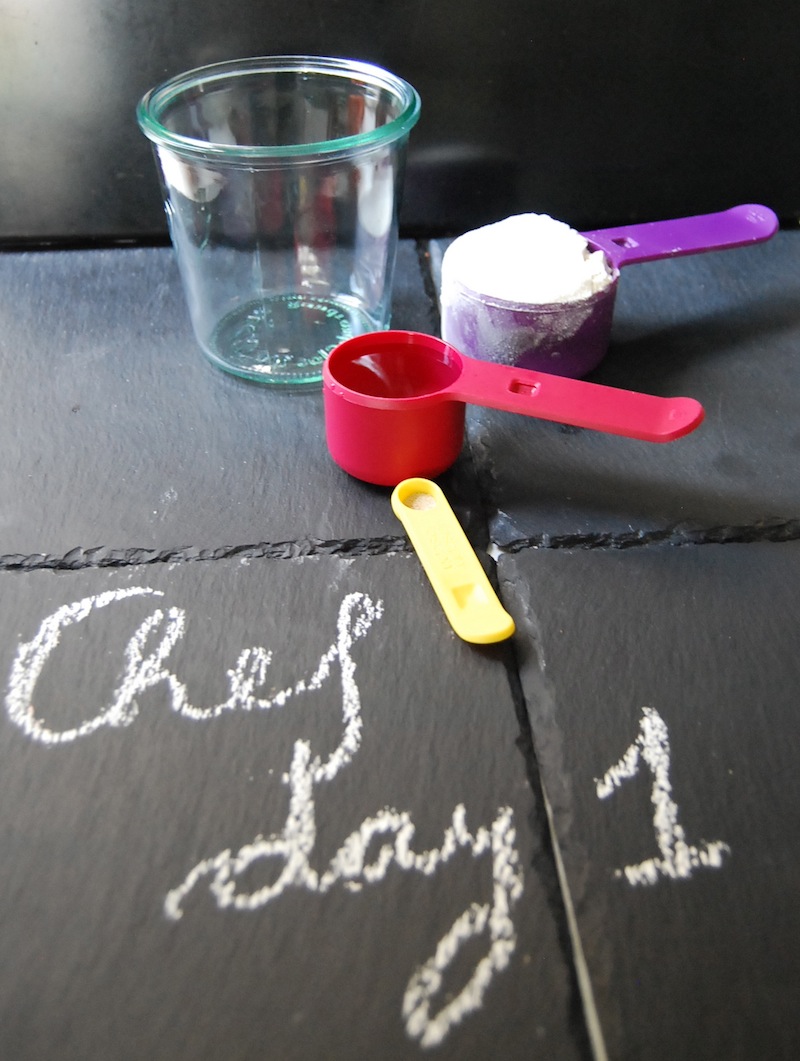
- 1/8 tsp yeast
- 1/2 cup plain flour
- scant 1/8 cup tepid water
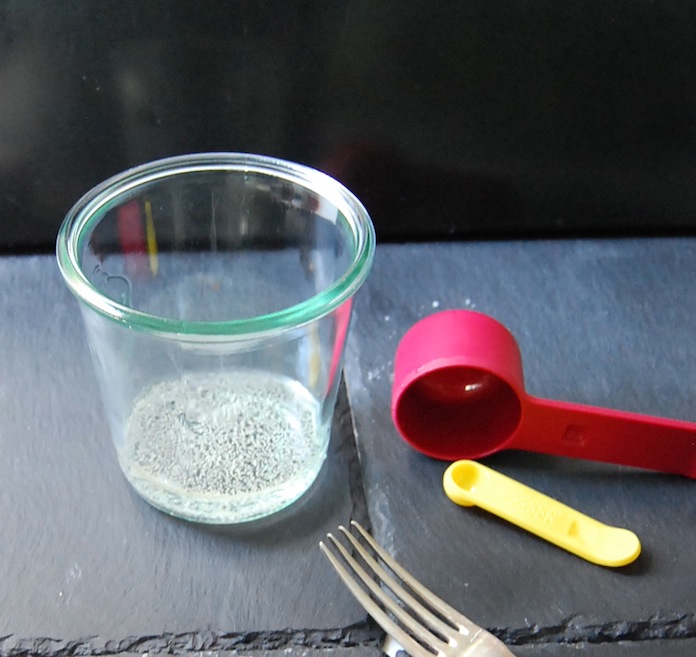
In a small bowl, mix the water and the yeast.
Add the flour and mix all the ingredients to a stiff dough.
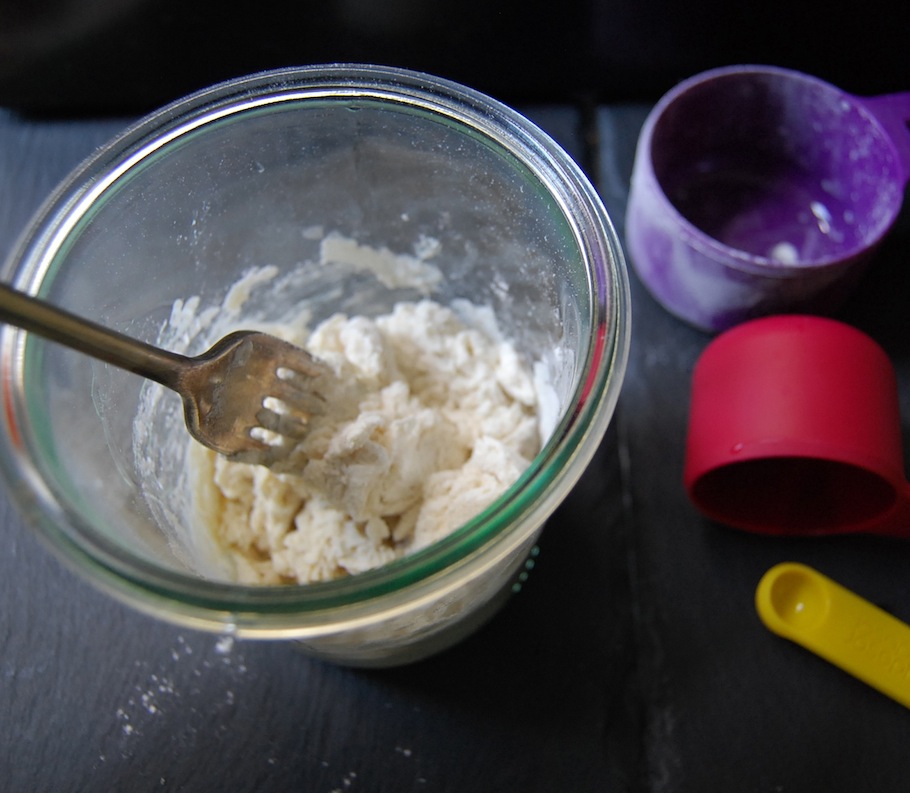
Cover with clingfilm and set aside for 3 days.
Day 2, 3 and 4: rest
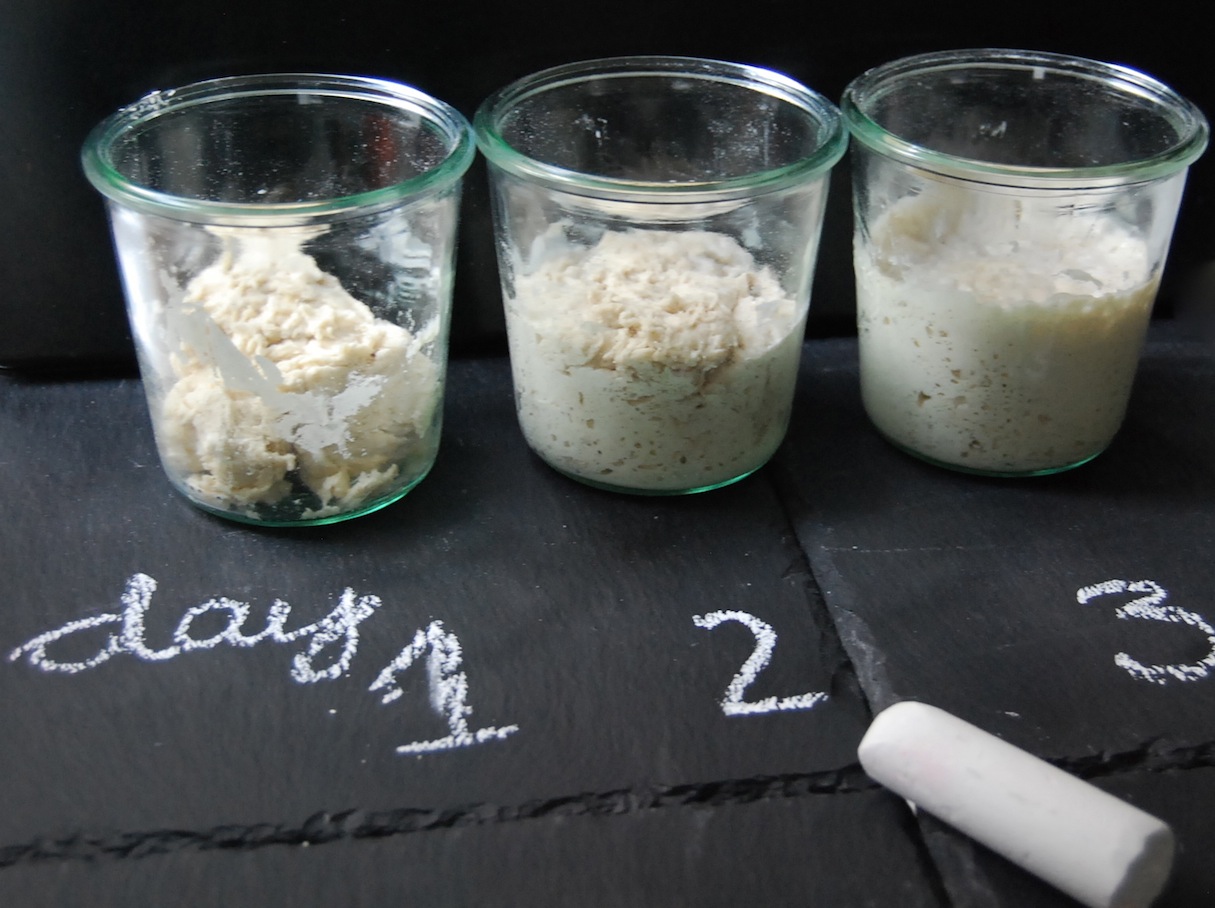
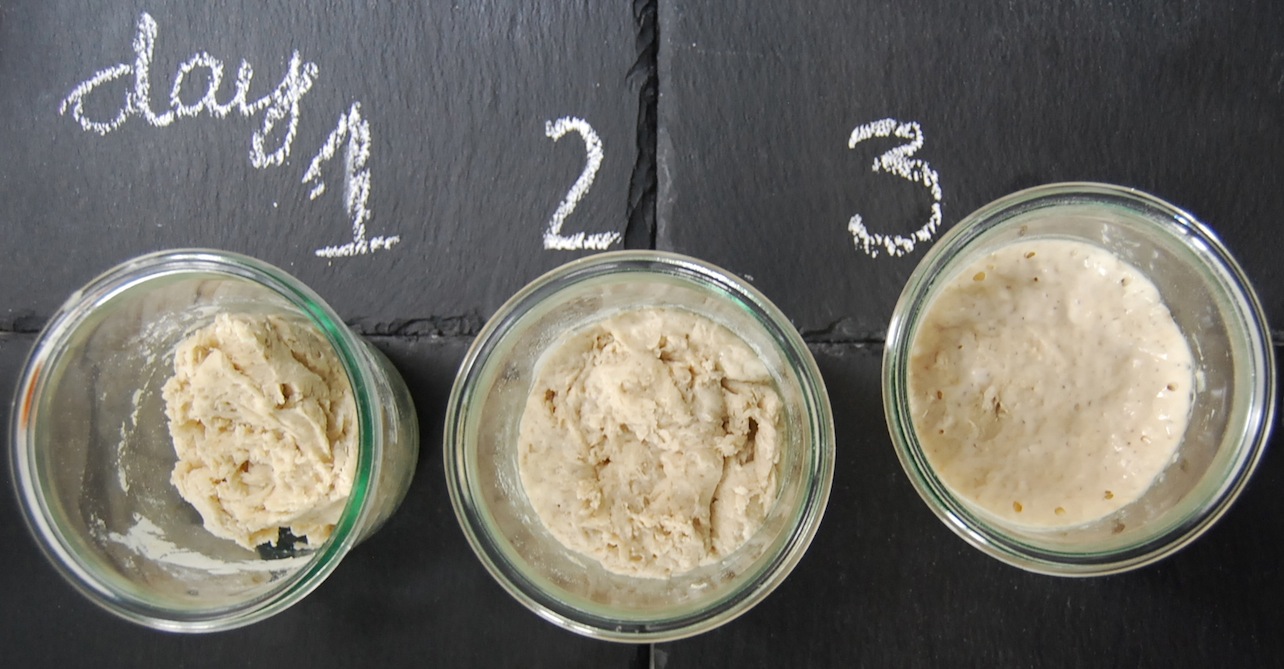
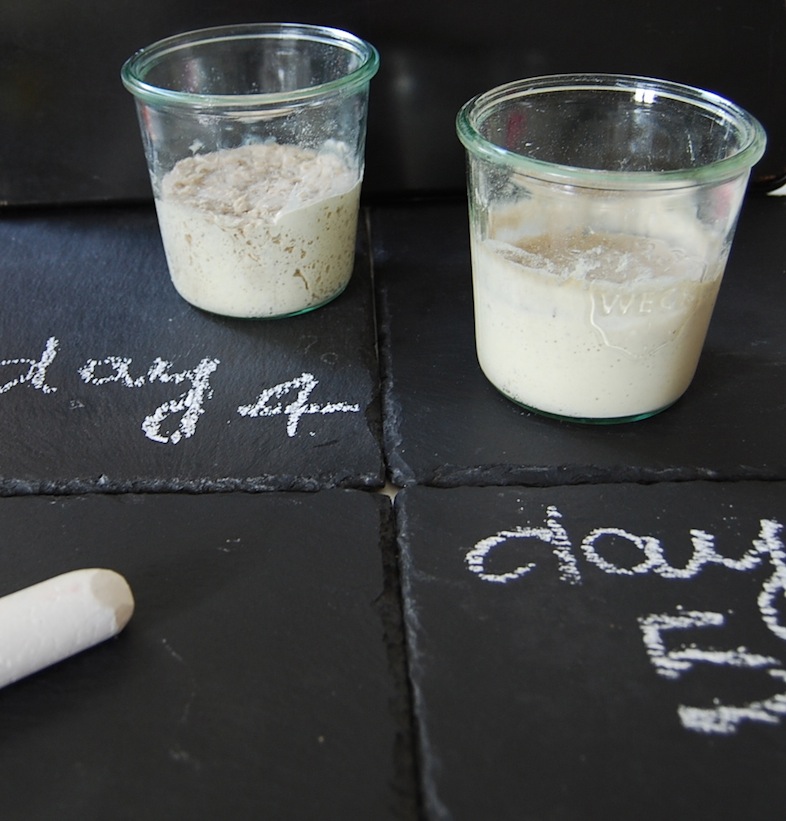
You know it is working when your start seeing bubbles on the surface – also, the initially stiff mix gets gradually softer and quite liquid over the next few days:
Day 5: 1st Refreshment
Once the chef has doubled in size and become quite liquid, you can feed your starter. This is usually around the 4th or 5th day.
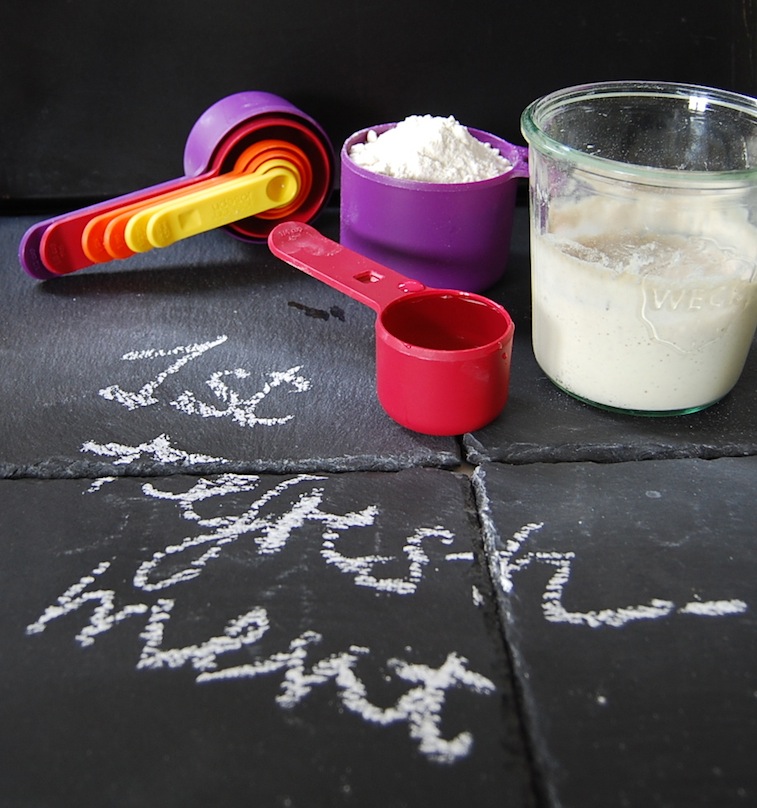
- 1 cup plain flour
- scant 1/8 cup water
Add the ingredients to your chef to make a rather stiff dough.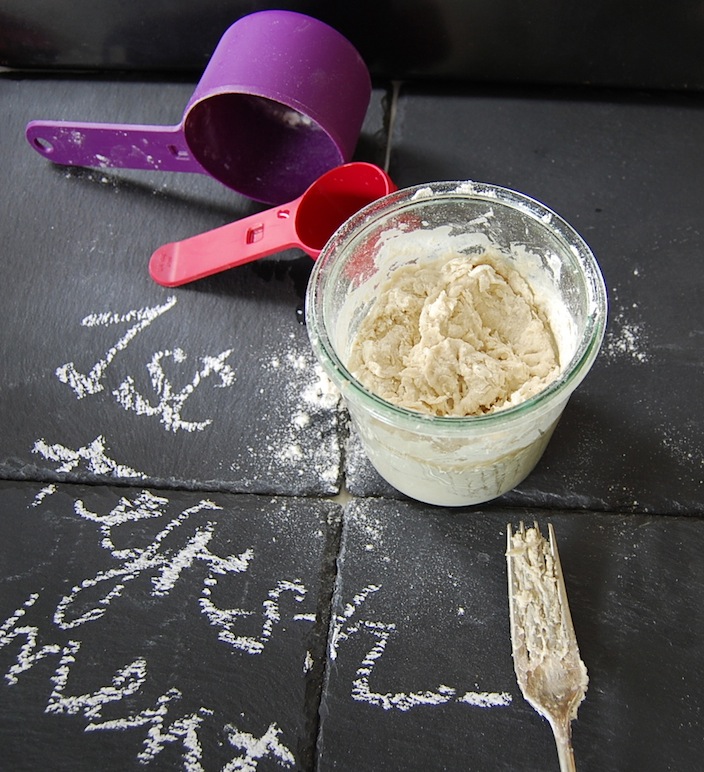
Cover with clingfilm and set aside for another 2 days.
Day 6 and 7: rest
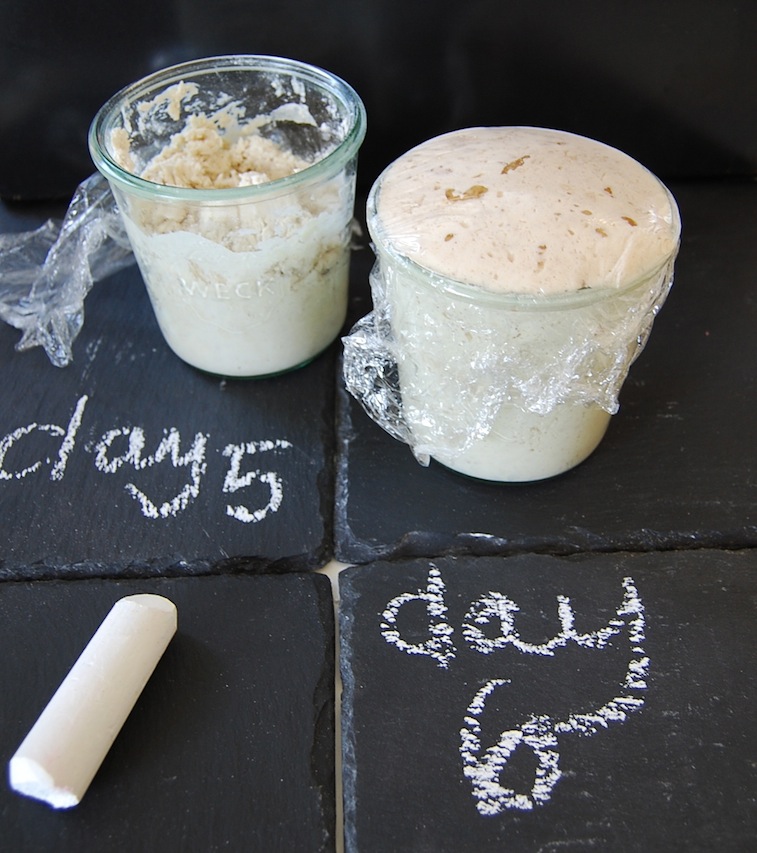
Over the next two days, the stiff mix will become gradually bigger and more liquid – but this time much faster than before the first feed!. Simply admire it: you’re almost there!
Day 8: the finished starter
Now you have a finished chef: if you’ve lost interest, simply pop it into the fridge in a lidded container and forget about it for a few weeks. If you are desperate for action, feed it to have a lovely loaf within 12 hours.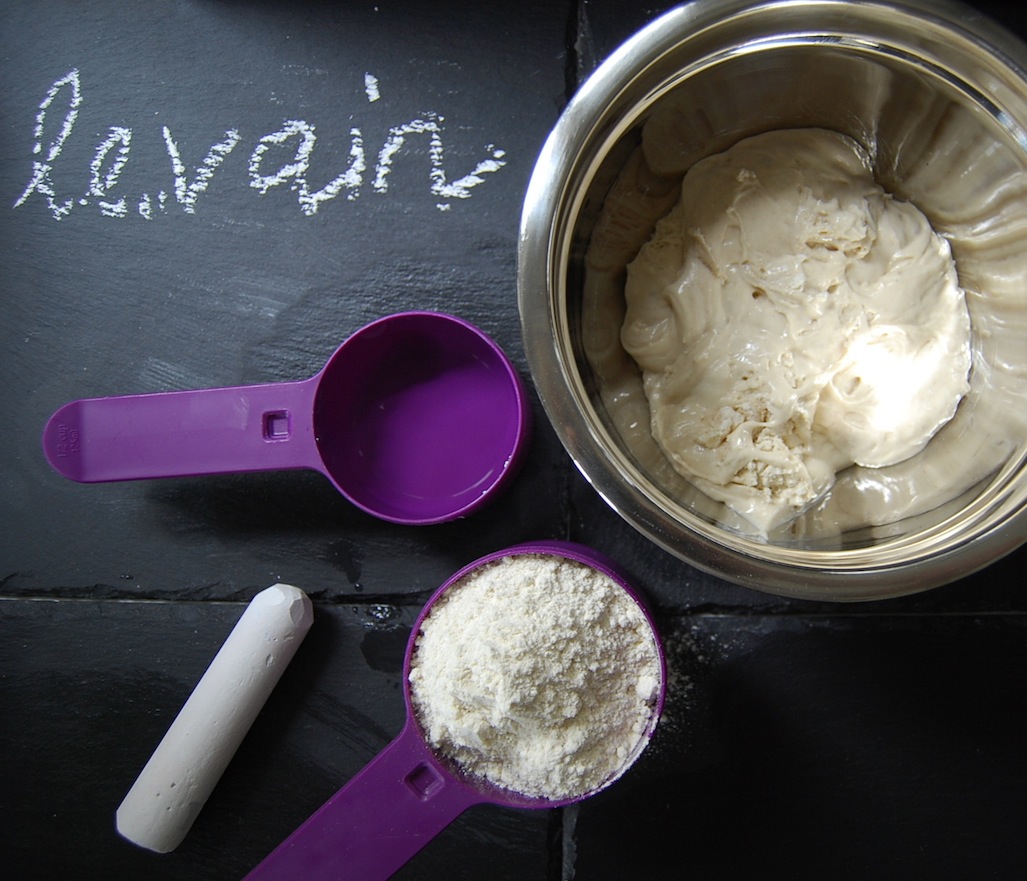
Feeding your starter
In order to keep hold of those lovely active sourdough cultures you have created, you need to double the quantity of your chef by adding more flour and water: over the course of a few hours, the sourdough cultures will mix with the new ingredients, leaving you with a whopping 300g or so of sourdough starter. You will need:
- 1 cup plain flour
- 1/2 cup tepid water
Simply add an mix with your starter, cover it with cling film, and leave it for 8 hours in a draught-free corner of your kitchen.
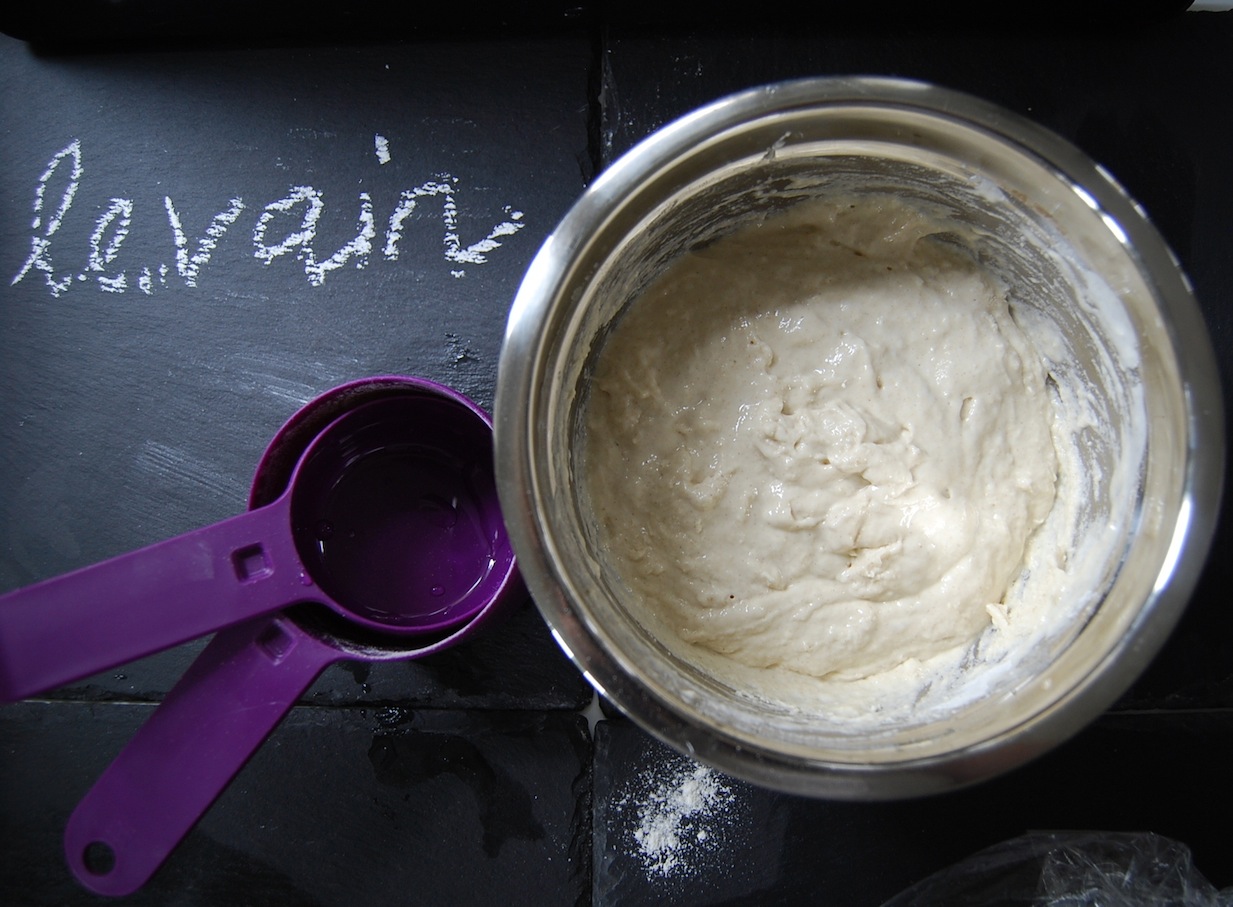 If you’re using a breadmaker, you can easily do the mixing and resting in there, just make sure you’re not accidentally baking it! Run a short kneading cycle and leave it, lid closed, for the 8 hours or so. You’ll notice it will double in size: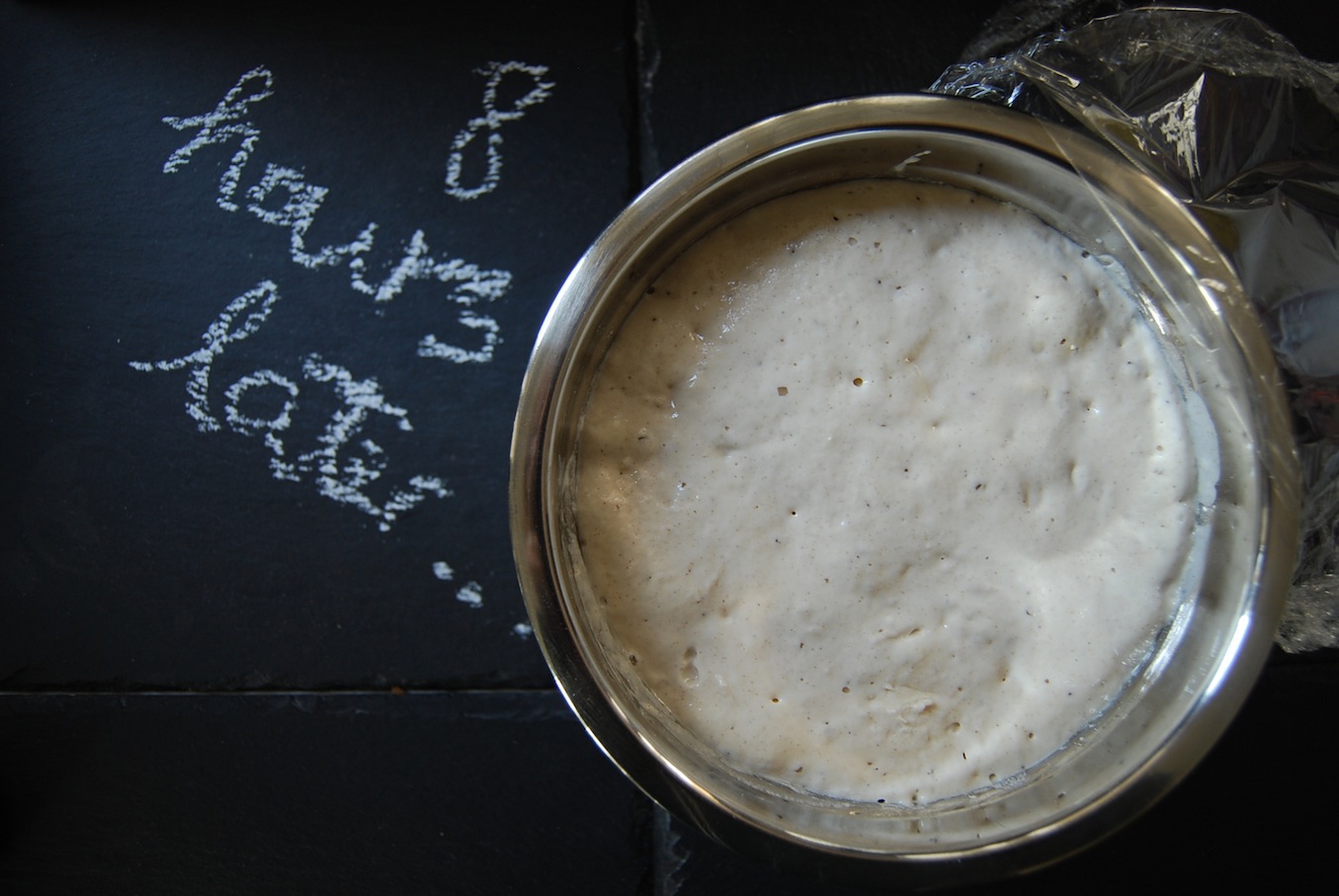
Once the 8 hours are over, split the starter: half of it can be used straightaway for your bread, while the rest can be plonked into the fridge until you want to use it again.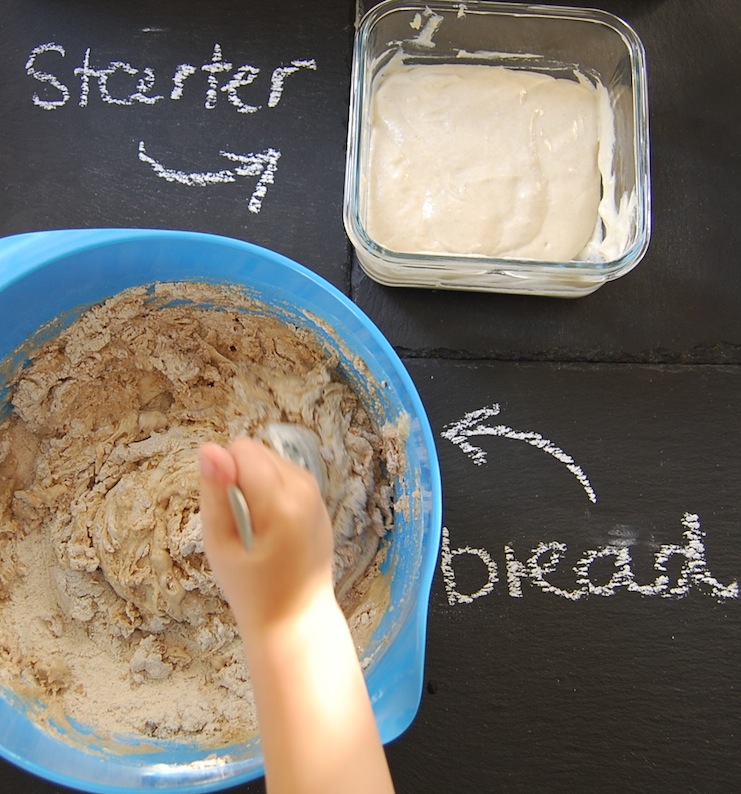
I’ve forgotten starters for weeks on end, somewhere in the back of the fridge. Trust me, it doesn’t matter. They don’t need any TLC until the day before you want to use them. By feeding the starter, the cultures will spring back to life and8 hours later, you’ll have an active, bubbly starter ready to use. No need to discard anything, or to employ a professional sourdough nanny to look after it whilst you’re on holidays. Seriously.


 Ginger&Bread
Pingback: Sourdough Bread | Ginger&Bread
Pingback: Sourdough Bread | Ginger&Bread
Pingback: Sourdough Bagels – The Final Frontier | Ginger&Bread
Pingback: Baguettes for Beginners, or: Getting Hooked on Sourdough | Ginger&Bread
Pingback: Leckere Baguettes: Sauerteig für Anfänger | Ginger&Bread
Pingback: Sauerteig Starterkultur: Levain | Ginger&Bread
Pingback: Going a Little Wild: Sourdough Starter using Wild Yeast | Ginger&Bread
Pingback: German Country Bread, or Schwarzbrot 2.0 | Ginger&Bread
Pingback: Everyday Wholewheat Sourdough | Ginger&Bread
I will try this, do I have to use bread flour or is all purpose flour alright?
LikeLike
Just got back to you on the bread post – I really don’t see why you’d need to use bread flour for a levain (it’s probably just out of a habit I’ve been using it!)
LikeLike
Really thats good to know. I may jyst use regular flour then thank you
LikeLike
Please excuse all the questions. I have never made bread with Levain. Do I need to feed it before I make the bread. If so do I add the same amount of flour and water? Won’t that weaken the levain? Just wondering I have yet to wrap myself around the science of the levain and am nervous about using only 1/8 tsp yeast for a loaf of bread.
LikeLiked by 1 person
Technically once you get to Day 7 you’re ready to go! My wholemeal loaf requires 200g of starter, that should be roughly half of what you’ve got. Just take that amount and get going with the bread, popping the remaining starter into the fridge until you want to make the next bread. The day before, simply feed it as in the 1st refreshment and 8 hours later you can again use half for a new loaf, keeping the rest for the next time.
LikeLiked by 1 person
Also mine did not grow like yours did. Maybe because it’s colder in my kitchen. If thats the case do I need to leave it longer to grow?
LikeLike
Relax – bread isn’t an exact science! I’d leave it in the cold oven overnight, perhaps, and if you’re really worried keep the oven light on, that will ads dome warmth; or a hot water bottle? But don’t worry, size doesn’t really matter.
LikeLike
Today is the 4th day and the levain looks good, bubbly and smells like sourdough bread. I will feed today and let sit another 2 days.
LikeLiked by 1 person
Good luck to you! Happy bread-baking days 🙂
LikeLike
Thank you!!
LikeLike
I wish I was able to explain it better!!
LikeLike
I am sure you are so sick of me, my apologies. I put the levain in the fridge while I waited for my cast iron pot to be delivered. I got it today, took the levain out of the fridge and fed it with 1 cup flour and 5 tbs warm water. Is that ok? I set it in the oven with the light on to warm up and rise again if I didn’t kill it. Should I just start over?
LikeLike
No worries, if you let it sit there for over 8 hours it will be ready!
I don’t always feed my starters before using them, it might just mean that they’ll take a little longer to rise. It’s a risk I’m prepared to take when making a simple loaf – I always feed it before attempting something more elaborate!
LikeLike
Pingback: Making Levain, A Gift For Nando A New Kitchen Toy, Community Pick On Food52 | apuginthekitchen
Pingback: My First Ever Sourdough Loaf And I’ll Bring To Fiesta Friday #50 | apuginthekitchen
Thanks for sharing your recipe Ginger… I’m starting my levian tomorrow using your recipe! I’m so excited… my fingers are crossed I’ll find great success, just as you and Suzanne did. 🙂
LikeLike
Pingback: No-nonsense Sourdough, as easy as 1, 2, 3 | Ginger&Bread
Pingback: Wholewheat, Rye and Oat Bread | Ginger&Bread
Pingback: Spelt and Rye Sourdough Loaf | Ginger&Bread