I had originally signed up to review Margarita Carrillo Arronte’s Mexico: The Cookbook as part of Food52’s Community Piglet competition. But despite cooking a range of dishes, I simply couldn’t make up my mind whether or not I could fully recommend the book to its readers, which is the whole purpose of the competition. I had picked this book because I had always wanted to find out more about Mexican cuisine, and with Phaidon as its publisher, I thought, what could go wrong?
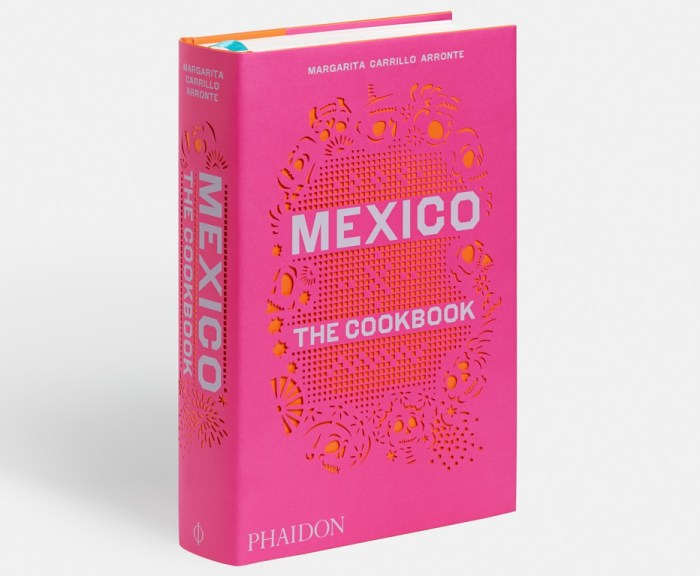
Photograph: Phaidon
I tend to divide cookbooks into two categories: practical or aspirational. By practical I mean clear, easy to follow and comprehensive. Aspirational, on the other hand, takes you out of your comfort zone and inspires you to take your cooking to another level. The downside of ‘practical’ cookbooks is that they can end up rather boring and predictable, whereas if a book is too challenging, the recipes remain untried because you cannot procure the ingredients, skills or equipment specified. Mexico: The Cookbook clearly falls into the category ‘aspirational’, and mostly in the best sense of my definition: its beautiful papel picado cover and hundreds of stunning photographs make it a real feast for the eyes, and the 600-odd recipes justify its reputation as a comprehensive guide to Mexican food.
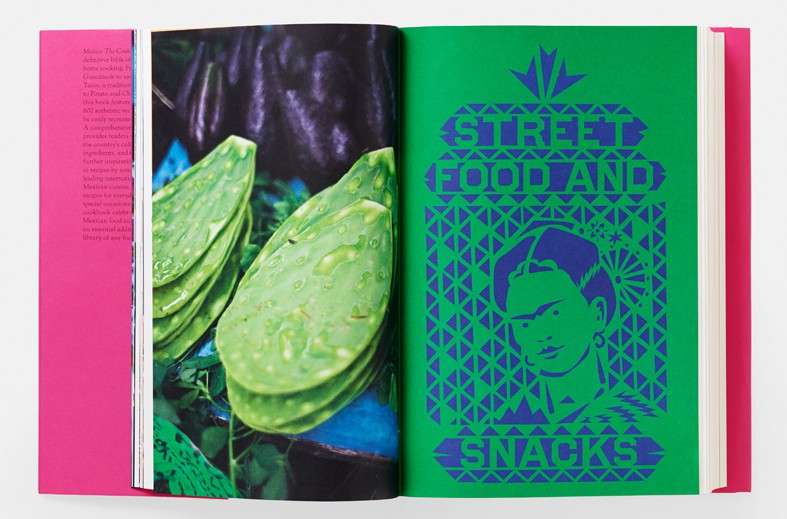
Photograph: Phaidon
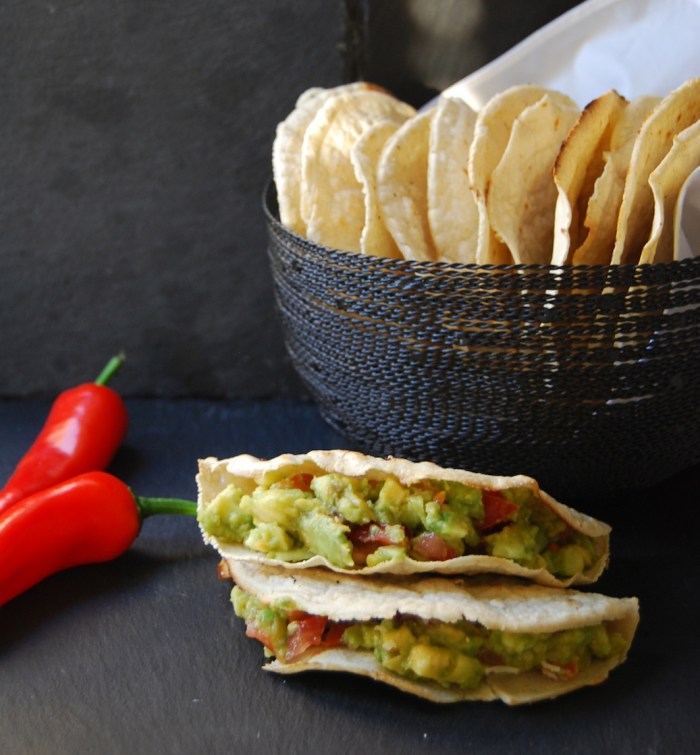
However, practical it ain’t, and mostly for the right reasons: its recipes are uncompromisingly Mexican, using the whole range of ingredients that you can find in the tropical climates of this fascinating country. No compromises or shortcuts are provided for those readers whose local supermarkets only stock two types of chilli (red and, surprise, surprise, green) and where ‘tropical fruit’ come in tins. In the case of the fresh ant eggs required for mixiotes, I wasn’t too bothered; the lack of a wider range of chilies and of fresh poblano peppers, which feature so regularly in the recipes, was much more seriously felt.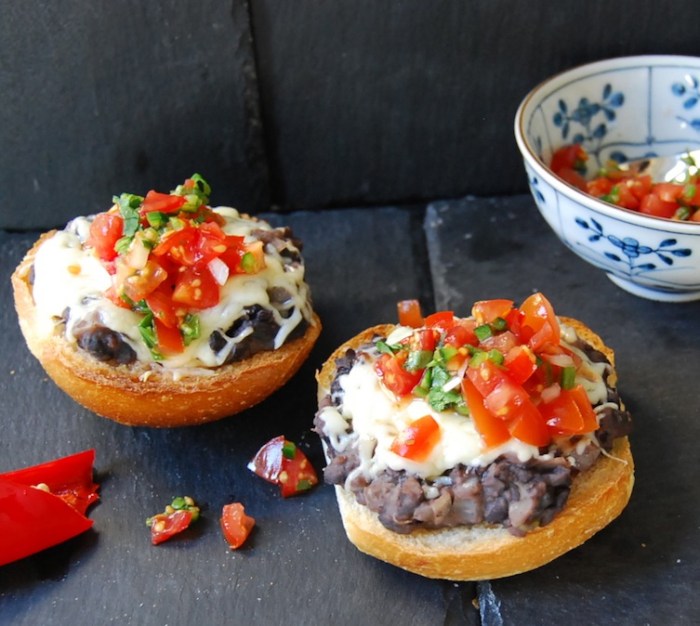 We started our Mexican adventure with some simple Molletes, sandwiches with black beans and a raw tomato salsa, whose combination of flavours and textures made it the perfect introduction to Mexican food. The next dish I prepared, a rabbit casserole, never made it to the blog: the rabbit was completely lost in the prune and chili sauce, which was enough to serve with at least four times the amount of meat; a headnote explaining how Mexican stomachs can stomach such an amount of dried prunes would have been helpful here. The Cochinita Pibil, on the other hand, was worth sourcing each of the ingredients individually: the pork is marinated in bitter orange juice and the most amazing spices and wrapped in banana leaves. If you can get hold of these ingredients, do so and give it a try as the flavours and aromas that are released in the process are simply to die for.
 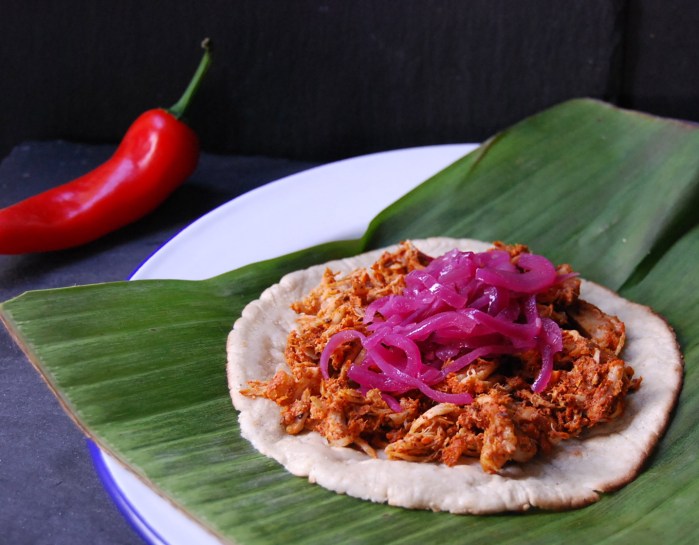 As the recipe suggested, we ate it with a red onion Escabeche, which added a fruity freshness to the meat dish, served on freshly prepared corn tortillas. The latter needed three times the amount of water specified in the recipe – a minor niggle, I admit, but one that could have easily been avoided.Although my tolerance-level for headnotes is rather low – I usually couldn’t care less for the cliché-heavy glimpses into a celebrity writer’s lifestyle – in this case I ended up missing the information they can provide you with. The origins of the Cochinita Pobil go back to the Mayans, and it would have been great to find out more about the history of the dish.
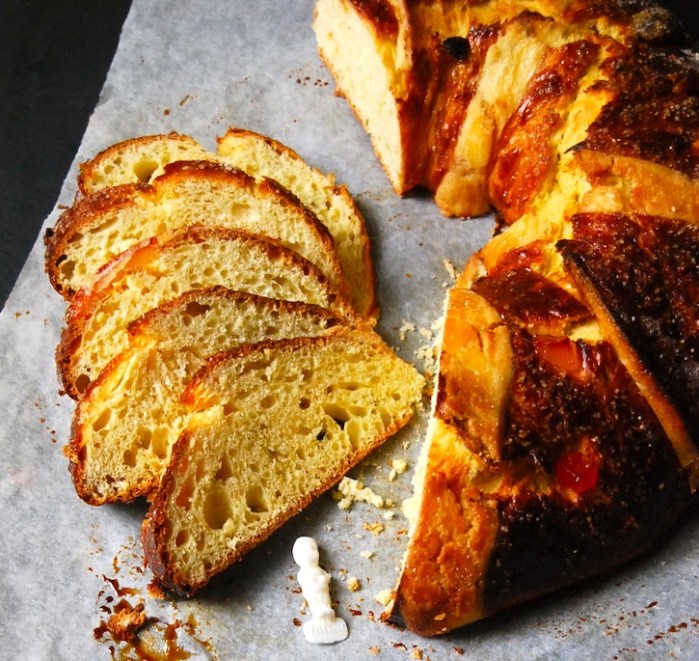
 Another dish that made me positively mourn the absence of headnotes was the Rosca de Reyes, the sweet bread traditionally made for Epiphany. No mention of the little figurine, usually depicting the baby Jesus, which is hidden in the bread, meant that readers less familiar with Mexican traditions would miss out on the lovely tradition that whoever finds it has to prepare the tamales for the next get-together. The bread was gorgeous, beautiful and rich, and would have made our day even without a plastic Baby Jesus. Some of the decorations, however, were so salty that it made those parts of the bread almost inedible. Again an explanation – or warning, even – might have helped; in my version of it I replaced the salt dough with the mix used to decorate hot cross buns, thus keeping the looks and texture but without the overpowering saltiness of Carillo’s version.
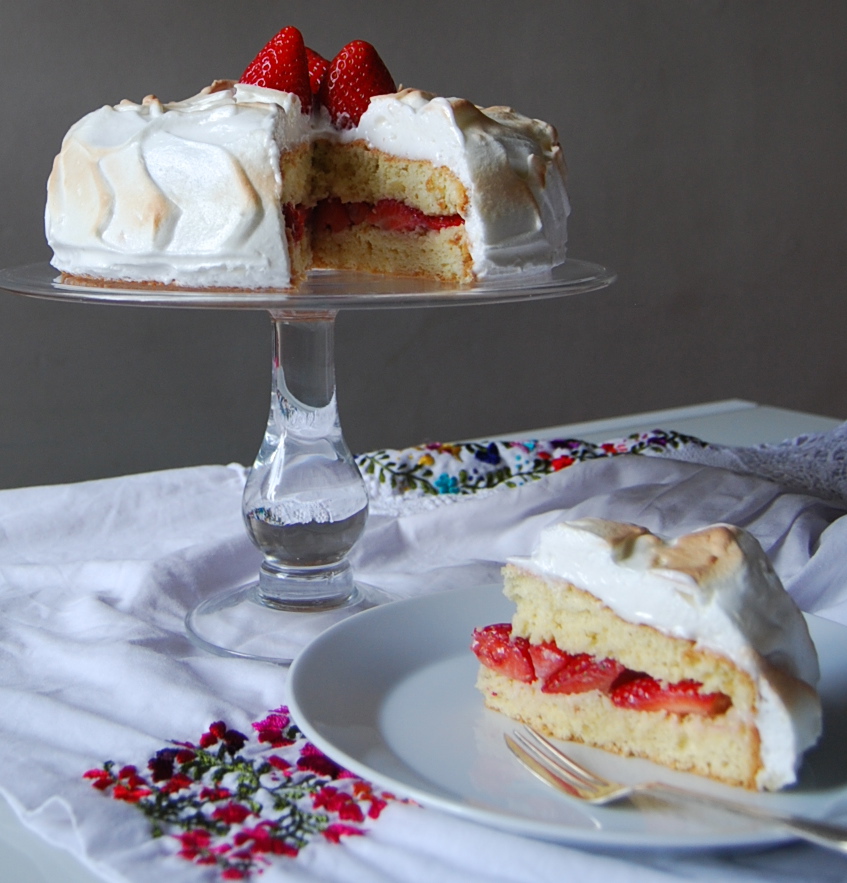
 The last recipe we made was the Pastel Tres Leches, a cake that’s popular all over the Spanish-speaking world. Carrillo’s layered version is absolutely spectacular: the sponge is filled with fresh strawberries and then soaked with the three types of milk that give the cake its name: condensed milk, evaporated milk and cream. The cake is finished off with a coat of Italian meringue, slightly browned – heaven on a plate, trust me, and the perfect finish to our tour of Mexican food.
 So, would I recommend this book? To be honest, I still don’t really know what to say. If you are familiar with Mexican cuisine and if you are an experienced cook or baker, there’s nothing better to get you into cooking up a right fiesta than this gorgeous tome. You’ll have few problems figuring out the correct quantities and ingredients where they are wrong or simply missing, and you will know how the finished dish is supposed to look or taste, regardless of your own cultural preferences. If you have very little knowledge or experience of Mexican food, this book might work better in conjunction with a more ‘practical’ Mexican cookbook, such as Miers’ Mexican Food Made Simple, which will provide you with substitutions that work for the UK. Carrillo’s uncompromising stance, however, will introduce to the recipes you will not find in find there, showing you in more than a dozen recipes what you could do with avocado leaves if you only had them. That in itself, for me, makes this a fascinating book that I will be using again and again. I might even start looking for those ant eggs …


 Ginger&Bread
Great review! Very thorough and helpful!
I’ve had similar issues sourcing chiles when I’ve tried to cook from Diana Kennedy’s (nevertheless excellent) books. I suppose they could be ordered online (?) but who plans ahead that far?!
I think i would still buy this book for its absolutely stunning design but I’d most likely never cook from it. 600 recipes? Of course there are mistakes! I’m SURE they weren’t all reliably tested. Too bad!
LikeLike
It’s one of those things that really surprise me! I love the German publisher GU as they claim they test every recipe 3 times before they publish a book, and I have to say that I’ve never had any issue there. When a friend of mine complained about a very famous chef’s last book for being all over the place in terms of measurements, I had no idea what she was talking about! But in hindsight, Mexico is a beautifully presented book with an insane amount of recipes in it, so to be able to buy this for just under £30 comes, metaphorically, at a price. It looks daunting but I promise you’ll be cooking from it! I am looking forward to the tamales my friend has promised for the Dia de la Candelaria 🙂
LikeLike
Hi there, I just bought this book and have exactly the same feelings. I actually do miss the headnotes and found myself going back to the introduction again and again just for some background. I suppose I was expecting a sort of modern version of Diana Kennedy’s books. Nonetheless, I appreciate your directing me as to the pitfalls of certain recipes . . . keep me posted!
LikeLike
I do agree, it is the perfect ‘second’ book on Mexican food! But then I love the pictures, and the sound of the dishes, and I do like a challenge 😉 I will have to take a look at Miers’ book to check up on some of the ingredients, though, as that seems to be the British standard for Mexican food. I’m in the process of sorting out how to mark the ‘conchas’, those lovely sweet buns, while eating one that my friend brought me from Mexico yesterday 🙂
LikeLike
I just discovered the whole Piglet “thing” and darn, I just missed the deadline! I’m making the bean and sesame seed soup today!
LikeLiked by 1 person
I am looking forward to that soup!
LikeLike
Excellent review – really well written. Think I might give the ant eggs a miss though 😉
LikeLike
There’s some stuff with grasshoppers, if you fancy them 😉
LikeLike
Well, I suppose I eat prawns so maybe I’d give them a go 😉
LikeLiked by 1 person
Awesome post. Good for you on such a great review. Even some of our wonderful blogger buddies have ingredients that I’m not familiar with so when I pick up a book that looks like that, I don’t take it home. I want to try new things, but on my level. Plus, I think Mayan cooking is very different from Mexican, and traditional Mexican is nothing like the tacos that everyone think is Mexican cooking.
LikeLike
You see. that’s what drew me to the book – it’s practically a taco-free zone! I’d rather have the ant eggs …
I absolutely share your issue with ingredients. I love to read Ottolenghi’s recipe, which he publishes every weekend in the Guardian. but never once have I considered making on of the dishes simply because I would have to go out of my way to get hold of the ingredients! I call it the Ottolenghi diet: drooling over the pictures with not a calorie in sight 😉
LikeLiked by 1 person
I must get involved in the Food52 community. I just heard about the piglet too. Do you get involved regularly? If so, on what level?
LikeLike
I really like the site and its focus on the, well, perhaps more practical side to food. With the internet being such a visual tool, much of the ‘quality control’ is done visually, and a stunning picture can hide an awful dish. What I like about the side is that they scrutinise the recipe and pick what works well in terms of flavours and textures. less than lighting and composition 😉 I am a great fan of Suzanne’s who I saw contributes quite regularly , which in itself is the best recommendation any site can get! I have contributed one or two recipes to the ongoing competitions, as a little challenge for myself and, hopefully, to get honest and precise feedback on my progress as a food writer. I would have loved to take part in the review, but I realised in hindsight that I seem to have put my money on the wrong horse 😉
LikeLiked by 1 person
Thank you Ginger, that helped a lot. Suzanne said that she has met a lot of people through that site. Is that because of the food that she has submitted or the competitions that she has won?
LikeLike
Probably! All the more reason to try harder 😉
LikeLiked by 1 person
Appreciate the honest review Ginger and the outstanding marathon of recipes you tired and mastered. As I mentioned some of those posts looked daunting to me, a fairly seasoned cook and although I enjoyed reading them, I knew I would not try them. But we all need aspirational cookbooks in our repertoire, don’t we? Well done!
LikeLike
Thank you, Johanne! It was actually quite a lot of fun (apart from rabbit-gate ;-)) And I am looking forward to trying out the next, especially as my friend brought some fresh banana leaves back from Mexico! Surely that must be one of the most amazing souvenirs ever (and I have an impressive collection of the most awful fridge magnets!) 😉
LikeLike
Ant eggs?? Can I have one banana leaf too? I know what you mean in terms of recommendations of the book- I also have a few, and frankly I would love to make those dishes, at the same time I know I will never be able to find certain ingredients- I understand when the author doesn’t want to compromise on these things for the sake of it- but wouldn’t be better to provide the reader with a list of equivalents, and simply give you a choice- for example can I replace those ant eggs with caviar? 😀 so what about our business plan my dear?
LikeLike
I still like the attitude, and I suppose if you live in southern parts of the US you might be able to source most of the ingredients quite easily, due to the large Mexican community. Where I live – and hopefully you will come and see it for yourself soon! – I could cook authentic Indian food to my heat’s content because of the thriving Indian community and their countless cash&carry shops that stock everything I might need to whip up a curry. I even have a German supermarket in Windsor, which is not far, but the Mexican community happens to be on the other side of London! Once you replace everything with ‘red’ or ‘green’ chillies it’ll taste just as bland as the ready-made mixtures you can buy 😦
No luck with the ant eggs yet, though 😉
LikeLiked by 1 person
Ginger that is a wonderfully honest write up. What you did make is wonderful and I am still in awe of those tortilla’s. Last year I signed up to review Modernist Cuisine, I became overwhelmed and couldn’t do the review. I know how you feel. The fact that Mexico is authentic is great but if you don’t have access to what you need to prepare a recipe it makes it kind of useless but I guess a good read.
LikeLike
Thank you so much for your kind comments, Suzanne! I’m glad I am not the only one 😉 I picked an ambitious read, I know, because I wanted to try out something new. And I am glad I did, because without the added pressure I would have given up before getting into it 🙂
I’ll be making the tortillas more often now, and I am really looking forward to giving the tamales a try – there are quite a few versions in the book, with or without grasshoppers I guess, and once I have worked my way round the various chillies I’ll hopefully come up with substitutions that work for the UK – which then, in turn, are of no use for you!
It is such a great exercise, though, to work your way through a book and to try and put your findings into a review that reflects your opinion and is useful to other readers. As a teacher who regularly sets ‘reviews’ as tasks I have to admit I was struggling much more than I would ever let on 😉
LikeLiked by 1 person
What a brilliant and balanced review! The photos and descriptions of the dishes make my mouth water. And you know you have trusted taster in me whenever you need one. Your review has made me want to look at this cookbook, so can I when I am around yours? X C
LikeLike
Absolutely! I’ll give you a shout when we are making the tamales 😉
LikeLike
Thanks for your post – I have not had a chance to make anything yet. I’ll say one thing for sure, that is one of the heaviest books I own LOL!
LikeLiked by 1 person
You see, in German, the word for ‘heavy’ is also used to say ‘difficult’ – so true in this case 😉
LikeLike
Pingback: Pastel Tres Leche | Ginger&Bread
I’ve seen this cookbook around (who could miss that bright pink cover??) but questioned whether it was worth it for the price, so a review like this is great. I’m a bit disappointed that such an encyclopaedic book doesn’t seem to include much in the way of food history, as that’s an area I always enjoy. The meals you made look mighty tasty though!
LikeLiked by 1 person
I suppose it’s really a book for people who know what they’re doing 😉 I’m still glad I got it – we made three different tamales out of it today, and each of them absolutely stunning. A more ‘practical’ book doesn’t bother with tamales as you need to get the corn husks to wrap them in …
LikeLike