Côte d’Ivoire, a former French colony, is by far the biggest exporter of cocoa in the world. The cocoa plant comes originally from the tropical forests of South and Central America (Peru, Ecuador, Brazil etc), where it still forms an important part of the diet: a Columbian friend assures me that hot chocolate drinks are consumed with many meals, even with savoury dishes.
The trees were introduced to Western Africa in the 19th century, where cocoa quickly became one of the most successful cash crops: today Côte d’Ivoire alone produces one third of the world’s cocoa produce. Despite trawling the net I did not come across any Ivorian recipes that included cocoa: the beans are clearly produced for the export market. Though Ivorians do enjoy giant land snails, agouti (cane rat) and cassava cooked in several different ways (attiéké), and deep fried plantain (alloko), none of these make any use of their most successful export article.
Instead of serving an interesting Ivorian dish I would like to use this post to present you with one of the most interesting facts I have learned this year, namely why Continental Europeans tend to prefer Continental European chocolates, whereas the British don’t seem to mind eating theirs. I used to think the difference is to do with the percentage of cocoa used, but the real difference lies in the production process.
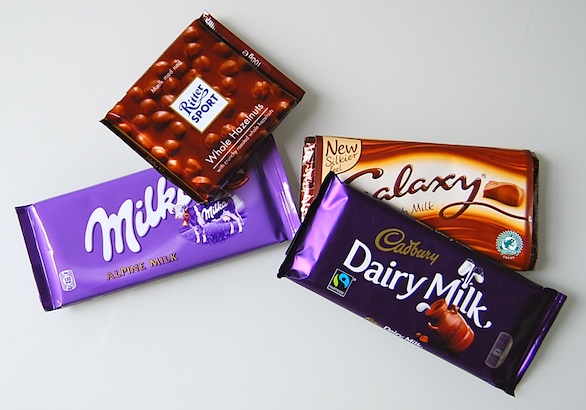
The setup of the experiment
Continental chocolate is made of sugar, milk, cocoa liquor and cocoa butter, which are mixed and dried before they are processed further. British chocolates are produced slightly differently in that their production includes an additional step: sugar, milk and cocoa liquor are cooked before they are mixed with the cocoa butter to form ‘chocolate crumb’. As a result the finished product displays a very different taste and texture.
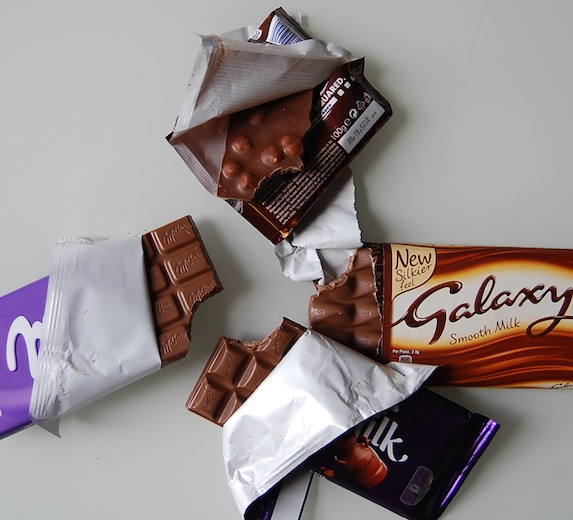
Finding volunteers for the tasting experiment was relatively easy
It’s an excellent example to illustrate how one small difference in the cooking process creates such a different outcome: it reminds me of Indian recipes, where a great stress is put on when and how various spices are introduced as it greatly affects the final outcome of the dish.
But which one is the ‘better’ chocolate? That depends which type you have grown up with, I suppose. Personally I like my chocolate dark and Continental, but my group of chocolate testers, which I recruited at a recent sleepover, did not seem to mind too much either way.

Crumb mix or no crumb mix: all that’s left are crumbs.


 Ginger&Bread
Pingback: Countdown to the Worldcup in Rio | Ginger&Bread