
I don’t know much about Ecuador, neither the football team nor the food. All I could come up with is the painter Oswaldo Guayasamin, whose paintings of indigenous people mirror the pain they are suffering in their everyday lives.
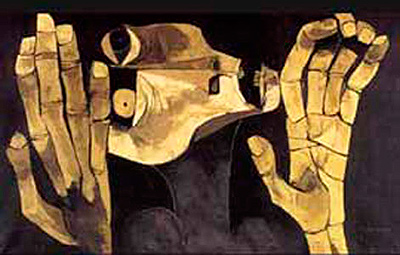
Oswaldo Guayasamin, ‘El Grito II (1983)
The issue of the rights for indigenous people has been simmering away across the continent: the descendants of the European colonisers are still holding most positions of power, with few exceptions. Chile, for example, celebrates the defiance of the native Araucanos and Mapuche, who fought off the Spanish colonisers and prevented them from taking the whole country. This does not prevent them from holding on to the vast lands they took off them in order to exploit the natural resources. Guyasamin’s paintings give a voice to the dispossessed and strike a chord with people across the continent.
Ecuadorian food is clearly the product of a tropical climate, and therefore hard to reproduce here in Europe: by the time the fruit arrives here, after weeks on boat, means we are never able to reproduce the intense flavours of the tropics. In the end I came across a lovely spicy pineapple tea on Laylita’s Recipes, a beautiful blog introducing us to Ecuadorian cuisine. Although chichas, which come ina all forms and shapes and are drunk all over Latinamerica, are traditionally fermented (by chewing corn and spitting it into the drink…), Laylita insists that you can also drink it without fermentation, like an iced tea. Reading around I found that Anna from Morsels and Musings added 500ml pineapple juice at the end, which I copied as the imported pineapples I used could not compete with the fresh produce you get in Equador.
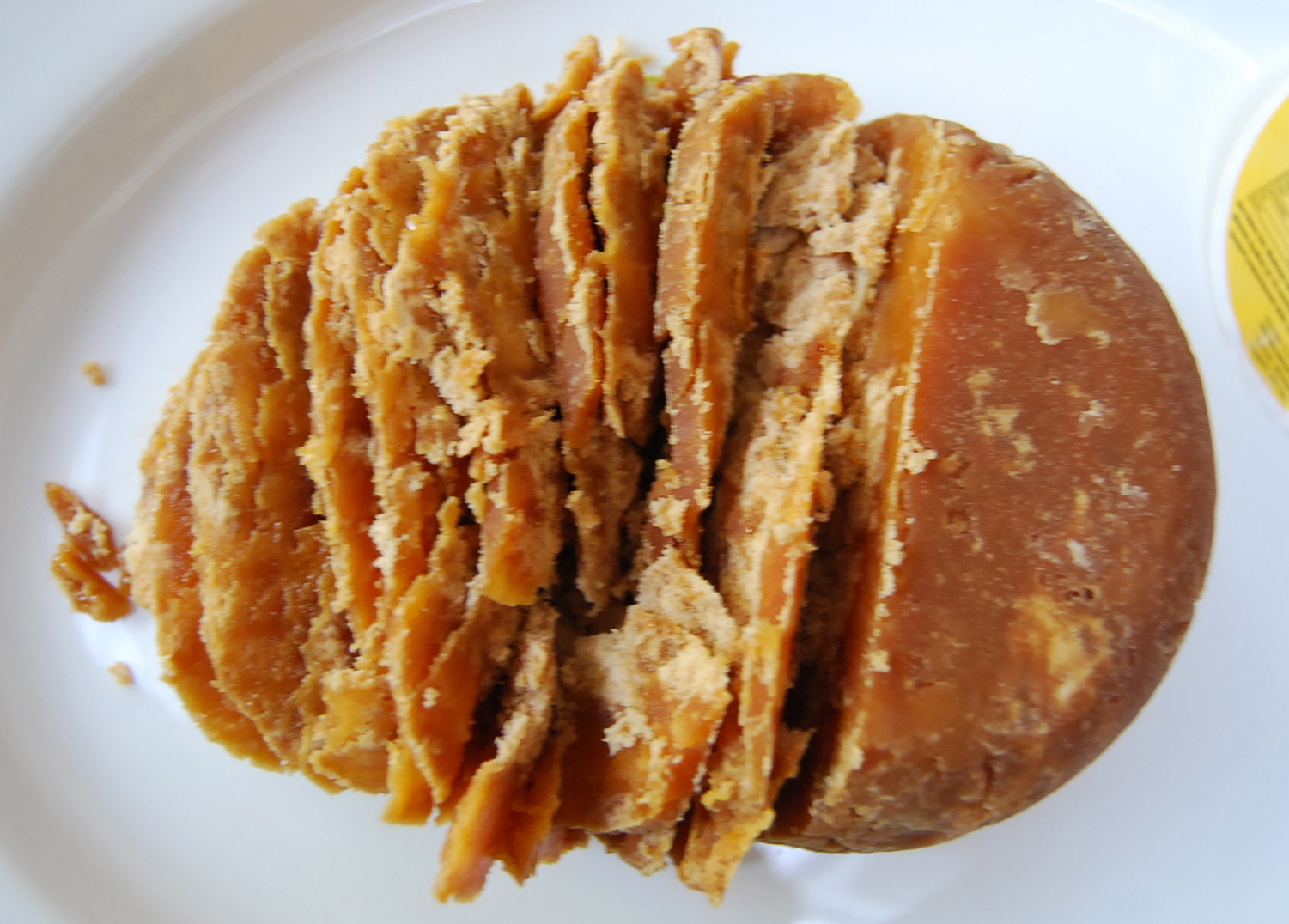
Unrefined cane sugar: panela in South America, jaggery in India
It’s the perfect way to use up the skins and core of a pineapple, and the panela, the unrefined cane sugar which the recipe requires, can be bought in every Indian or Sri Lankan shop under the name ‘jaggery’. It gives the tea a caramel-like sweetness which led us to mix it with sparkling water – the perfect drink for a hot afternoon in the garden!
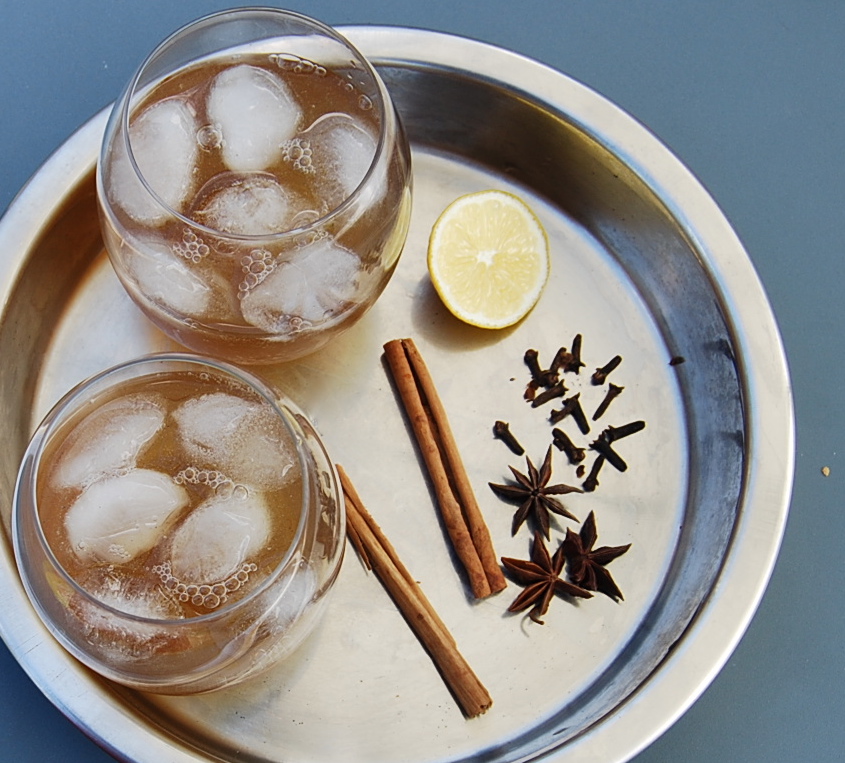
Chicha de Piña with ice and sparkling water
Chicha de Piña (makes ca. 2.5 litres)
- the leftovers (skins and core) of 1 pineapple
- 500 g unrefined cane sugar (panela or jaggery)
- cinnamon sticks, all spice, cloves, anise, to taste
- 500l of pineapple juice
In a pressure cooker or large pan, combine all the ingredients apart from the pineapple juice with 2 l of water and bring to boil. Simmer for 20 minutes in the pressure cooker, or one hour in the pan.
Remove from the heat and let it cool down. Before serving, add 500ml of pineapple juice. Serve with ice and sparkling water to taste.
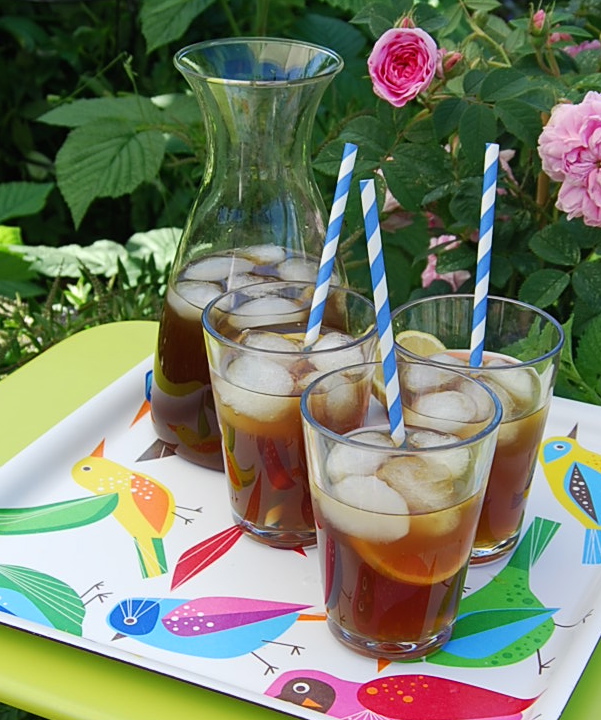
Chicha de Piña as iced tea
Should you want to ferment it, check out Laylita’s page – no spitting required!


 Ginger&Bread
Pingback: Countdown to the Worldcup in Rio | Ginger&Bread
Pingback: Ecuador | What's in Elly's Belly