
Ham House near Richmond
Today we went to visit our spiritual home, Ham near Richmond, the heart of the German community in London. Many parts of London are colonised by particular ethnic groups, who create their little bubbles of ‘Heimat‘ in the capital. Brick Lane’s Bangladeshi culture has been immortalised by Monica Ali’s novel, but other cultures have put their marks on their areas as well. The French, for example, have Kensington, an exclusive quarter in the centre of London where you can find the French School, as well as countless delis, cafes and restaurants catering for the French expat community. Ham near Richmond is the German equivalent: this is where you can find the German School, where the many well-heeled German executives who move to England as part of their jobs send their children.
Richmond and Ham are south of the Thames, on the ‘good’ side of London, albeit quite a bit away from the centre. The German influence is much less obvious than the French in Kensington: a German bakery, a couple of healthy options on the menus of local restaurants, and a German beer garden.
Ham also boasts a beautiful Stuart mansion, Ham House. It is owned by the National Trust, an organisation who runs a wide range of historic buildings, preserving them as well as opening them to the public. Ham House is the perfect spot to visit when the weather forecasts suggests ‘sunny spells’. These are just a silly British euphemism for unsettled weather and should really be called ‘occasional downpours’. With its mix of 17th-century interiors as well as extensive gardens, Ham House is the place to visit if you fancy a bit of history in a dryish setting.

I know you can’t really see much but I really liked the pattern of the floor…
While it was raining outside (‘drizzlie’, as it is called here), we had a look at the interior. You can visit a range of rooms, including the impressive dark gallery on the upper floor. The room I liked best, though, was the library, which had a range of maps and globes documenting the growing interest in far-flung places. One of the maps had Australia and New Zealand joined up into one continent – clearly ensuing visits made the cartographers adjust this minor error.
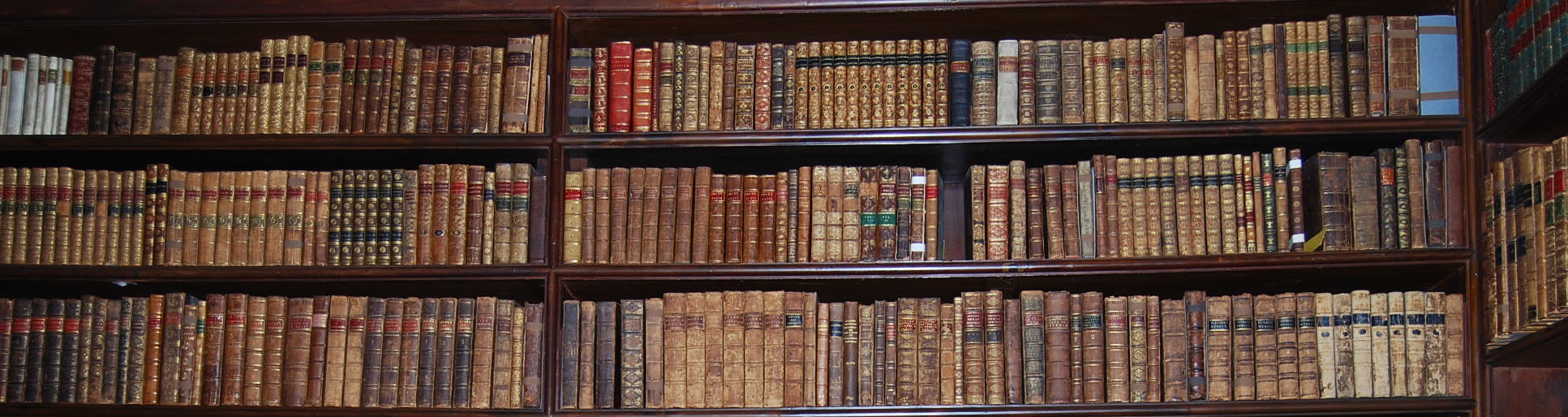
The library in Ham House
You can also visit the ‘downstairs’ part of the building, the kitchen and cellars. I particularly liked the beer cellar, where the guide explained that at the time, in 16th-century England, drinking water was not always considered the ‘safe’ option, with the Thames serving as a giant sewer. Instead, people drank beer, which came in different strengths to cater for everyone, from small children to serious drunkards.
Ham House also has a so-called ‘still house’, a room where the lady of the house dried her medicinal herbs in order to prepare potions and lotions for her family and staff. They had a lovely display of herbs grown on site in their very own gardens:
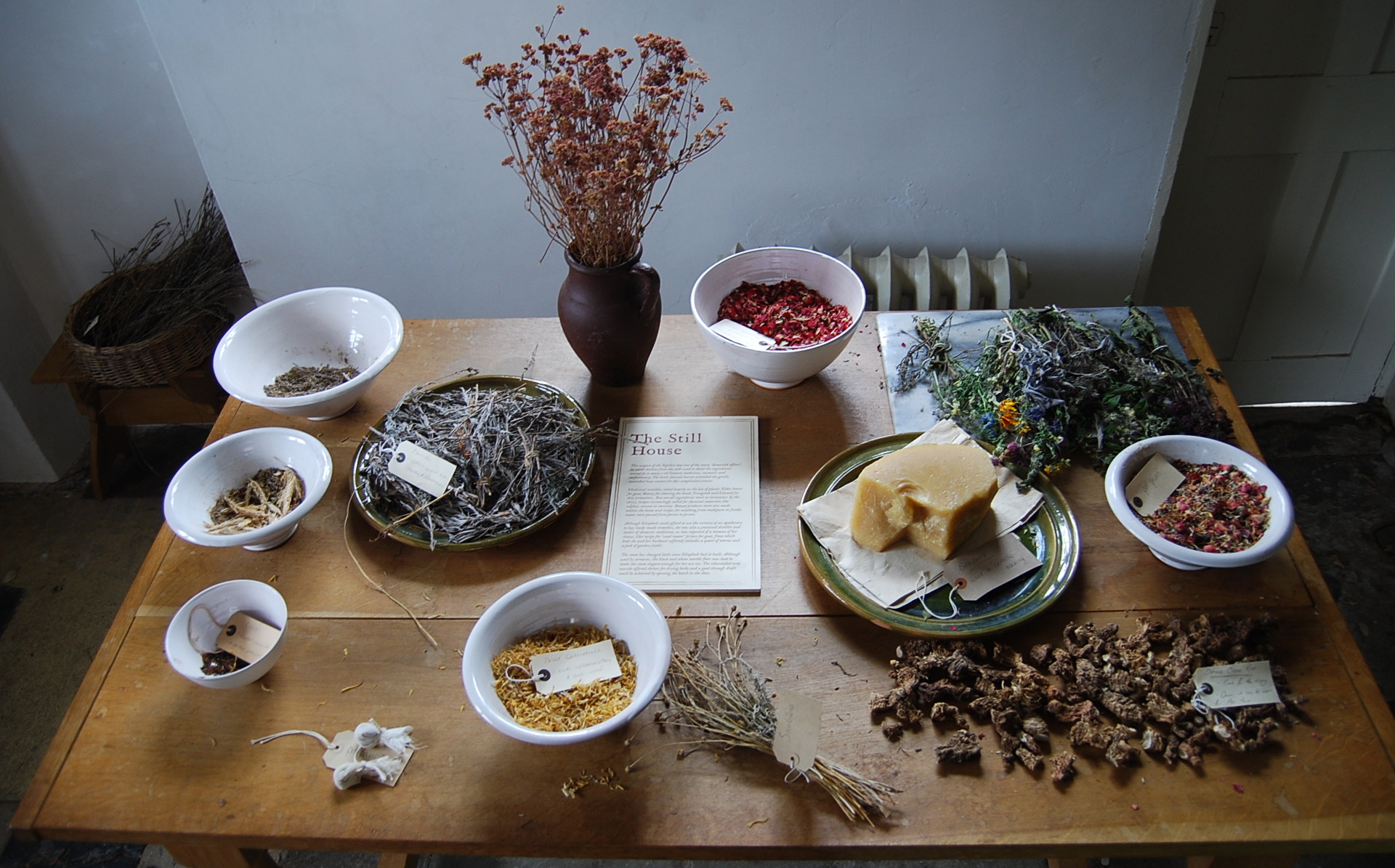
The ‘Still House’
The gardens are magnificent, and after the heavy downpours of recent they are beautifully lush and green.
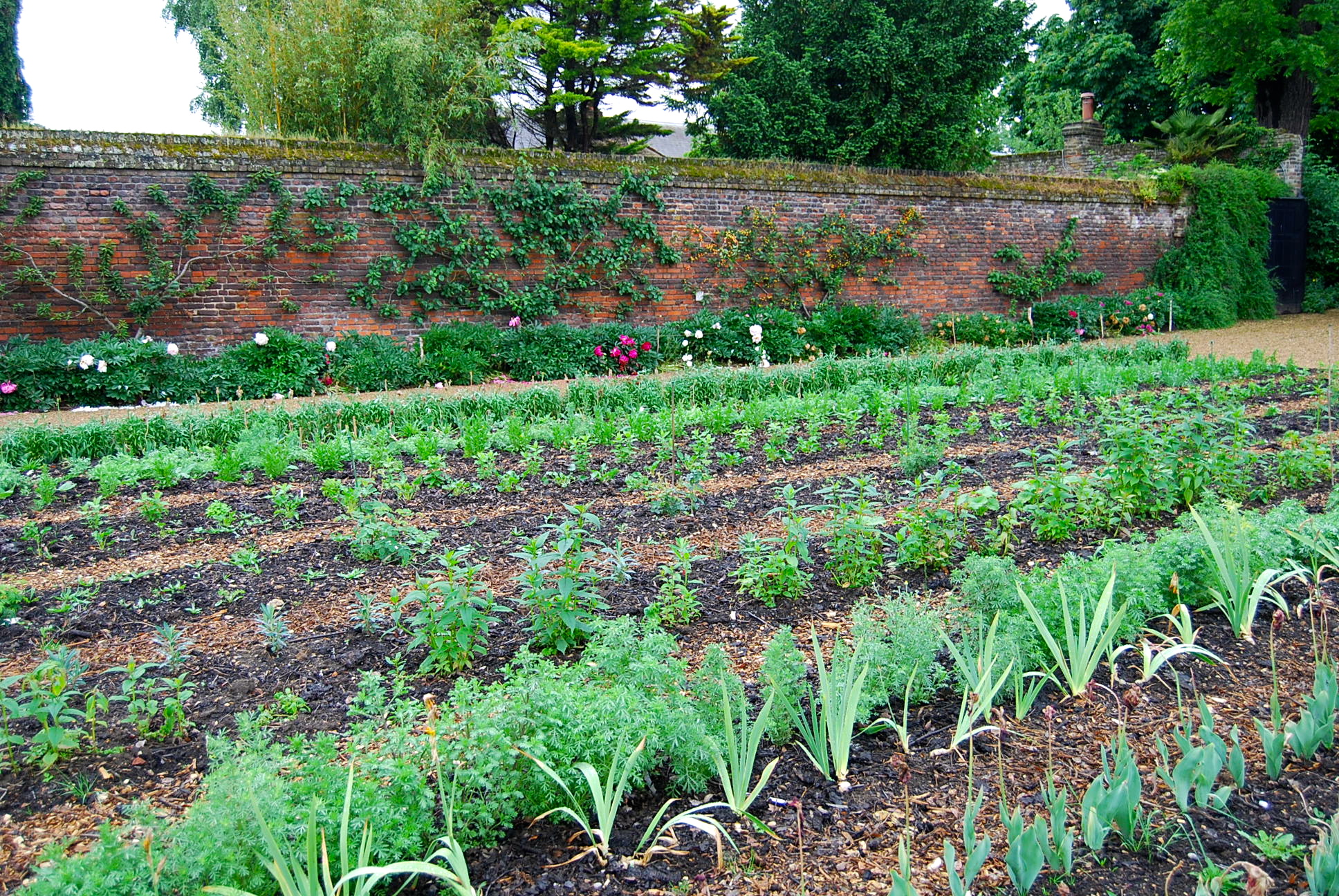
The kitchen gardens are spectacular, beautifully arranged you can find a wide range of traditional fruit and vegetables as well as old-fashioned flowers.
What I love about Britain and the National Trust is the way they cater for the younger visitors who often lack the passion for history necessary to enjoy a place like Ham House. We found a pile of sticks and branches with the invitation to build a den, which provided our children with almost a full hour of quality entertainment:
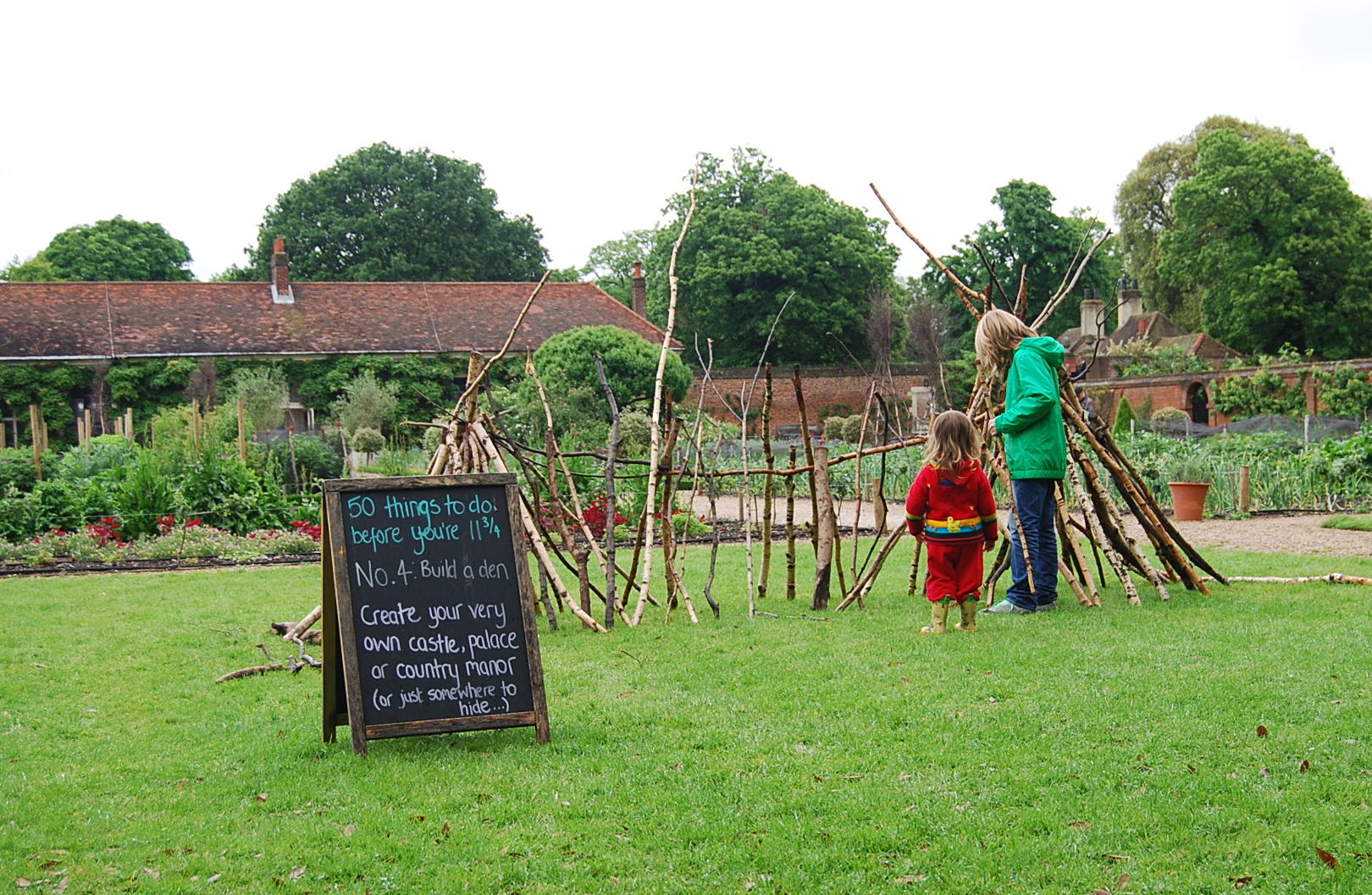
The finished ‘den’
After all the hard work we treated ourselves to a cup of coffee at the Petersham Nurseries: a rather fancy (or ‘upmarket’) garden centre which boast its own Michelin-starred restaurant. Coming from Swabia, the region in Germany which invented stinginess, we kept a safe distance to the restaurant and stuck to the Teahouse, which is invariably cheaper but shares the shabby-chic setting in the centre of a beautifully presented garden centre.
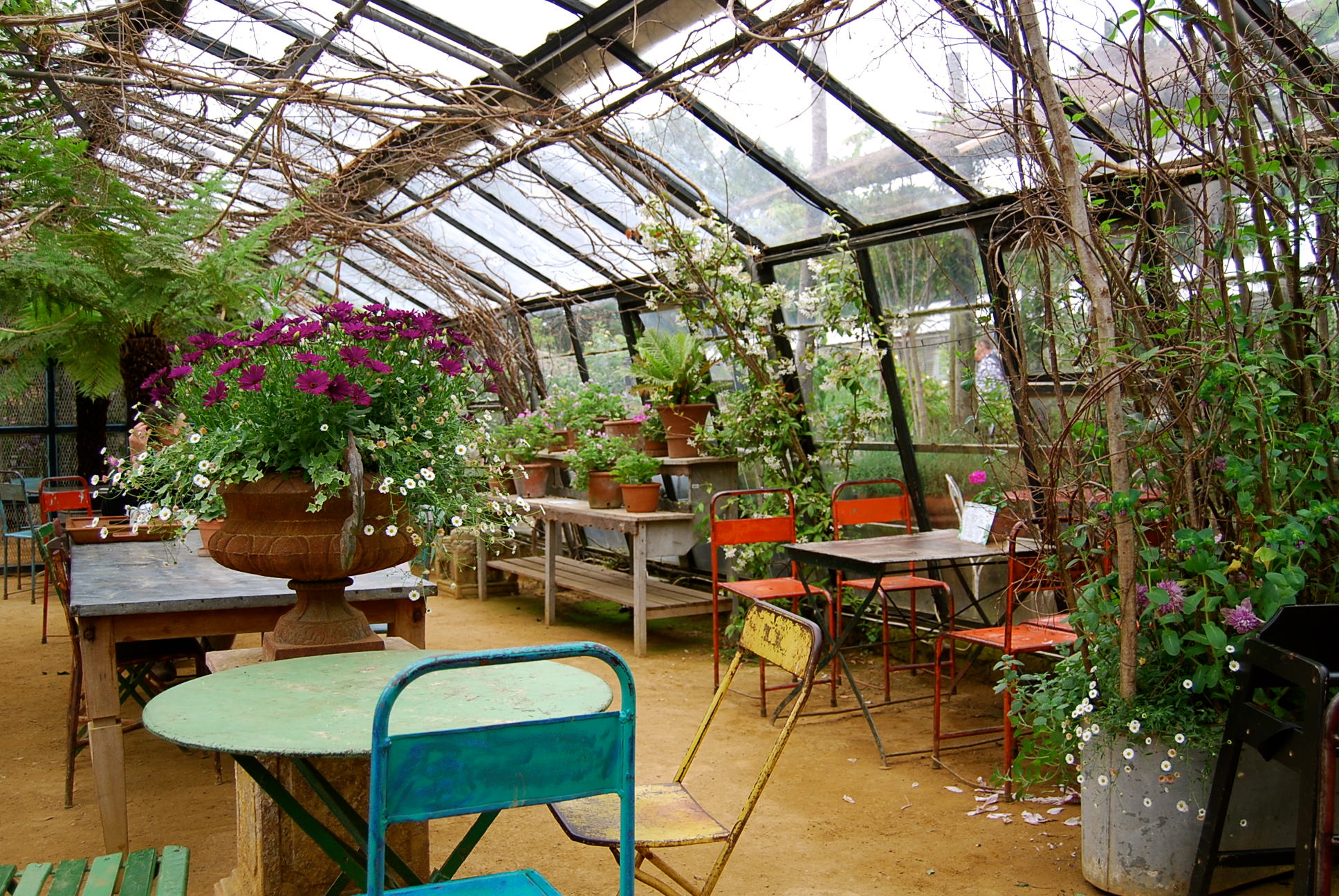
Shabby chic goes country: the seating area in the Petersham Nurseries’ Tearooms
I suppose you have to like the carefully arranged disarray and the eclectic mix of decor to have coffee or tea in a greenhouse. I do think the nurseries are well worth a visit, even just for a stroll around their (overpriced!) wares, and I do love the seemingly random planting schemes despite knowing full well how much careful consideration goes into the colour and position of any of those ‘carelessly discarded’ objects. Garden lovers will love the beautiful displays and the gorgeous arrangements of plants.
So, if you’re in the area and you have loads of money to spare, please try the restaurant and let me know if it is worth it!
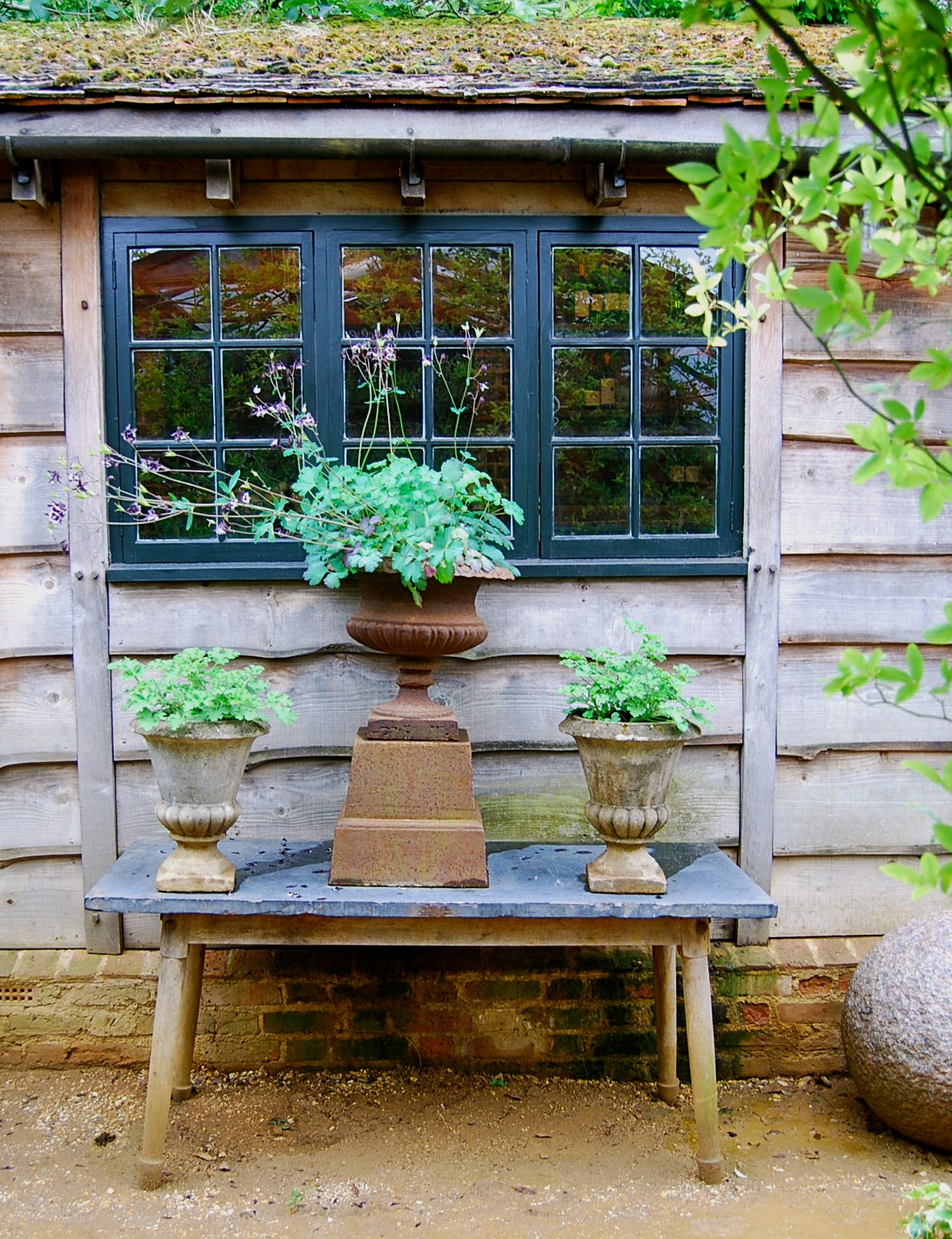
A seemingly ‘careless’ arrangement outside the kitchen of the ‘Tearooms’


 Ginger&Bread
I used to pass Ham House frequently when working for a particular client but never visited – it looks lik somewhere I’d really enjoy and I love the look of that tearoom!
LikeLike
It was the same for us! we used to go there quite regularly to watch football right behind the house, but it took the miserable weather to make us go back and explore it. It is absolutely lovely, and well worth the visit!
LikeLike